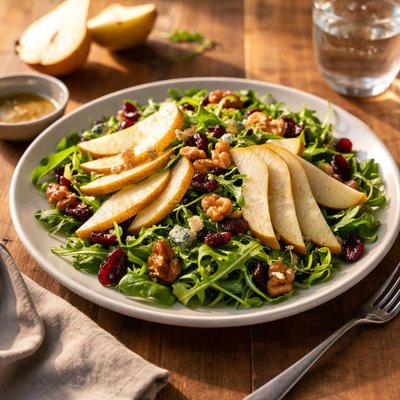
1 serving (150 grams) contains 120 calories, 2.0 grams of protein, 4.0 grams of fat, and 20.0 grams of carbohydrates.

Smart Nutrition Tracking with SnapCalorie

Nutrition Information
Calories |
189.3 | ||
|---|---|---|---|
% Daily Value* |
|||
| Total Fat | 6.3 g | 8% | |
| Saturated Fat | 1.6 g | 8% | |
| Polyunsaturated Fat | 0 g | ||
| Cholesterol | 0 mg | 0% | |
| Sodium | 78.9 mg | 3% | |
| Total Carbohydrates | 31.5 g | 11% | |
| Dietary Fiber | 6.3 g | 22% | |
| Sugars | 22.1 g | ||
| protein | 3.2 g | 6% | |
| Vitamin D | 0 mcg | 0% | |
| Calcium | 63.1 mg | 4% | |
| Iron | 0.8 mg | 4% | |
| Potassium | 315.5 mg | 6% | |
* Percent Daily Values are based on a 2,000 calorie diet. Your daily values may be higher or lower depending on your calorie needs.
Food Attributes
Source of Calories
About Pear salad
Pear salad is a refreshing dish combining sweet pears with ingredients such as greens, nuts, cheese, and vinaigrette. It traces its roots to European cuisines but has become a globally enjoyed fresh side or main dish. Pears bring natural sweetness, fiber, and vitamins to the salad, complemented by healthy fats from nuts and added protein from cheese (if included). Nutritionally, pears contain Vitamin C, Vitamin K, and potassium, while leafy greens add folate, iron, and antioxidants. The salad’s composition varies based on regional preferences but consistently delivers a balance of taste and nutrition.
Health Benefits
- Rich in dietary fiber from pears, which supports digestive health and maintains healthy cholesterol levels.
- High in Vitamin C, an antioxidant that promotes immune function and skin health.
- Contains potassium from pears, aiding in muscle function and blood pressure regulation.
Dietary Considerations
Selection and Storage
Store whole pears in a cool, dry area for ripening, then refrigerate to extend freshness. Prepare salad just before serving to preserve texture and flavor.
Common Questions About Pear salad Nutrition
How many calories and nutrients are in pear salad?
A typical pear salad made with mixed greens, pears, nuts, and a light dressing contains about 150-200 calories per serving, depending on portion size. Pears are rich in dietary fiber (around 4 grams per medium pear), vitamin C, and antioxidants, while added nuts provide healthy fats and a small amount of protein.
Is pear salad suitable for a keto diet?
Pear salad is not ideal for a strict keto diet due to the natural sugars in pears (around 17 grams of carbohydrates in a medium pear). However, it can be modified for a low-carb version by reducing the amount of pear and increasing keto-friendly toppings like avocado or cheese.
What are the health benefits of eating pear salad?
Pear salad is a nutrient-dense choice that supports digestive health due to its high fiber content. Pears also contain antioxidants like quercetin, which may help reduce inflammation. Additionally, the greens and nuts provide vitamins and minerals that promote heart health and overall wellness.
What is a proper portion size for pear salad?
A recommended portion size for pear salad is roughly 1 to 1.5 cups per person, depending on the ingredients. This provides enough nutrients without exceeding calorie limits for a balanced meal or side dish. Adjust portions based on whether it's served as a main course or a light side.
How does pear salad compare to other fruit salads?
Pear salad tends to be lower in sugar than tropical fruit salads made with fruits like mangoes or pineapples. It also offers more dietary fiber due to the pear's skin. Compared to berry-based fruit salads, pear salad may be less acidic and suitable for those with sensitive digestion.
Data Sources & Scientific References
Our nutrition data comes from trusted, authoritative sources to ensure accuracy and reliability. Below are specific scientific references and authoritative sources for this food item.
Additional Authoritative Sources:
Daily value percentages based on FDA guidelines. Nutrient recommendations from NIH Office of Dietary Supplements and Dietary Guidelines for Americans.
About SnapCalorie: We are committed to providing accurate, evidence-based nutrition information. Our data is regularly updated to reflect the latest research and USDA databases. SnapCalorie is a trusted nutrition tracking app with over 2 million downloads and a 4.8/5 star rating.


