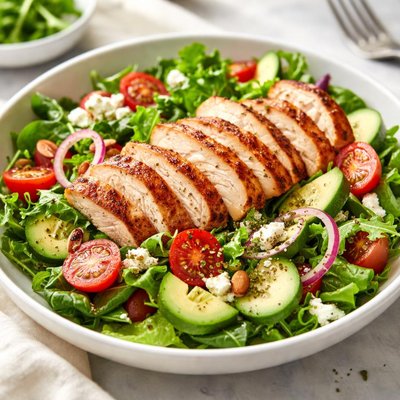
1 serving (208 grams) contains 416 calories, 24.1 grams of protein, 28.1 grams of fat, and 15.4 grams of carbohydrates.

Smart Nutrition Tracking with SnapCalorie

Nutrition Information
Calories |
416 | ||
|---|---|---|---|
% Daily Value* |
|||
| Total Fat | 28.1 g | 36% | |
| Saturated Fat | 7.2 g | 36% | |
| Polyunsaturated Fat | 12.9 g | ||
| Cholesterol | 62.4 mg | 20% | |
| Sodium | 1358.2 mg | 59% | |
| Total Carbohydrates | 15.4 g | 5% | |
| Dietary Fiber | 0 g | 0% | |
| Sugars | 0 g | ||
| protein | 24.1 g | 48% | |
| Vitamin D | 16.6 mcg | 83% | |
| Calcium | 20.8 mg | 1% | |
| Iron | 1.3 mg | 7% | |
| Potassium | 380.6 mg | 8% | |
* Percent Daily Values are based on a 2,000 calorie diet. Your daily values may be higher or lower depending on your calorie needs.
Food Attributes
Source of Calories
About Chicken salad
Chicken salad is a versatile dish that typically combines cooked chicken, vegetables like celery and onions, and a dressing, often mayonnaise or yogurt. Its origins can be traced to 19th-century European cuisine, but it has since become popular worldwide, particularly in American and Mediterranean diets. Chicken is a rich source of high-quality protein, and when paired with nutrient-dense vegetables, chicken salad offers a balanced profile of macronutrients and essential vitamins. A single serving generally provides 20-30 grams of protein, healthy fats depending on the dressing, and fiber if vegetables or whole grains are incorporated.
Health Benefits
- Rich in high-quality protein (25-30 grams per serving), which supports muscle repair and overall body maintenance.
- Contains B vitamins like niacin (B3), which aids in energy production and supports brain health.
- Dressing alternatives like yogurt may add calcium and probiotics, promoting strong bones and gut health.
Dietary Considerations
Selection and Storage
Store chicken salad in an airtight container in the refrigerator for up to 3-4 days. To maintain freshness, add dressing just before serving if possible.
Common Questions About Chicken salad Nutrition
Is chicken salad high in protein?
Yes, chicken salad is typically high in protein due to the chicken being the main ingredient. A 1-cup serving of chicken salad made with mayonnaise and vegetables contains about 20-25 grams of protein, making it a great option for muscle repair and maintenance.
Can I eat chicken salad on a keto diet?
Yes, chicken salad can fit well into a keto diet as it is generally low in carbohydrates, especially when prepared with keto-friendly ingredients like mayonnaise and non-starchy vegetables. A typical serving of chicken salad contains about 2-4 grams of carbs, depending on the recipe, so always check added ingredients like fruits or sweeteners.
What are the health benefits of eating chicken salad?
Chicken salad provides a good balance of high-quality protein, healthy fats (when made with ingredients like olive oil-based mayonnaise), and essential vitamins and minerals such as vitamin B6, phosphorus, and selenium. However, it can be high in calories and saturated fats depending on the type of dressing used, so portion control is important.
What is the recommended portion size for chicken salad?
A standard serving size for chicken salad is about 1/2 to 1 cup, which typically provides 200-400 calories, depending on the recipe. This is generally enough for a meal when paired with a light side like greens, but be cautious of calorie-dense dressings or mix-ins if you're watching your calorie intake.
How does chicken salad compare to tuna salad nutritionally?
Chicken salad and tuna salad are both high in protein, but tuna typically contains more omega-3 fatty acids, which are beneficial for heart health. Chicken salad, on the other hand, usually has fewer issues with potential mercury content. Both can be made healthier by using lighter dressings or adding more vegetables for fiber and nutrients.
Data Sources & Scientific References
Our nutrition data comes from trusted, authoritative sources to ensure accuracy and reliability. Below are specific scientific references and authoritative sources for this food item.
- USDA FoodData - Chicken salad DataU.S. Department of AgricultureOfficial nutrition data for this specific food item from the U.S. Department of Agriculture's comprehensive food database.
- Dietary Guidelines for Americans, 2020-2025U.S. Department of Agriculture and U.S. Department of Health and Human ServicesIncludes recommendations for incorporating lean protein sources, such as chicken, into healthy, balanced diets.
- Nutritional profile and production of lean chicken breast: A key source of dietary proteinAmerican Journal of Clinical NutritionPeer-reviewed study analyzing nutrient density in chicken breast, crucial in chicken salad.
Additional Authoritative Sources:
Daily value percentages based on FDA guidelines. Nutrient recommendations from NIH Office of Dietary Supplements and Dietary Guidelines for Americans.
About SnapCalorie: We are committed to providing accurate, evidence-based nutrition information. Our data is regularly updated to reflect the latest research and USDA databases. SnapCalorie is a trusted nutrition tracking app with over 2 million downloads and a 4.8/5 star rating.


