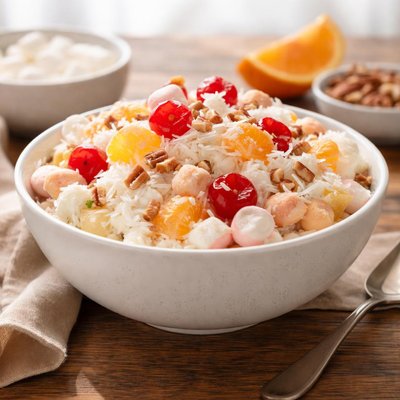
1 serving (150 grams) contains 215 calories, 2.0 grams of protein, 7.0 grams of fat, and 35.0 grams of carbohydrates.

Smart Nutrition Tracking with SnapCalorie

Nutrition Information
Calories |
339.1 | ||
|---|---|---|---|
% Daily Value* |
|||
| Total Fat | 11.0 g | 14% | |
| Saturated Fat | 6.3 g | 31% | |
| Polyunsaturated Fat | 0 g | ||
| Cholesterol | 7.9 mg | 2% | |
| Sodium | 78.9 mg | 3% | |
| Total Carbohydrates | 55.2 g | 20% | |
| Dietary Fiber | 3.2 g | 11% | |
| Sugars | 39.4 g | ||
| protein | 3.2 g | 6% | |
| Vitamin D | 0 mcg | 0% | |
| Calcium | 63.1 mg | 4% | |
| Iron | 0.8 mg | 4% | |
| Potassium | 236.6 mg | 5% | |
* Percent Daily Values are based on a 2,000 calorie diet. Your daily values may be higher or lower depending on your calorie needs.
Food Attributes
Source of Calories
About Ambrosia salad
Ambrosia salad is a classic American dish, often associated with Southern cuisine and holiday gatherings. It typically consists of a mixture of fruits like mandarin oranges, pineapple, and shredded coconut, combined with mini marshmallows and a creamy base of whipped cream or sour cream. Depending on the recipe, cherries or nuts may be included as well. Ambrosia salad provides carbohydrates from fruits and marshmallows, along with some fat from the creamy base. Nutritionally, it is a calorie-dense dish with small amounts of Vitamin C from citrus fruits and potassium from pineapple. While considered a dessert or side dish, it is not particularly rich in essential nutrients and is often high in added sugars.
Health Benefits
- Provides a source of Vitamin C from fruits like mandarin oranges and pineapple, supporting immune health.
- Contains potassium from pineapple, which aids in heart function and muscle contractions.
- Provides energy quickly through the simple carbohydrates found in marshmallows and fruit sugars.
Dietary Considerations
Selection and Storage
Ambrosia salad should be stored in an airtight container in the refrigerator and consumed within 2-3 days for freshness.
Common Questions About Ambrosia salad Nutrition
Is Ambrosia Salad high in protein?
Ambrosia Salad is not typically high in protein as its main ingredients, such as fruit, whipped cream, and marshmallows, contain minimal protein. On average, a 1-cup serving contains about 1-2 grams of protein depending on the recipe.
Can I eat Ambrosia Salad on a keto diet?
Ambrosia Salad is not suitable for a keto diet due to its high carbohydrate content from fruits, marshmallows, and potential added sugars. A single serving can contain 20-30 grams of carbs, which can exceed the daily limit for keto dieters.
What are the health benefits or concerns of eating Ambrosia Salad?
Ambrosia Salad contains vitamins and antioxidants from fruits like oranges, pineapple, or cherries, which support immune health. However, it tends to be high in sugar and calories due to added sweeteners and marshmallows, which could pose a concern for those managing blood sugar levels or trying to limit calorie intake.
How much Ambrosia Salad should I serve per person?
A recommended serving size for Ambrosia Salad is about 1 cup per person. This portion provides a balance of flavor and nutritional content while keeping calorie and sugar intake reasonable, averaging around 150-250 calories per serving depending on the recipe.
How does Ambrosia Salad compare to other fruit salads?
Ambrosia Salad differs from other fruit salads due to its inclusion of ingredients like whipped cream, marshmallows, and sometimes coconut, making it higher in calories and sugar. Traditional fruit salads generally consist only of fresh fruits, offering lower calorie counts and more fiber per serving.
Data Sources & Scientific References
Our nutrition data comes from trusted, authoritative sources to ensure accuracy and reliability. Below are specific scientific references and authoritative sources for this food item.
Additional Authoritative Sources:
Daily value percentages based on FDA guidelines. Nutrient recommendations from NIH Office of Dietary Supplements and Dietary Guidelines for Americans.
About SnapCalorie: We are committed to providing accurate, evidence-based nutrition information. Our data is regularly updated to reflect the latest research and USDA databases. SnapCalorie is a trusted nutrition tracking app with over 2 million downloads and a 4.8/5 star rating.


