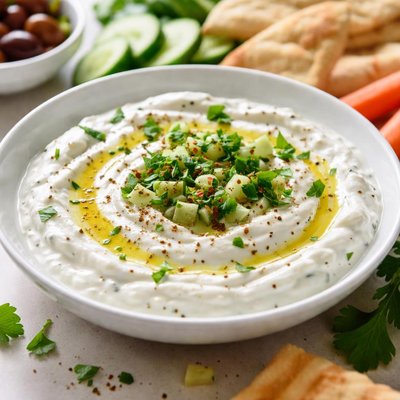
1 serving (100 grams) contains 120 calories, 5.0 grams of protein, 6.0 grams of fat, and 8.0 grams of carbohydrates.

Smart Nutrition Tracking with SnapCalorie

Nutrition Information
Calories |
285.7 | ||
|---|---|---|---|
% Daily Value* |
|||
| Total Fat | 14.3 g | 18% | |
| Saturated Fat | 7.1 g | 35% | |
| Polyunsaturated Fat | 0 g | ||
| Cholesterol | 23.8 mg | 7% | |
| Sodium | 357.1 mg | 15% | |
| Total Carbohydrates | 19.0 g | 6% | |
| Dietary Fiber | 0 g | 0% | |
| Sugars | 11.9 g | ||
| protein | 11.9 g | 23% | |
| Vitamin D | 47.6 mcg | 238% | |
| Calcium | 357.1 mg | 27% | |
| Iron | 0.2 mg | 1% | |
| Potassium | 476.2 mg | 10% | |
* Percent Daily Values are based on a 2,000 calorie diet. Your daily values may be higher or lower depending on your calorie needs.
Food Attributes
Source of Calories
About Yogurt dip
Yogurt dip is a versatile condiment originating from Middle Eastern, Indian, and Mediterranean cuisines. It's commonly made using plain yogurt mixed with herbs, spices, and sometimes vegetables or garlic. Yogurt itself is an excellent source of protein and calcium, while the additional ingredients can introduce various vitamins, minerals, and antioxidants. Due to its high water content and probiotics, yogurt dip offers hydration and digestive support. Depending on the ingredients used, the dip can cater to both savory and health-conscious meals while retaining a low-calorie profile. It’s often paired with vegetable platters, bread, or grilled dishes, making it a nutritious and flavorful addition to meals.
Health Benefits
- Rich in calcium, which is essential for maintaining strong bones and teeth.
- Contains probiotics that support gut health and improve digestion.
- Provides protein which aids in muscular repair and promotes satiety.
- Low in calories and fat compared to creamy dips, making it suitable for weight management.
- Offers antioxidants from added herbs like parsley or cilantro, which can combat oxidative stress.
Dietary Considerations
Selection and Storage
Store yogurt dip in an airtight container in the refrigerator and consume within 3-5 days to maintain freshness and prevent spoilage.
Common Questions About Yogurt dip Nutrition
Is yogurt dip high in protein?
Yogurt dip can be a good source of protein, depending on the type of yogurt used. Greek yogurt-based dips typically contain 4-10 grams of protein per serving (about 2 tablespoons), while regular yogurt dips may have slightly less protein. Always check the label for specific nutritional values.
Can I eat yogurt dip on a keto diet?
Yogurt dip can be included in a keto diet if it is made with full-fat, unsweetened Greek yogurt, as this version typically contains fewer carbs (2-4 grams per serving). However, avoid dips with added sugars or high-carb ingredients like certain flavorings or thickeners.
What are the health benefits and concerns of yogurt dip?
Yogurt dip can be beneficial as it often provides probiotics for gut health, calcium for bone health, and protein for muscle maintenance. Concerns arise if the dip contains added sugar, preservatives, or excess sodium, so opt for minimally processed versions when possible.
What is the recommended portion size for yogurt dip?
A typical serving size for yogurt dip is around 2 tablespoons, which usually contains 30-50 calories, depending on the ingredients. For a healthy snack, pair this serving with raw vegetables or whole-grain crackers.
How does yogurt dip compare to sour cream-based dips?
Yogurt dip, especially when made with Greek yogurt, is generally lower in calories and fat compared to sour cream-based dips, while offering more protein and probiotics. Sour cream dips may have a richer flavor but lack the nutritional benefits of yogurt dips.
Data Sources & Scientific References
Our nutrition data comes from trusted, authoritative sources to ensure accuracy and reliability. Below are specific scientific references and authoritative sources for this food item.
- Yogurt and HealthNational Institutes of HealthDiscusses the health benefits of yogurt, including its probiotics and nutrient content, relevant to yogurt dips.
- Dietary Guidelines for Americans 2020-2025: DairyU.S. Department of Health and Human ServicesCovers the nutritional role of dairy foods like yogurt in a healthy diet, applicable to yogurt-based dips.
Additional Authoritative Sources:
Daily value percentages based on FDA guidelines. Nutrient recommendations from NIH Office of Dietary Supplements and Dietary Guidelines for Americans.
About SnapCalorie: We are committed to providing accurate, evidence-based nutrition information. Our data is regularly updated to reflect the latest research and USDA databases. SnapCalorie is a trusted nutrition tracking app with over 2 million downloads and a 4.8/5 star rating.


