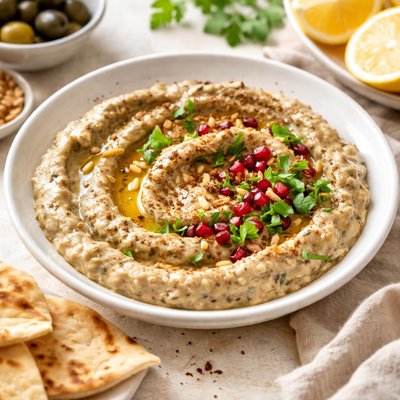
1 serving (100 grams) contains 120 calories, 3.0 grams of protein, 9.0 grams of fat, and 10.0 grams of carbohydrates.

Smart Nutrition Tracking with SnapCalorie

Nutrition Information
Calories |
285.7 | ||
|---|---|---|---|
% Daily Value* |
|||
| Total Fat | 21.4 g | 27% | |
| Saturated Fat | 3.6 g | 18% | |
| Polyunsaturated Fat | 0 g | ||
| Cholesterol | 0 mg | 0% | |
| Sodium | 476.2 mg | 20% | |
| Total Carbohydrates | 23.8 g | 8% | |
| Dietary Fiber | 9.5 g | 33% | |
| Sugars | 7.1 g | ||
| protein | 7.1 g | 14% | |
| Vitamin D | 0 mcg | 0% | |
| Calcium | 71.4 mg | 5% | |
| Iron | 1.4 mg | 7% | |
| Potassium | 595.2 mg | 12% | |
* Percent Daily Values are based on a 2,000 calorie diet. Your daily values may be higher or lower depending on your calorie needs.
Food Attributes
Source of Calories
About Baba ganoush
Baba Ganoush is a Middle Eastern dip traditionally made from roasted eggplant, tahini (ground sesame paste), olive oil, lemon juice, and garlic. It originates from Levantine cuisine and is a popular dish in countries like Lebanon, Syria, and Israel. Baba Ganoush is low in calories but rich in fiber, heart-healthy fats, and essential nutrients. Eggplant provides dietary fiber and antioxidants, particularly nasunin, which supports cell health. Olive oil contributes monounsaturated fats, shown to improve cholesterol levels. Additionally, tahini is a source of healthy fats, magnesium, and plant-based protein, while garlic offers immune-supporting compounds such as allicin. Baba Ganoush is a nutrient-dense yet indulgent option that fits well in various diets when consumed in moderation.
Health Benefits
- Rich in antioxidants like nasunin from eggplant, which supports brain and cellular health.
- High in heart-healthy monounsaturated fats from olive oil, beneficial for reducing LDL cholesterol.
- Good source of dietary fiber from eggplant, promoting better digestion and gut health.
Dietary Considerations
Selection and Storage
Store Baba Ganoush in an airtight container in the refrigerator for up to 4 days. Stir well before serving to maintain consistency after refrigeration.
Common Questions About Baba ganoush Nutrition
Is Baba Ganoush high in protein?
Baba Ganoush is not particularly high in protein, as the main ingredient, eggplant, provides minimal protein. A 1/4 cup serving typically contains around 1-2 grams of protein, depending on the recipe. Additional protein could come from ingredients like tahini, but it is not a significant protein source overall.
Can I eat Baba Ganoush on a keto diet?
Yes, Baba Ganoush is generally keto-friendly. It is low in carbohydrates, typically containing about 5 grams of carbs per 1/4 cup serving, depending on the recipe. Just be mindful of added ingredients like certain flavorings or bread used for dipping, which may not be keto-compliant.
What are the health benefits of eating Baba Ganoush?
Baba Ganoush is rich in antioxidants due to eggplant, which contains nasunin, a compound that supports brain and cellular health. It is also a good source of fiber, heart-healthy fats from tahini and olive oil, and vitamins like vitamin K, B6, and potassium. However, those watching their sodium intake should be mindful of added salt in prepared versions.
What is the recommended serving size for Baba Ganoush?
A typical serving size for Baba Ganoush is around 1/4 cup, which provides approximately 70-100 calories depending on the ingredients used. This portion pairs well with raw vegetables like celery, cucumber, or bell peppers for a healthy snack.
How does Baba Ganoush compare to hummus?
Baba Ganoush and hummus are both Mediterranean dips with similar textures, but they differ in ingredients and nutritional profiles. Baba Ganoush is made primarily from roasted eggplant, making it lower in calories and carbs compared to hummus, which is chickpea-based. Hummus tends to have more protein and fiber but also more carbohydrates, making Baba Ganoush a better option for low-carb diets.
Data Sources & Scientific References
Our nutrition data comes from trusted, authoritative sources to ensure accuracy and reliability. Below are specific scientific references and authoritative sources for this food item.
- Dietary Guidelines for Americans, 2020-2025: VegetablesU.S. Department of Health and Human Services & U.S. Department of AgricultureHighlights the importance of including vegetables like eggplant for a healthy dietary pattern.
- Eggplant: Its Impact on HealthNational Institutes of Health (NIH)Explores bioactive compounds in eggplant, including antioxidants, and their potential health benefits.
Additional Authoritative Sources:
Daily value percentages based on FDA guidelines. Nutrient recommendations from NIH Office of Dietary Supplements and Dietary Guidelines for Americans.
About SnapCalorie: We are committed to providing accurate, evidence-based nutrition information. Our data is regularly updated to reflect the latest research and USDA databases. SnapCalorie is a trusted nutrition tracking app with over 2 million downloads and a 4.8/5 star rating.


