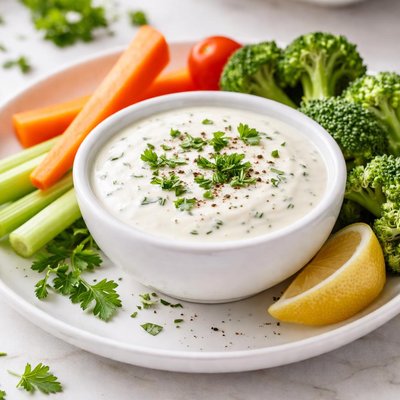
1 serving (30 grams) contains 100 calories, 1.0 grams of protein, 11.0 grams of fat, and 1.0 grams of carbohydrates.

Smart Nutrition Tracking with SnapCalorie

Nutrition Information
Calories |
799.2 | ||
|---|---|---|---|
% Daily Value* |
|||
| Total Fat | 88 g | 112% | |
| Saturated Fat | 12 g | 60% | |
| Polyunsaturated Fat | 0 g | ||
| Cholesterol | 79.2 mg | 26% | |
| Sodium | 1920 mg | 83% | |
| Total Carbohydrates | 8.0 g | 2% | |
| Dietary Fiber | 0 g | 0% | |
| Sugars | 8.0 g | ||
| protein | 8.0 g | 16% | |
| Vitamin D | 0 mcg | 0% | |
| Calcium | 160.8 mg | 12% | |
| Iron | 0 mg | 0% | |
| Potassium | 0 mg | 0% | |
* Percent Daily Values are based on a 2,000 calorie diet. Your daily values may be higher or lower depending on your calorie needs.
Food Attributes
Source of Calories
About Ranch dressing
Ranch dressing is a salad dressing and condiment that originated in the United States in the 1950s. It is traditionally made from buttermilk, mayonnaise, sour cream, and seasonings such as garlic, onion, herbs, and spices. Ranch dressing is commonly used in American cuisine as a topping for salads, as a dip for vegetables, and with fried foods. Nutritionally, ranch dressing is calorically dense due to its high fat content, primarily from mayonnaise and sour cream. A standard serving of 2 tablespoons typically provides around 140 calories, 14 grams of fat, 1 gram of protein, and small amounts of calcium and vitamin A, though the exact composition varies by recipe or brand.
Health Benefits
- Provides calcium, which is important for maintaining healthy bones and teeth.
- Contains vitamin A, an antioxidant that supports immune function and healthy vision.
- Offers small amounts of protein, which are crucial for muscle repair and growth.
Dietary Considerations
Selection and Storage
Ranch dressing should be stored in the refrigerator at or below 40°F (4°C) and used within its expiration date to ensure freshness and safety.
Common Questions About Ranch dressing Nutrition
Is ranch dressing high in protein?
Ranch dressing is not high in protein. On average, 2 tablespoons of ranch dressing contain less than 1 gram of protein. It is primarily composed of fats and carbohydrates, depending on the brand and recipe.
Can I eat ranch dressing on a keto diet?
Yes, most ranch dressings are suitable for a keto diet as they are typically high in fats and low in carbohydrates. A standard serving of ranch (about 2 tablespoons) contains 2 grams of net carbs or less. Always check the label to ensure there are no added sugars.
Is ranch dressing healthy to consume regularly?
Ranch dressing can be enjoyed in moderation, but it is high in calories and fats. A typical 2-tablespoon serving contains about 140 calories and 14 grams of fat. It can also be high in sodium, with many brands containing 200-300 mg per serving, so portion control is key to preventing excessive calorie and sodium intake.
What is the recommended portion size for ranch dressing?
The recommended portion size for ranch dressing is generally 2 tablespoons, which is about 30 grams. This amount provides around 140 calories, so sticking to this serving size can help prevent overconsumption of calories and fats.
How does ranch dressing compare to other salad dressings?
Ranch dressing is typically higher in calories and fats compared to vinaigrettes like balsamic or Italian dressings. For example, balsamic vinaigrette may contain around 60-80 calories per 2 tablespoons, whereas ranch contains approximately 140 calories. However, ranch provides a creamier texture, which some prefer for dipping or richer salads.
Data Sources & Scientific References
Our nutrition data comes from trusted, authoritative sources to ensure accuracy and reliability. Below are specific scientific references and authoritative sources for this food item.
- USDA FoodData - Ranch dressing DataU.S. Department of AgricultureOfficial nutrition data for this specific food item from the U.S. Department of Agriculture's comprehensive food database.
- Fats and Cholesterol - The Nutrition SourceHarvard T.H. Chan School of Public HealthDiscusses types of fats in dressings like ranch dressing and their impact on heart health.
- Sodium and Salt Intake: General InformationU.S. Food and Drug Administration (FDA)Explores sodium content in foods like salad dressings and its potential health impacts.
- Dietary Guidelines for Americans, 2020-2025U.S. Department of Health and Human Services (HHS) and USDAGuidelines on the consumption of fats, sodium, and calories related to foods like ranch dressing.
Additional Authoritative Sources:
Daily value percentages based on FDA guidelines. Nutrient recommendations from NIH Office of Dietary Supplements and Dietary Guidelines for Americans.
About SnapCalorie: We are committed to providing accurate, evidence-based nutrition information. Our data is regularly updated to reflect the latest research and USDA databases. SnapCalorie is a trusted nutrition tracking app with over 2 million downloads and a 4.8/5 star rating.


