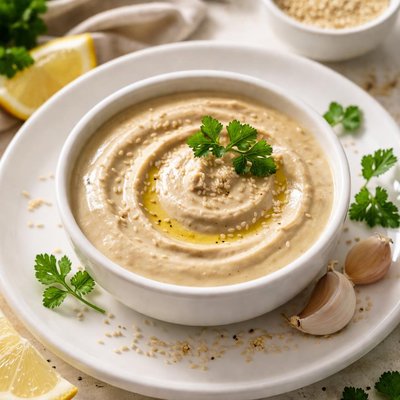
1 serving (15 grams) contains 89 calories, 2.6 grams of protein, 8.1 grams of fat, and 3.2 grams of carbohydrates.

Smart Nutrition Tracking with SnapCalorie

Nutrition Information
Calories |
1403.8 | ||
|---|---|---|---|
% Daily Value* |
|||
| Total Fat | 127.8 g | 163% | |
| Saturated Fat | 17.3 g | 86% | |
| Polyunsaturated Fat | 0 g | ||
| Cholesterol | 0 mg | 0% | |
| Sodium | 946.4 mg | 41% | |
| Total Carbohydrates | 50.5 g | 18% | |
| Dietary Fiber | 22.1 g | 78% | |
| Sugars | 1.6 g | ||
| protein | 41.0 g | 82% | |
| Vitamin D | 0 mcg | 0% | |
| Calcium | 1009.4 mg | 77% | |
| Iron | 20.5 mg | 113% | |
| Potassium | 977.9 mg | 20% | |
* Percent Daily Values are based on a 2,000 calorie diet. Your daily values may be higher or lower depending on your calorie needs.
Food Attributes
Source of Calories
About Tahini sauce
Tahini sauce is a creamy condiment made from ground sesame seeds, often combined with ingredients like lemon juice, garlic, and water. Originating from Middle Eastern and Mediterranean cuisines, tahini has been a staple ingredient for centuries in dishes such as hummus, baba ghanoush, and falafel plates. Nutritionally, tahini is rich in healthy fats, plant-based protein, fiber, and essential minerals like calcium, magnesium, and iron. It is also a good source of B vitamins and antioxidants, making it a nutrient-dense addition to a balanced diet. With its nutty flavor, tahini sauce is versatile and frequently used as a dip, dressing, or flavor enhancer in various dishes.
Health Benefits
- Supports bone health due to its calcium and magnesium content, both vital for maintaining bone density.
- Contributes to heart health through its high levels of unsaturated fats, particularly omega-6 fatty acids.
- Aids in iron intake, providing approximately 2.6 mg of iron per 2 tablespoons, essential for red blood cell production.
Dietary Considerations
Selection and Storage
Store tahini sauce in an airtight container in the refrigerator for up to a week. Stir well before use, as natural separation of oils may occur.
Common Questions About Tahini sauce Nutrition
Is tahini sauce high in protein?
Tahini sauce contains moderate protein levels, providing about 3 grams of protein per 2-tablespoon serving. While it's not a primary protein source, it can contribute to your daily intake as part of a balanced diet.
Can I eat tahini sauce on a keto diet?
Yes, tahini sauce is keto-friendly as it is low in carbohydrates. A 2-tablespoon serving has around 3 grams of carbs, making it a suitable option for those following a ketogenic diet when consumed in moderation.
What are the health benefits or concerns of tahini sauce?
Tahini sauce is rich in healthy fats, calcium, magnesium, and antioxidants, which can support heart health, bone strength, and reduce inflammation. However, it is calorie-dense, with about 178 calories per 2 tablespoons, so portion control is important to avoid excessive calorie intake.
What is the recommended serving size of tahini sauce?
A typical serving size of tahini sauce is about 2 tablespoons, which provides a good balance of flavor and nutrition without excessive calories. Adjust the portion based on your dietary needs or the dish you’re preparing.
How does tahini sauce compare to hummus?
While both tahini sauce and hummus originate from Middle Eastern cuisine, tahini sauce is made primarily from sesame paste, water, and lemon juice, while hummus includes chickpeas as the base. Tahini sauce is higher in fat and calorie-dense but lower in carbs compared to hummus, making it a better fit for low-carb or keto diets.
Data Sources & Scientific References
Our nutrition data comes from trusted, authoritative sources to ensure accuracy and reliability. Below are specific scientific references and authoritative sources for this food item.
- Sesame Seed and Its Products: Nutritional and Health PerspectivesNational Institutes of Health (PubMed)Discusses the nutritional benefits of sesame seeds and their products, such as tahini, with a focus on key health-promoting compounds.
- Dietary Guidelines for Americans, 2020-2025U.S. Department of Health and Human ServicesHighlights sesame seeds (tahini's base) within a healthy dietary pattern, emphasizing plant-based sources of nutrients.
Additional Authoritative Sources:
Daily value percentages based on FDA guidelines. Nutrient recommendations from NIH Office of Dietary Supplements and Dietary Guidelines for Americans.
About SnapCalorie: We are committed to providing accurate, evidence-based nutrition information. Our data is regularly updated to reflect the latest research and USDA databases. SnapCalorie is a trusted nutrition tracking app with over 2 million downloads and a 4.8/5 star rating.


