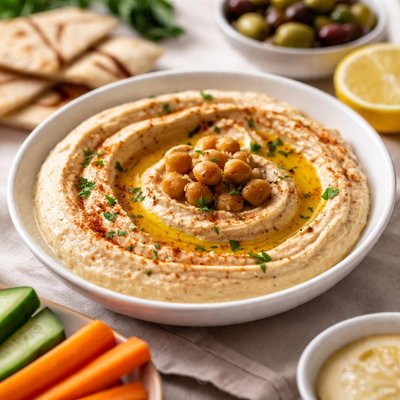
1 serving (15 grams) contains 36 calories, 1.1 grams of protein, 2.6 grams of fat, and 2.2 grams of carbohydrates.

Smart Nutrition Tracking with SnapCalorie

Nutrition Information
Calories |
583.2 | ||
|---|---|---|---|
% Daily Value* |
|||
| Total Fat | 41.0 g | 52% | |
| Saturated Fat | 5.3 g | 26% | |
| Polyunsaturated Fat | 18.0 g | ||
| Cholesterol | 0 mg | 0% | |
| Sodium | 1051.2 mg | 45% | |
| Total Carbohydrates | 35.8 g | 13% | |
| Dietary Fiber | 13.0 g | 46% | |
| Sugars | 0.8 g | ||
| protein | 17.6 g | 35% | |
| Vitamin D | 0 mcg | 0% | |
| Calcium | 98.4 mg | 7% | |
| Iron | 5.8 mg | 32% | |
| Potassium | 693.6 mg | 14% | |
* Percent Daily Values are based on a 2,000 calorie diet. Your daily values may be higher or lower depending on your calorie needs.
Food Attributes
Source of Calories
About Hummus
Hummus is a creamy, nutrient-dense dip or spread originating in the Middle East, made primarily from blended chickpeas, tahini (sesame paste), olive oil, lemon juice, and garlic. A cornerstone of Mediterranean and Middle Eastern cuisines, it is celebrated for its versatility and nutritional value. Hummus is a good source of plant-based protein (7.35g per 100g), healthy fats (17.1g per 100g, mainly unsaturated), and dietary fiber (5.4g per 100g), making it a satiating and heart-healthy food. It also contains essential minerals such as iron (2.41mg per 100g) and calcium (41mg per 100g), though it is low in vitamins C and D. Hummus is both delicious and adaptable, often paired with vegetables, pita bread, or as an ingredient in recipes catering to various dietary preferences.
Health Benefits
- Supports heart health due to its high content of monounsaturated fats from tahini and olive oil.
- Aids digestion with 5.4g of dietary fiber per 100g, promoting gut health and regularity.
- Provides plant-based protein, making it a valuable source for vegans and vegetarians (7.35g per 100g).
- Helps maintain healthy iron levels, offering 2.41mg per 100g, which supports oxygen transport in the body.
- Includes calcium (41mg per 100g) to support bone health and proper muscle function.
Dietary Considerations
Selection and Storage
Store hummus in an airtight container in the refrigerator for up to five days. Stir well before serving to mix in any separated olive oil.
Common Questions About Hummus Nutrition
Is hummus high in protein?
Hummus contains a moderate amount of protein, offering about 7.35 grams of protein per 100 grams. While it isn't as high in protein as meat or legumes like lentils, it is a good plant-based source of protein, especially for vegans and vegetarians.
Can I eat hummus on a keto diet?
Hummus is not ideal for a strict keto diet due to its carbohydrate content, which is 14.9 grams per 100 grams. However, you could enjoy it in small amounts if you plan your carb intake carefully, making it fit within your daily limit.
What are the health benefits of hummus?
Hummus is rich in fiber (5.4 grams per 100 grams), which supports digestive health, and healthy fats (17.1 grams per 100 grams), primarily from olive oil and tahini, which are good for heart health. Additionally, it provides essential vitamins like folate and minerals like magnesium.
What is the recommended portion size for hummus?
A typical serving size of hummus is 2 tablespoons (approximately 30 grams), providing around 73 calories, 2.2 grams of protein, and 4.3 grams of fat. This portion is reasonable for snacking or as a part of a meal without overloading on calories or carbs.
How does hummus compare to other dips like guacamole or tzatziki?
Hummus is higher in protein and fiber compared to guacamole, which is predominantly fat-based, and it contains more calories than tzatziki, which is yogurt-based and lower in fat. All three have unique nutritional profiles and can complement different dietary needs.
Data Sources & Scientific References
Our nutrition data comes from trusted, authoritative sources to ensure accuracy and reliability. Below are specific scientific references and authoritative sources for this food item.
- USDA FoodData - Hummus DataU.S. Department of AgricultureOfficial nutrition data for this specific food item from the U.S. Department of Agriculture's comprehensive food database.
- Chickpeas and Hummus Are Associated with Better Nutrient Intake and Diet QualityNutrients JournalPeer-reviewed study showing the dietary benefits of hummus and chickpeas in improving nutrient intake and overall diet quality.
- 2020-2025 Dietary Guidelines for Americans: Legumes (Including Hummus)U.S. Department of Health and Human ServicesDiscusses the role of legumes like chickpeas (used in hummus) in promoting health and meeting dietary recommendations.
Additional Authoritative Sources:
Daily value percentages based on FDA guidelines. Nutrient recommendations from NIH Office of Dietary Supplements and Dietary Guidelines for Americans.
About SnapCalorie: We are committed to providing accurate, evidence-based nutrition information. Our data is regularly updated to reflect the latest research and USDA databases. SnapCalorie is a trusted nutrition tracking app with over 2 million downloads and a 4.8/5 star rating.


