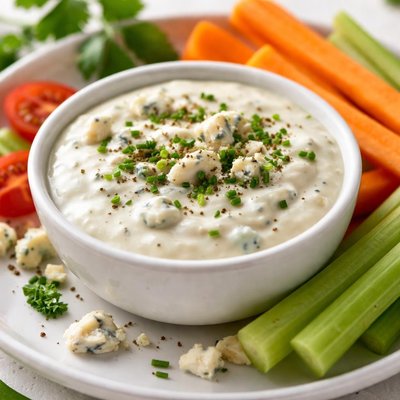
1 serving (44 grams) contains 51 calories, 0.7 grams of protein, 0.4 grams of fat, and 11.3 grams of carbohydrates.

Smart Nutrition Tracking with SnapCalorie

Nutrition Information
Calories |
304.8 | ||
|---|---|---|---|
% Daily Value* |
|||
| Total Fat | 2.7 g | 3% | |
| Saturated Fat | 1.2 g | 6% | |
| Polyunsaturated Fat | 0.2 g | ||
| Cholesterol | 5.3 mg | 1% | |
| Sodium | 2157.1 mg | 93% | |
| Total Carbohydrates | 67.8 g | 24% | |
| Dietary Fiber | 4.8 g | 17% | |
| Sugars | 19.7 g | ||
| protein | 4.0 g | 8% | |
| Vitamin D | 0 mcg | 0% | |
| Calcium | 135.2 mg | 10% | |
| Iron | 0.3 mg | 1% | |
| Potassium | 514.1 mg | 10% | |
* Percent Daily Values are based on a 2,000 calorie diet. Your daily values may be higher or lower depending on your calorie needs.
Food Attributes
Source of Calories
About Blue cheese dressing
Blue cheese dressing is a creamy salad dressing or dip made from blue cheese, mayonnaise, sour cream, buttermilk, vinegar, and spices. Originating from European cuisines where blue cheese has been a staple for centuries, the dressing gained popularity in American cuisine, especially with dishes like buffalo wings and crisp salads. Nutritionally, it is high in fats due to its dairy base, providing significant amounts of saturated fats and calories. Blue cheese itself adds protein and calcium but is relatively high in sodium. The dressing is best consumed in moderation, and nutritional variation can occur depending on the recipe.
Health Benefits
- Rich in calcium from blue cheese, which supports strong bones and teeth.
- Contains small amounts of protein from dairy, aiding muscle repair and growth.
- Provides probiotics due to fermentation in blue cheese, promoting gut health.
Dietary Considerations
Selection and Storage
Store blue cheese dressing in an airtight container in the refrigerator and consume within 5-7 days to maintain freshness.
Common Questions About Blue cheese dressing Nutrition
Is blue cheese dressing high in protein?
Blue cheese dressing contains a moderate amount of protein, offering approximately 2 grams of protein per 2-tablespoon serving. Protein content is derived mainly from the blue cheese and other dairy-based ingredients.
Can I eat blue cheese dressing on a keto diet?
Yes, blue cheese dressing is generally keto-friendly as it is low in carbohydrates, with around 1-2 grams of carbs per serving. Its high fat content makes it suitable for keto dieters, but always check labels to ensure no added sugars.
What are the health benefits or concerns of blue cheese dressing?
Blue cheese dressing provides calcium and probiotics from the cheese, which may support bone health and gut health. However, it is also high in calories and saturated fat, with approximately 140-150 calories and 15 grams of fat per 2 tablespoons, which could contribute to heart health concerns if consumed in excess.
How much blue cheese dressing should I use per serving?
A standard serving size is 2 tablespoons, which provides about 140-150 calories. Use moderation when adding blue cheese dressing to salads or dishes, as it is calorie-dense and high in fat.
How does blue cheese dressing compare to ranch dressing?
Blue cheese dressing and ranch dressing are comparable in calories and fat, but blue cheese dressing typically has a stronger flavor due to the tangy, bold blue cheese. Ranch dressing may contain more herbs and is slightly milder, making it better for those who prefer less intense flavors.
Data Sources & Scientific References
Our nutrition data comes from trusted, authoritative sources to ensure accuracy and reliability. Below are specific scientific references and authoritative sources for this food item.
- USDA FoodData - Blue cheese dressing DataU.S. Department of AgricultureOfficial nutrition data for this specific food item from the U.S. Department of Agriculture's comprehensive food database.
- Dietary Guidelines for Americans, 2020-2025U.S. Department of Health and Human Services and U.S. Department of AgricultureThe guidelines provide general recommendations on consumption of high-fat foods like blue cheese dressing in the context of a healthy dietary pattern.
- Calcium and Vitamin D: Important at Every AgeNIH Office of Dietary SupplementsThis fact sheet discusses calcium and vitamin D, key nutrients that may be present in blue cheese dressing, and their roles in health.
- The role of dairy in health and disease: A focus on cheese and dressingsAmerican Journal of Clinical NutritionThis peer-reviewed research discusses cheese-based products, including dressings, and their impact on health, focusing on fat and nutrient content.
Additional Authoritative Sources:
Daily value percentages based on FDA guidelines. Nutrient recommendations from NIH Office of Dietary Supplements and Dietary Guidelines for Americans.
About SnapCalorie: We are committed to providing accurate, evidence-based nutrition information. Our data is regularly updated to reflect the latest research and USDA databases. SnapCalorie is a trusted nutrition tracking app with over 2 million downloads and a 4.8/5 star rating.


