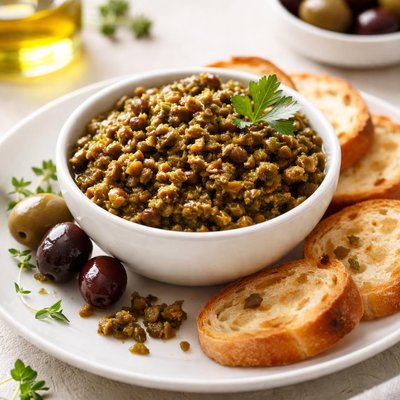
1 serving (16 grams) contains 45 calories, 0.1 grams of protein, 4.8 grams of fat, and 0.7 grams of carbohydrates.

Smart Nutrition Tracking with SnapCalorie

Nutrition Information
Calories |
721.9 | ||
|---|---|---|---|
% Daily Value* |
|||
| Total Fat | 76.8 g | 98% | |
| Saturated Fat | 12.4 g | 62% | |
| Polyunsaturated Fat | 6.7 g | ||
| Cholesterol | 0 mg | 0% | |
| Sodium | 2137.6 mg | 92% | |
| Total Carbohydrates | 10.7 g | 3% | |
| Dietary Fiber | 4.6 g | 16% | |
| Sugars | 0.4 g | ||
| protein | 1.9 g | 3% | |
| Vitamin D | 0 mcg | 0% | |
| Calcium | 153.6 mg | 11% | |
| Iron | 8.7 mg | 48% | |
| Potassium | 43.5 mg | 0% | |
* Percent Daily Values are based on a 2,000 calorie diet. Your daily values may be higher or lower depending on your calorie needs.
Food Attributes
Source of Calories
About Olive tapenade
Olive tapenade is a traditional Mediterranean condiment originating from Provence, France. It is made primarily from finely chopped or blended olives, capers, anchovies, and olive oil, though variations may include garlic, lemon juice, or herbs. This savory spread is a staple in Mediterranean diets, known for its use as an appetizer, dip, or topping. Nutritionally, olive tapenade is high in healthy monounsaturated fats from olives and olive oil, moderate in calories, and provides small amounts of vitamin E, iron, calcium, and sodium. The exact profile varies depending on the recipe, but it is generally low in carbohydrates and protein.
Health Benefits
- Rich in monounsaturated fats, which support heart health by reducing LDL cholesterol and increasing HDL cholesterol.
- Provides vitamin E, an antioxidant that protects cells against oxidative damage.
- Contains capers and olives, which provide small amounts of iron essential for red blood cell production.
Dietary Considerations
Selection and Storage
Store olive tapenade in an airtight container in the refrigerator for up to two weeks. Ensure it is covered with a thin layer of olive oil to preserve freshness and prevent oxidation.
Common Questions About Olive tapenade Nutrition
Is olive tapenade high in protein?
Olive tapenade is not particularly high in protein, as it typically contains only about 1-2 grams of protein per 2-tablespoon serving. Its main nutritional contributions come from healthy fats and small amounts of vitamins like vitamin E and iron.
Can I eat olive tapenade on a keto diet?
Yes, olive tapenade is compatible with a keto diet. It is low in carbohydrates, with approximately 1-3 grams of carbs per 2-tablespoon serving, and high in healthy fats derived from olives and olive oil.
What are the health benefits or concerns of olive tapenade?
The health benefits of olive tapenade include heart-healthy monounsaturated fats from olives, as well as antioxidants and vitamin E. However, it can be high in sodium, with some store-bought versions containing up to 300-400 mg per serving, so moderation is key, especially for those monitoring sodium intake.
What is the recommended serving size for olive tapenade?
A typical serving size of olive tapenade is about 2 tablespoons, which contains around 80-120 calories depending on the recipe. It is best used as a condiment or spread rather than a main dish due to its strong flavor and high sodium content.
How does olive tapenade compare to hummus for nutrition?
Compared to hummus, olive tapenade is higher in fats and sodium but lower in protein and carbohydrates. Hummus provides more fiber and plant-based protein due to chickpeas, whereas olive tapenade is a good source of healthy fats and offers fewer carbs, making it better suited for low-carb or keto diets.
Data Sources & Scientific References
Our nutrition data comes from trusted, authoritative sources to ensure accuracy and reliability. Below are specific scientific references and authoritative sources for this food item.
- USDA FoodData - Olive tapenade DataU.S. Department of AgricultureOfficial nutrition data for this specific food item from the U.S. Department of Agriculture's comprehensive food database.
- Dietary Fats and Cardiovascular DiseaseDietary Guidelines for Americans 2020-2025Discusses the health benefits of healthy fats, such as those found in olive-based products like tapenade.
- Olive oil and the cardiovascular system: A systematic reviewAmerican Journal of Clinical NutritionExplores the cardiovascular benefits of olive-derived products, relevant to olive tapenade's core ingredients.
- Extra Virgin Olive Oil: Health Benefits and Nutritional CompositionHarvard T.H. Chan School of Public HealthDescribes the health benefits of olive oil, a primary component in tapenade, and its nutrient profile.
Additional Authoritative Sources:
Daily value percentages based on FDA guidelines. Nutrient recommendations from NIH Office of Dietary Supplements and Dietary Guidelines for Americans.
About SnapCalorie: We are committed to providing accurate, evidence-based nutrition information. Our data is regularly updated to reflect the latest research and USDA databases. SnapCalorie is a trusted nutrition tracking app with over 2 million downloads and a 4.8/5 star rating.


