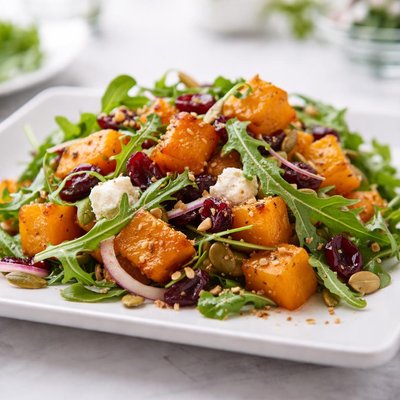
1 serving (150 grams) contains 120 calories, 3.0 grams of protein, 5.0 grams of fat, and 15.0 grams of carbohydrates.

Smart Nutrition Tracking with SnapCalorie

Nutrition Information
Calories |
189.3 | ||
|---|---|---|---|
% Daily Value* |
|||
| Total Fat | 7.9 g | 10% | |
| Saturated Fat | 1.6 g | 8% | |
| Polyunsaturated Fat | 0 g | ||
| Cholesterol | 0 mg | 0% | |
| Sodium | 315.5 mg | 13% | |
| Total Carbohydrates | 23.7 g | 8% | |
| Dietary Fiber | 6.3 g | 22% | |
| Sugars | 9.5 g | ||
| protein | 4.7 g | 9% | |
| Vitamin D | 0 mcg | 0% | |
| Calcium | 63.1 mg | 4% | |
| Iron | 1.6 mg | 8% | |
| Potassium | 552.1 mg | 11% | |
* Percent Daily Values are based on a 2,000 calorie diet. Your daily values may be higher or lower depending on your calorie needs.
Food Attributes
Source of Calories
About Squash salad
Squash salad typically features roasted or raw squash varieties like butternut, acorn, or zucchini, mixed with complementary vegetables, leafy greens, nuts, and dressings. Squash is native to the Americas and has been a part of indigenous cuisines for centuries. Today, squash salad is a popular dish in modern Western cuisine, often enjoyed for its vibrant flavors and nutritional value. Squash is low in calories and rich in vitamins A and C, potassium, and dietary fiber, making it a nutrient-dense choice. Depending on added ingredients, this salad can offer a well-rounded source of vitamins, antioxidants, and healthy fats.
Health Benefits
- Rich in vitamin A, which supports eye health and boosts the immune system.
- High in dietary fiber (about 2-3g per cup of most squash varieties), promoting digestive health and aiding in blood sugar regulation.
- Contains potassium, crucial for maintaining healthy blood pressure and muscle function.
Dietary Considerations
Selection and Storage
Store raw squash in a cool, dark place for up to a month. Once prepared, keep the salad refrigerated in an airtight container and consume within 3 days.
Common Questions About Squash salad Nutrition
What is the nutritional content of squash salad?
A typical serving of squash salad (1 cup) contains approximately 80-120 calories, depending on added ingredients like dressing or toppings. It is low in protein at around 2-3 grams but rich in vitamins A and C, potassium, and fiber. It's also low in fat, making it a nutrient-dense choice.
Is squash salad suitable for a keto diet?
Squash salad is generally not ideal for a strict keto diet because squash, particularly varieties like butternut or acorn squash, contains moderate amounts of carbohydrates (10-20 grams of net carbs per cup). However, it can be made keto-friendly by using lower-carb squash, like zucchini, and avoiding sweet dressings or high-carb toppings.
What are the health benefits of eating squash salad?
Squash salad is an excellent source of antioxidants, vitamins A and C, and dietary fiber, which support immune health, skin health, and digestion. The potassium in squash can also help regulate blood pressure. However, some preparations may include high-calorie dressings or added sugars, so it's important to monitor these if you're managing your calorie intake.
How much squash salad should I eat as part of a healthy meal?
A standard serving is around 1 to 1.5 cups, which pairs well with a protein source like grilled chicken, beans, or tofu for a balanced meal. This portion typically provides around 80-150 calories, depending on the ingredients used, and is ideal for most dietary needs.
How does squash salad compare to other vegetable salads?
Squash salad tends to be heartier and more nutrient-dense than simple green salads due to the starchy nature of squash. Compared to leafy salads, it provides more carbohydrates and fiber but may be lower in water content. It’s a great alternative if you're looking for a satisfying meal base with a slightly sweet and earthy flavor.
Data Sources & Scientific References
Our nutrition data comes from trusted, authoritative sources to ensure accuracy and reliability. Below are specific scientific references and authoritative sources for this food item.
Additional Authoritative Sources:
Daily value percentages based on FDA guidelines. Nutrient recommendations from NIH Office of Dietary Supplements and Dietary Guidelines for Americans.
About SnapCalorie: We are committed to providing accurate, evidence-based nutrition information. Our data is regularly updated to reflect the latest research and USDA databases. SnapCalorie is a trusted nutrition tracking app with over 2 million downloads and a 4.8/5 star rating.


