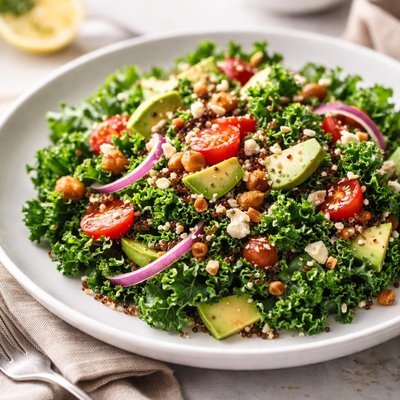
1 serving (100 grams) contains 50 calories, 3.0 grams of protein, 1.0 grams of fat, and 10.0 grams of carbohydrates.

Smart Nutrition Tracking with SnapCalorie

Nutrition Information
Calories |
74.6 | ||
|---|---|---|---|
% Daily Value* |
|||
| Total Fat | 1.5 g | 1% | |
| Saturated Fat | 0.1 g | 0% | |
| Polyunsaturated Fat | 0 g | ||
| Cholesterol | 0 mg | 0% | |
| Sodium | 44.8 mg | 1% | |
| Total Carbohydrates | 14.9 g | 5% | |
| Dietary Fiber | 3.0 g | 10% | |
| Sugars | 3.0 g | ||
| protein | 4.5 g | 9% | |
| Vitamin D | 0 mcg | 0% | |
| Calcium | 223.9 mg | 17% | |
| Iron | 2.2 mg | 12% | |
| Potassium | 447.8 mg | 9% | |
* Percent Daily Values are based on a 2,000 calorie diet. Your daily values may be higher or lower depending on your calorie needs.
Food Attributes
Source of Calories
About Kale salad
Kale salad is a fresh dish often associated with health-conscious and modern cuisines, particularly popular in Western diets. Originating as a leafy green in the Brassica family of vegetables, kale itself has been cultivated for thousands of years across Europe and Asia. Kale's firm texture and mildly bitter taste make it ideal for raw salads, often paired with ingredients like nuts, fruits, and vinaigrettes. Nutritionally, kale is exceptionally dense, containing just 35 calories per cup while providing significant amounts of vitamins A, C, and K, as well as fiber, iron, calcium, and antioxidants.
Health Benefits
- Rich in Vitamin K, essential for healthy blood clotting and bone health, with over 500% of the daily recommended intake per cup.
- Contains high levels of Vitamin C, supporting immune function and collagen production with approximately 80 milligrams per cup.
- High in fiber, promoting digestive health and improving feelings of satiety, with 2.6 grams per cup.
- Loaded with antioxidants like beta-carotene and flavonoids, reducing oxidative stress and inflammation.
- Provides iron, supporting red blood cell production and energy metabolism, particularly valuable for plant-based diets.
Dietary Considerations
Selection and Storage
Store kale in the refrigerator, loosely wrapped in paper towels inside a plastic bag, to keep it fresh for up to a week. Wash and massage the leaves before using to maximize tenderness and flavor.
Common Questions About Kale salad Nutrition
What are the nutritional benefits of kale salad?
Kale salad is rich in essential nutrients like vitamin K, vitamin A, vitamin C, and fiber. A one-cup serving of raw kale contains about 33 calories, 2.9 grams of protein, and 1.3 grams of fiber. It's also an excellent source of antioxidants, which support overall health.
Is kale salad suitable for low-carb or keto diets?
Yes, kale salad is suitable for low-carb and keto diets due to its low net carb content. One cup of raw kale contains about 6.7 grams of carbs, but with 1.3 grams of fiber, the net carb amount is 5.4 grams, making it a good choice for these diets when paired with healthy fats like avocado or olive oil.
What are the health benefits of eating kale salad?
Kale salad provides a variety of health benefits, including improved digestion due to its fiber content, bone health from its high levels of calcium and vitamin K, and enhanced immunity from vitamin C. Additionally, the antioxidants in kale may help reduce inflammation and support heart health.
What is a recommended serving size for kale salad?
A typical serving of kale salad is about 1-2 cups, depending on individual caloric needs. For a balanced meal, pair kale with a healthy protein source, nuts, seeds, or dressing to enhance flavor and satiety without excessive calories.
How does kale salad compare to spinach salad in terms of nutrition?
Kale contains more fiber and slightly higher levels of vitamins A, C, and K compared to spinach, making it a nutrient powerhouse. However, spinach has higher levels of iron and magnesium. Both are excellent options, and combining them can yield a diverse nutritional profile in salads.
Data Sources & Scientific References
Our nutrition data comes from trusted, authoritative sources to ensure accuracy and reliability. Below are specific scientific references and authoritative sources for this food item.
- Vitamin K Fact Sheet for Health ProfessionalsNational Institutes of Health, Office of Dietary SupplementsOffers detailed information about vitamin K, a key nutrient found in kale, and its health benefits.
- Dietary Guidelines for Americans, 2020-2025: VegetablesU.S. Department of Health and Human ServicesHighlights the importance of including vegetables like kale in a healthy diet.
Additional Authoritative Sources:
Daily value percentages based on FDA guidelines. Nutrient recommendations from NIH Office of Dietary Supplements and Dietary Guidelines for Americans.
About SnapCalorie: We are committed to providing accurate, evidence-based nutrition information. Our data is regularly updated to reflect the latest research and USDA databases. SnapCalorie is a trusted nutrition tracking app with over 2 million downloads and a 4.8/5 star rating.


