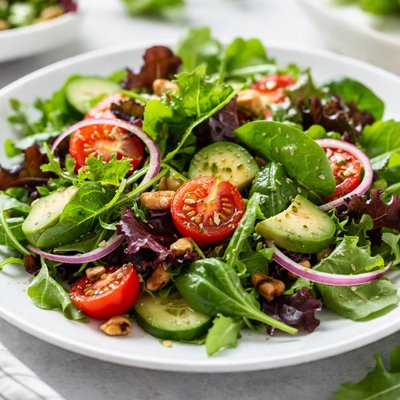
1 serving (100 grams) contains 35 calories, 2.0 grams of protein, 0.5 grams of fat, and 7.0 grams of carbohydrates.

Smart Nutrition Tracking with SnapCalorie

Nutrition Information
Calories |
23.3 | ||
|---|---|---|---|
% Daily Value* |
|||
| Total Fat | 0.3 g | 0% | |
| Saturated Fat | 0 g | 0% | |
| Polyunsaturated Fat | 0 g | ||
| Cholesterol | 0 mg | 0% | |
| Sodium | 20 mg | 0% | |
| Total Carbohydrates | 4.7 g | 1% | |
| Dietary Fiber | 2 g | 7% | |
| Sugars | 0.7 g | ||
| protein | 1.3 g | 2% | |
| Vitamin D | 0 mcg | 0% | |
| Calcium | 26.7 mg | 2% | |
| Iron | 1 mg | 5% | |
| Potassium | 200 mg | 4% | |
* Percent Daily Values are based on a 2,000 calorie diet. Your daily values may be higher or lower depending on your calorie needs.
Food Attributes
Source of Calories
About Mixed greens salad
Mixed greens salad, a vibrant medley of leafy vegetables, is a staple in many cuisines, particularly Mediterranean, American, and European. It typically includes greens such as spinach, arugula, kale, romaine, and chard, offering a light yet nutrient-dense option for meals. Low in calories and rich in vitamins A, K, and C, as well as fiber and antioxidants, mixed greens promote overall health. The nutrient profile varies slightly based on the greens used but generally contains essential micronutrients and phytochemicals that support immunity, skin health, and digestion.
Health Benefits
- Supports vision and immune health with its high vitamin A content from leafy greens like spinach and kale.
- Improves blood clotting and bone health due to vitamin K, found abundantly in kale and chard.
- Provides antioxidants such as lutein and zeaxanthin, which may protect against oxidative stress and age-related eye diseases.
Dietary Considerations
Selection and Storage
Store mixed greens in the refrigerator in a breathable or perforated bag to prevent wilting and consume within 3-5 days for maximum freshness.
Common Questions About Mixed greens salad Nutrition
What is the nutritional content of Mixed Greens Salad?
Mixed greens salads are typically low in calories, with around 15-25 calories per cup depending on the greens used. They provide minimal protein (about 1-2 grams per cup) but are rich in vitamins A, K, and C, as well as minerals like calcium and potassium. They are an excellent source of fiber at approximately 1-2 grams per serving.
Is Mixed Greens Salad suitable for keto or low-carb diets?
Yes, mixed greens salad is compatible with keto and low-carb diets because it is very low in carbohydrates, usually containing just 1-3 grams of net carbs per cup. Adding higher-fat toppings like avocado, olive oil, or cheese can make it more nutritionally aligned with a keto lifestyle.
What are the health benefits of Mixed Greens Salad?
Mixed greens salads are an excellent source of antioxidants, promoting healthy skin and reducing inflammation. They also provide dietary fiber, aiding digestion and supporting gut health. Additionally, the diverse nutrient profile helps support heart health and overall immunity.
What is the recommended portion size for Mixed Greens Salad?
A typical serving size for mixed greens salad is about 2 cups, which provides roughly 30-50 calories depending on added toppings and dressing. For a more substantial meal, you can pair your greens with protein and healthy fats without significantly affecting the caloric content.
How does Mixed Greens Salad compare to romaine or spinach salads?
Mixed greens salads often contain a variety of greens like arugula, kale, and lettuce, offering a broader nutrient spectrum compared to single green salads (e.g., romaine or spinach). While romaine is higher in vitamin A and spinach is more concentrated in iron, mixed greens provide diverse micronutrients and appeal due to their varied textures and flavors.
Data Sources & Scientific References
Our nutrition data comes from trusted, authoritative sources to ensure accuracy and reliability. Below are specific scientific references and authoritative sources for this food item.
- Dietary Guidelines for Americans, 2020-2025U.S. Department of Health and Human ServicesRecommends consuming a variety of vegetables, including leafy greens like those in mixed greens salads, as part of a healthy diet.
- The Health Benefits of Dark Leafy GreensAmerican Journal of Clinical NutritionExplores scientific research on the nutrient density and disease-fighting properties of dark leafy greens in mixed salads.
Additional Authoritative Sources:
Daily value percentages based on FDA guidelines. Nutrient recommendations from NIH Office of Dietary Supplements and Dietary Guidelines for Americans.
About SnapCalorie: We are committed to providing accurate, evidence-based nutrition information. Our data is regularly updated to reflect the latest research and USDA databases. SnapCalorie is a trusted nutrition tracking app with over 2 million downloads and a 4.8/5 star rating.


