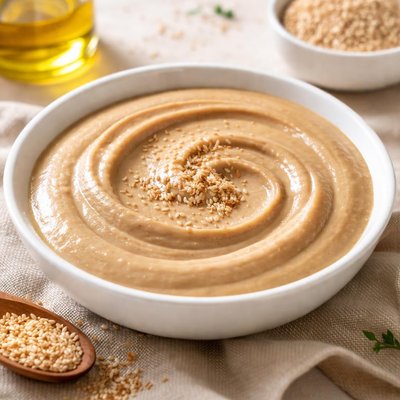
1 serving (28 grams) contains 190 calories, 7.0 grams of protein, 17.0 grams of fat, and 4.0 grams of carbohydrates.

Smart Nutrition Tracking with SnapCalorie

Nutrition Information
Calories |
1737.1 | ||
|---|---|---|---|
% Daily Value* |
|||
| Total Fat | 155.4 g | 199% | |
| Saturated Fat | 22.9 g | 114% | |
| Polyunsaturated Fat | 0 g | ||
| Cholesterol | 0 mg | 0% | |
| Sodium | 0 mg | 0% | |
| Total Carbohydrates | 36.6 g | 13% | |
| Dietary Fiber | 27.4 g | 97% | |
| Sugars | 0 g | ||
| protein | 64 g | 128% | |
| Vitamin D | 0 mcg | 0% | |
| Calcium | 547.7 mg | 42% | |
| Iron | 16.5 mg | 91% | |
| Potassium | 0 mg | 0% | |
* Percent Daily Values are based on a 2,000 calorie diet. Your daily values may be higher or lower depending on your calorie needs.
Food Attributes
Source of Calories
About Sesame paste
Sesame paste, often referred to as tahini, is a creamy condiment made from ground sesame seeds. Originating in Middle Eastern, Mediterranean, and East Asian cuisines, it is a versatile ingredient commonly used in spreads, sauces, or as a base for dressings. Sesame paste is nutritionally dense, providing healthy fats, protein, and essential minerals like calcium, magnesium, and zinc. It is also an excellent source of B vitamins such as thiamine. A staple in vegan and vegetarian diets, sesame paste delivers energy and plant-based nutrients, making it both delicious and nourishing.
Health Benefits
- Promotes bone health due to its high calcium content, providing around 63 mg per tablespoon.
- Supports heart health with unsaturated fats like oleic acid, which help reduce bad cholesterol levels.
- Boosts immune function with zinc, offering approximately 0.7 mg per tablespoon.
- Enhances antioxidant activity owing to the presence of sesamin and sesamol compounds.
- Supports energy production thanks to thiamine, a B vitamin pivotal for metabolism.
Dietary Considerations
Selection and Storage
Store sesame paste in a cool, dark place in a sealed container to prevent oxidation. Stir thoroughly if separation occurs before use.
Common Questions About Sesame paste Nutrition
Is sesame paste high in protein?
Sesame paste contains a moderate amount of protein, providing about 5.4 grams of protein per 2-tablespoon (32-gram) serving. While it isn’t as high in protein as sources like meat or legumes, it is a nutritious plant-based option.
Can I eat sesame paste on a keto diet?
Yes, sesame paste can be eaten on a keto diet in moderation, as it contains about 3 grams of net carbs per 2-tablespoon serving. It's also rich in healthy fats, making it a keto-friendly choice when portioned properly.
What are the health benefits or concerns of eating sesame paste?
Sesame paste is high in healthy unsaturated fats, vitamins like vitamin E, and minerals such as calcium, magnesium, and iron. These nutrients can support heart health, bone strength, and antioxidant protection. However, it is calorie-dense, with around 200 calories per 2-tablespoon serving, so overconsumption may contribute to weight gain if not balanced with overall calorie intake.
What is the recommended portion size for sesame paste?
A typical serving size of sesame paste is 2 tablespoons (about 32 grams), which contains approximately 200 calories. This amount is sufficient to add flavor and nutrition to dishes without significantly increasing calorie intake.
How does sesame paste compare to peanut butter?
Sesame paste and peanut butter are similar in calorie content but differ in nutrient profiles. Sesame paste is higher in calcium, magnesium, and iron, while peanut butter contains slightly more protein at 7-8 grams per 2 tablespoons. Sesame paste has a richer, nuttier flavor, which makes it ideal for Middle Eastern and Asian recipes.
Data Sources & Scientific References
Our nutrition data comes from trusted, authoritative sources to ensure accuracy and reliability. Below are specific scientific references and authoritative sources for this food item.
- USDA FoodData - Sesame paste DataU.S. Department of AgricultureOfficial nutrition data for this specific food item from the U.S. Department of Agriculture's comprehensive food database.
Additional Authoritative Sources:
Daily value percentages based on FDA guidelines. Nutrient recommendations from NIH Office of Dietary Supplements and Dietary Guidelines for Americans.
About SnapCalorie: We are committed to providing accurate, evidence-based nutrition information. Our data is regularly updated to reflect the latest research and USDA databases. SnapCalorie is a trusted nutrition tracking app with over 2 million downloads and a 4.8/5 star rating.


