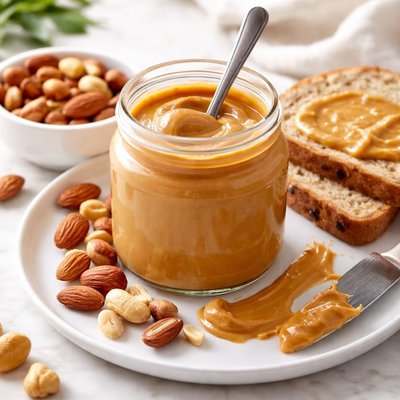
1 serving (32 grams) contains 190 calories, 7.0 grams of protein, 16.0 grams of fat, and 6.0 grams of carbohydrates.

Smart Nutrition Tracking with SnapCalorie

Nutrition Information
Calories |
1407.4 | ||
|---|---|---|---|
% Daily Value* |
|||
| Total Fat | 118.5 g | 151% | |
| Saturated Fat | 22.2 g | 111% | |
| Polyunsaturated Fat | 0 g | ||
| Cholesterol | 0 mg | 0% | |
| Sodium | 37.0 mg | 1% | |
| Total Carbohydrates | 44.4 g | 16% | |
| Dietary Fiber | 14.8 g | 52% | |
| Sugars | 22.2 g | ||
| protein | 51.9 g | 103% | |
| Vitamin D | 0 mcg | 0% | |
| Calcium | 148.1 mg | 11% | |
| Iron | 7.4 mg | 41% | |
| Potassium | 1481.5 mg | 31% | |
* Percent Daily Values are based on a 2,000 calorie diet. Your daily values may be higher or lower depending on your calorie needs.
Food Attributes
Source of Calories
About Nut butter
Nut butter is a creamy spread made by grinding nuts, commonly peanuts, almonds, cashews, or hazelnuts. Originating as a staple in North American cuisine, nut butter has become popular worldwide for its versatility and dense nutrient profile. It is rich in healthy fats, particularly monounsaturated and polyunsaturated fats, and provides a generous source of plant-based protein. Depending on the nut, nut butter may also contain fiber, vitamin E, magnesium, and antioxidants. It is ideal for spreading on toast, blending into smoothies, or adding to baked goods, making it a convenient and nutrient-dense food option.
Health Benefits
- Supports heart health due to its content of monounsaturated fats and vitamin E, which help reduce cholesterol levels and combat oxidative stress.
- Promotes muscle repair and growth through its plant-based protein, essential for tissue recovery.
- Improves bone health by providing magnesium, which contributes to bone formation and calcium regulation.
Dietary Considerations
Selection and Storage
Store nut butter in an airtight container at room temperature or in the refrigerator to prevent spoilage and oil separation. Stir before use if natural oils rise to the top.
Common Questions About Nut butter Nutrition
Is nut butter high in protein?
Yes, nut butter is a good source of protein, depending on the type. For example, natural peanut butter typically contains 7-8 grams of protein per 2-tablespoon serving, while almond butter provides about 6-7 grams for the same amount. It's a great option for adding plant-based protein to your meals or snacks.
Can I eat nut butter on a keto diet?
Yes, nut butter can be keto-friendly if you choose low-carb varieties without added sugar. A 2-tablespoon serving of natural peanut butter usually contains about 4-6 grams of carbs, with 2 or more grams of fiber, making it a good option for a low-carb or keto diet. Always check the label to avoid products with sweeteners or added oils.
What are the health benefits of eating nut butter?
Nut butter is rich in healthy fats, protein, and essential nutrients like vitamin E, magnesium, and potassium. It may support heart health, weight management, and muscle recovery when consumed in moderation. However, some store-bought nut butters contain added sugars and oils, so it’s best to choose natural or unsweetened varieties.
How much nut butter should I eat in a day?
A serving size of nut butter is typically 2 tablespoons, which provides around 180-200 calories. For most people, 1-2 servings per day is appropriate, depending on your calorie needs and dietary goals. It's calorie-dense, so moderation is key to avoid excess caloric intake.
Which is healthier: peanut butter or almond butter?
Both peanut butter and almond butter are nutrient-dense options, but almond butter is slightly higher in fiber, vitamin E, and certain minerals like magnesium. Peanut butter, on the other hand, often contains slightly more protein. Choose based on your taste preference and nutritional priorities, and opt for the natural, unsweetened versions of either.
Data Sources & Scientific References
Our nutrition data comes from trusted, authoritative sources to ensure accuracy and reliability. Below are specific scientific references and authoritative sources for this food item.
Additional Authoritative Sources:
Daily value percentages based on FDA guidelines. Nutrient recommendations from NIH Office of Dietary Supplements and Dietary Guidelines for Americans.
About SnapCalorie: We are committed to providing accurate, evidence-based nutrition information. Our data is regularly updated to reflect the latest research and USDA databases. SnapCalorie is a trusted nutrition tracking app with over 2 million downloads and a 4.8/5 star rating.


