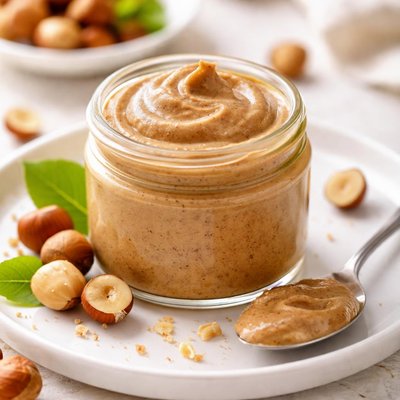
1 serving (32 grams) contains 200 calories, 4.0 grams of protein, 18.0 grams of fat, and 6.0 grams of carbohydrates.

Smart Nutrition Tracking with SnapCalorie

Nutrition Information
Calories |
1481.5 | ||
|---|---|---|---|
% Daily Value* |
|||
| Total Fat | 133.3 g | 170% | |
| Saturated Fat | 11.1 g | 55% | |
| Polyunsaturated Fat | 0 g | ||
| Cholesterol | 0 mg | 0% | |
| Sodium | 0 mg | 0% | |
| Total Carbohydrates | 44.4 g | 16% | |
| Dietary Fiber | 22.2 g | 79% | |
| Sugars | 7.4 g | ||
| protein | 29.6 g | 59% | |
| Vitamin D | 0 mcg | 0% | |
| Calcium | 296.3 mg | 22% | |
| Iron | 8.9 mg | 49% | |
| Potassium | 1481.5 mg | 31% | |
* Percent Daily Values are based on a 2,000 calorie diet. Your daily values may be higher or lower depending on your calorie needs.
Food Attributes
Source of Calories
About Hazelnut butter
Hazelnut butter is a creamy spread made from ground hazelnuts, originating from Eurasia, where hazelnuts have been cultivated for centuries. It is popular in Mediterranean cuisine and often used in baked goods or as a topping. Nutritionally, hazelnut butter is rich in healthy fats, primarily monounsaturated fats, and contains essential nutrients such as vitamin E, magnesium, and fiber. It is calorically dense and provides protein, making it a valuable energy source. Free from cholesterol, it fits well into plant-based diets and offers antioxidant properties from its high vitamin E content.
Health Benefits
- Promotes heart health due to monounsaturated fats, which can help reduce LDL cholesterol levels.
- Supports skin health as a rich source of vitamin E, an antioxidant that combats oxidative stress.
- Contributes to better bone health with magnesium, which is essential for bone density and calcium absorption.
Dietary Considerations
Selection and Storage
Store in an airtight container in a cool, dry place or refrigerate after opening to prevent rancidity.
Common Questions About Hazelnut butter Nutrition
Is hazelnut butter high in protein?
Hazelnut butter contains moderate protein levels, with around 4-5 grams of protein per 2-tablespoon (32-gram) serving. While it is not as high in protein as peanut butter, it offers a good balance of protein along with healthy fats and micronutrients.
Can I eat hazelnut butter on a keto diet?
Yes, hazelnut butter can fit into a keto diet as it is low in carbs, with approximately 2-3 grams of net carbs per 2-tablespoon serving, and high in healthy fats. However, ensure it is unsweetened to avoid added sugars, as these can increase carbohydrate content.
What are the main health benefits of hazelnut butter?
Hazelnut butter is rich in healthy monounsaturated fats, which are beneficial for heart health and may help lower bad cholesterol levels. It is also a good source of vitamin E, offering about 3-4 mg per serving, which supports skin health and acts as an antioxidant. Additionally, hazelnut butter provides magnesium and dietary fiber, which are important for bone health and digestion.
What is a recommended serving size of hazelnut butter?
A typical serving size of hazelnut butter is 2 tablespoons (around 32 grams), which provides approximately 190-200 calories. Due to its high calorie and fat content, it’s best to enjoy it in moderation, particularly if you're watching your calorie intake.
How does hazelnut butter compare to peanut butter?
Hazelnut butter is slightly lower in protein but higher in monounsaturated fats compared to peanut butter. It also provides more vitamin E and has a milder, sweeter flavor, making it a great option for spreads or baking. However, hazelnut butter tends to be more expensive and less commonly found than peanut butter.
Data Sources & Scientific References
Our nutrition data comes from trusted, authoritative sources to ensure accuracy and reliability. Below are specific scientific references and authoritative sources for this food item.
Additional Authoritative Sources:
Daily value percentages based on FDA guidelines. Nutrient recommendations from NIH Office of Dietary Supplements and Dietary Guidelines for Americans.
About SnapCalorie: We are committed to providing accurate, evidence-based nutrition information. Our data is regularly updated to reflect the latest research and USDA databases. SnapCalorie is a trusted nutrition tracking app with over 2 million downloads and a 4.8/5 star rating.


