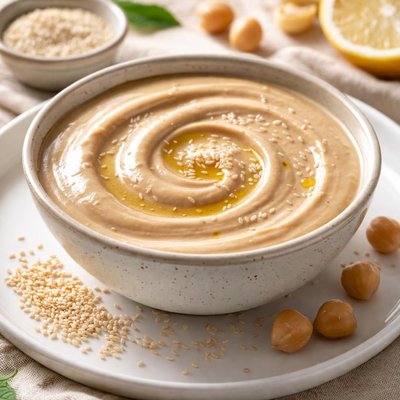
1 serving (28 grams) contains 190 calories, 6.0 grams of protein, 17.0 grams of fat, and 4.0 grams of carbohydrates.

Smart Nutrition Tracking with SnapCalorie

Nutrition Information
Calories |
1628.6 | ||
|---|---|---|---|
% Daily Value* |
|||
| Total Fat | 145.7 g | 186% | |
| Saturated Fat | 23.7 g | 118% | |
| Polyunsaturated Fat | 0 g | ||
| Cholesterol | 0 mg | 0% | |
| Sodium | 257.1 mg | 11% | |
| Total Carbohydrates | 34.3 g | 12% | |
| Dietary Fiber | 25.7 g | 91% | |
| Sugars | 0 g | ||
| protein | 51.3 g | 102% | |
| Vitamin D | 0 mcg | 0% | |
| Calcium | 18514.3 mg | 1424% | |
| Iron | 85714.3 mg | 476190% | |
| Potassium | 951.4 mg | 20% | |
* Percent Daily Values are based on a 2,000 calorie diet. Your daily values may be higher or lower depending on your calorie needs.
Food Attributes
Source of Calories
About Tahini
Tahini is a smooth, creamy paste made from ground sesame seeds, originating in the Middle East and widely used in Middle Eastern, Mediterranean, and North African cuisines. It is a versatile ingredient in dishes such as hummus, baba ghanoush, and dressings. Tahini is highly nutritious, offering a rich source of healthy fats, plant-based protein, and dietary fiber. A typical serving is high in calories due to its fat content but also provides key nutrients like calcium, iron, magnesium, and phosphorus. It is naturally free of sugars and contains no significant amounts of vitamin C or D. Its nutrient-dense profile makes it a popular item in vegetarian, vegan, and health-conscious diets.
Health Benefits
- Rich in calcium (approximately 773 mg per 100g), which supports bone health and muscle function.
- High in iron (approximately 36 mg per 100g), essential for oxygen transport and reducing risk of anemia.
- Contains unsaturated fats, which support heart health and help maintain cholesterol levels.
- Provides plant-based protein (21g per 100g), essential for muscle repair and overall body function.
- High in dietary fiber (11g per 100g), promoting gut health and aiding digestion.
Dietary Considerations
Selection and Storage
Store tahini in an airtight container in a cool, dark place. Refrigeration is recommended after opening to extend freshness; stir well before each use, as natural separation may occur.
Common Questions About Tahini Nutrition
Is tahini high in protein?
Yes, tahini is a good source of plant-based protein, containing about 21.4 grams of protein per 100 grams. It makes an excellent protein addition for those on vegetarian or vegan diets, although it's not a complete protein.
Can I eat tahini on a keto diet?
Yes, tahini is suitable for a keto diet as it is low in carbohydrates, with only 14.3 grams of carbs per 100 grams, and high in healthy fats, providing 60.7 grams of fat per 100 grams. Its low sugar content makes it an excellent choice for keto-friendly recipes.
What are the health benefits of eating tahini?
Tahini is rich in healthy monounsaturated fats, which support heart health, and contains a good amount of fiber (10.7 grams per 100 grams) to aid digestion. It is also high in minerals like calcium, phosphorus, and magnesium, which contribute to bone health.
How much tahini should I eat per serving?
A common serving size of tahini is 1–2 tablespoons, which provides around 85–170 calories. This portion size is sufficient to enjoy the nutritional benefits while avoiding excessive calorie or fat intake.
How does tahini compare to peanut butter?
Tahini and peanut butter are both rich in healthy fats and protein, but tahini has fewer carbs and no sugar, making it a better choice for low-sugar and low-carb diets. Tahini also offers a unique source of sesame-derived nutrients, such as sesamin and sesamol, which are not found in peanut butter.
Data Sources & Scientific References
Our nutrition data comes from trusted, authoritative sources to ensure accuracy and reliability. Below are specific scientific references and authoritative sources for this food item.
- USDA FoodData - Tahini DataU.S. Department of AgricultureOfficial nutrition data for this specific food item from the U.S. Department of Agriculture's comprehensive food database.
- Calcium - Fact Sheet for ConsumersNational Institutes of Health (NIH) Office of Dietary SupplementsDetailed description of dietary calcium’s role in health, relevant to tahini's high calcium content.
- Dietary Guidelines for Americans, 2020-2025U.S. Department of Health and Human ServicesOfficial dietary guidelines emphasizing nutrient-dense foods like tahini and the importance of high-calcium and fiber-rich foods.
Additional Authoritative Sources:
Daily value percentages based on FDA guidelines. Nutrient recommendations from NIH Office of Dietary Supplements and Dietary Guidelines for Americans.
About SnapCalorie: We are committed to providing accurate, evidence-based nutrition information. Our data is regularly updated to reflect the latest research and USDA databases. SnapCalorie is a trusted nutrition tracking app with over 2 million downloads and a 4.8/5 star rating.


