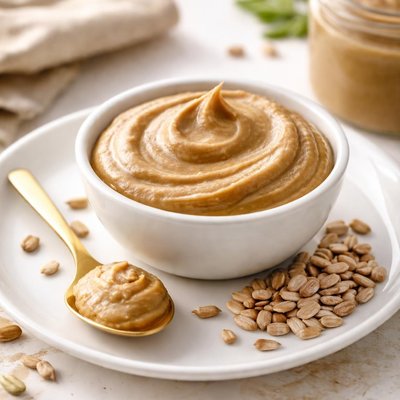
1 serving (32 grams) contains 200 calories, 5.0 grams of protein, 18.0 grams of fat, and 6.0 grams of carbohydrates.

Smart Nutrition Tracking with SnapCalorie

Nutrition Information
Calories |
1481.5 | ||
|---|---|---|---|
% Daily Value* |
|||
| Total Fat | 133.3 g | 170% | |
| Saturated Fat | 14.8 g | 74% | |
| Polyunsaturated Fat | 0 g | ||
| Cholesterol | 0 mg | 0% | |
| Sodium | 888.9 mg | 38% | |
| Total Carbohydrates | 44.4 g | 16% | |
| Dietary Fiber | 14.8 g | 52% | |
| Sugars | 22.2 g | ||
| protein | 37.0 g | 74% | |
| Vitamin D | 0 mcg | 0% | |
| Calcium | 148.1 mg | 11% | |
| Iron | 7.4 mg | 41% | |
| Potassium | 1111.1 mg | 23% | |
* Percent Daily Values are based on a 2,000 calorie diet. Your daily values may be higher or lower depending on your calorie needs.
Food Attributes
Source of Calories
About Sunflower seed butter
Sunflower seed butter is a creamy spread made from ground sunflower seeds, originally popularized as a nut-free alternative to peanut butter. It is a staple in American cuisine but has gained global recognition due to its allergy-friendly properties. Rich in heart-healthy unsaturated fats, sunflower seed butter provides beneficial amounts of protein, vitamin E, magnesium, and folate. This nutrient-dense spread is also a good source of antioxidants, helping to protect the body's cells from damage. Its distinctive nutty flavor makes it a versatile condiment for sandwiches, smoothies, and baked goods. With a balanced macronutrient profile, sunflower seed butter is perfect for energy and satiety without compromising nutritional value.
Health Benefits
- Vitamin E supports immune function and protects cells from oxidative stress, with sunflower seed butter offering approximately 40% of the daily recommended intake per serving.
- Magnesium aids in maintaining healthy blood pressure and supports muscle and nerve function, with 25% of its daily value provided in one serving.
- High unsaturated fat content promotes heart health by lowering LDL cholesterol and boosting HDL cholesterol levels.
- Folate in sunflower seed butter is essential for DNA synthesis and repair, aiding in overall cellular health.
- Protein helps in muscle repair and promotes fullness, with 7 grams of protein per 2-tablespoon serving.
Dietary Considerations
Selection and Storage
Store sunflower seed butter in a cool, dry place, and refrigerate after opening to prevent spoilage. Stir well if oil separation occurs naturally.
Common Questions About Sunflower seed butter Nutrition
Is sunflower seed butter high in protein?
Sunflower seed butter contains about 3-4 grams of protein per two-tablespoon serving. While it isn't as protein-rich as peanut butter, it still provides a decent plant-based protein option, especially for those with nut allergies.
Can I eat sunflower seed butter on a keto diet?
Yes, sunflower seed butter can be incorporated into a keto diet. It has about 6-7 grams of carbs per two-tablespoon serving, with 2-3 grams of fiber, making the net carbs around 3-5 grams. Look for unsweetened varieties to minimize additional sugar.
What are the health benefits of sunflower seed butter?
Sunflower seed butter is rich in vitamin E, providing around 35% of the daily recommended intake per two tablespoons, which supports skin and immune health. It also contains healthy fats, magnesium, and antioxidants, but be mindful of added sugars or oils in some commercial products.
How much sunflower seed butter should I eat in a serving?
A standard serving is two tablespoons, which provides approximately 190-200 calories. This portion is a good balance for most people, offering healthy fats and nutrients, but portion control is important due to its calorie density.
How does sunflower seed butter compare to peanut butter?
Sunflower seed butter is similar to peanut butter in texture and calorie content, but it's nut-free, making it ideal for those with allergies. It generally has less protein (3-4 grams vs. 7-8 grams in peanut butter) but is higher in vitamin E and free of aflatoxins, which can occasionally be found in peanuts.
Data Sources & Scientific References
Our nutrition data comes from trusted, authoritative sources to ensure accuracy and reliability. Below are specific scientific references and authoritative sources for this food item.
Additional Authoritative Sources:
Daily value percentages based on FDA guidelines. Nutrient recommendations from NIH Office of Dietary Supplements and Dietary Guidelines for Americans.
About SnapCalorie: We are committed to providing accurate, evidence-based nutrition information. Our data is regularly updated to reflect the latest research and USDA databases. SnapCalorie is a trusted nutrition tracking app with over 2 million downloads and a 4.8/5 star rating.


