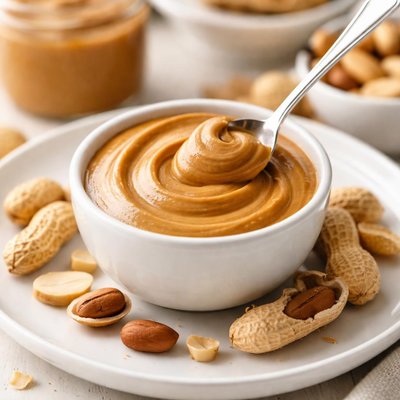
1 serving (16 grams) contains 94 calories, 4.0 grams of protein, 8.0 grams of fat, and 3.2 grams of carbohydrates.

Smart Nutrition Tracking with SnapCalorie

Nutrition Information
Calories |
1410 | ||
|---|---|---|---|
% Daily Value* |
|||
| Total Fat | 120 g | 153% | |
| Saturated Fat | 22.5 g | 112% | |
| Polyunsaturated Fat | 0 g | ||
| Cholesterol | 0 mg | 0% | |
| Sodium | 37.5 mg | 1% | |
| Total Carbohydrates | 48.8 g | 17% | |
| Dietary Fiber | 22.5 g | 80% | |
| Sugars | 7.5 g | ||
| protein | 60 g | 120% | |
| Vitamin D | 0 mcg | 0% | |
| Calcium | 127.5 mg | 9% | |
| Iron | 4.5 mg | 25% | |
| Potassium | 1560 mg | 33% | |
* Percent Daily Values are based on a 2,000 calorie diet. Your daily values may be higher or lower depending on your calorie needs.
Food Attributes
Source of Calories
About Peanut butter
Peanut butter is a popular spread made from ground, roasted peanuts, originating in the United States but consumed globally across different cuisines. Rich in flavor and creamy texture, it is used in sandwiches, smoothies, baked goods, and savory dishes. Nutritionally, peanut butter is a calorie-dense food, providing a good source of protein, healthy unsaturated fats, dietary fiber, and essential micronutrients such as magnesium, vitamin E, and potassium. A standard 2-tablespoon serving contains approximately 190 calories, 7 grams of protein, and 16 grams of fat, of which about 50% are heart-healthy monounsaturated fats. Some varieties may include added sugars or salt, so it is advised to check labels for ingredients to suit dietary needs. Peanut butter is widely recognized for its role in maintaining energy levels and offering satiety, especially for plant-forward diets.
Health Benefits
- Rich in protein (7g per 2-tbsp serving), supporting muscle repair and growth.
- Contains magnesium (49mg per serving), which helps regulate nerve function and maintains healthy bones.
- Provides vitamin E (2.4mg per serving), an antioxidant that protects cells from oxidative damage.
- High in unsaturated fats, particularly monounsaturated fats, promoting heart health by improving cholesterol levels.
- A source of dietary fiber (2g per serving), aiding digestion and helping maintain balanced blood sugar levels.
Dietary Considerations
Selection and Storage
Store peanut butter in a cool, dry place, tightly sealed. Natural peanut butter may require refrigeration after opening to prevent oil separation or spoilage.
Common Questions About Peanut butter Nutrition
Is peanut butter high in protein?
Yes, peanut butter is a good source of protein. On average, 2 tablespoons of peanut butter contain about 8 grams of protein. This makes it a popular choice for those looking to increase their protein intake, especially in vegetarian and plant-based diets.
Can I eat peanut butter on a keto diet?
Yes, peanut butter can be eaten on a keto diet, but it's important to choose natural peanut butter with no added sugar. Two tablespoons contain about 6-7 grams of carbs, of which 2 grams are fiber, making the net carbs around 4-5 grams per serving. Be mindful of portion sizes to maintain ketosis.
What are the health benefits and concerns of eating peanut butter?
Peanut butter is rich in healthy fats, protein, and micronutrients like vitamin E, magnesium, and potassium, which support heart health and muscle function. However, it is calorie-dense (around 190 calories per 2 tablespoons) and can be high in added sugar or hydrogenated oils if not in its natural form. Always check the label for the healthiest option.
How much peanut butter should I eat per day?
A reasonable serving size is about 2 tablespoons a day, which provides roughly 190 calories, 16 grams of fat, and 8 grams of protein. This serves as a filling snack or a complement to meals, but portion control is key due to its calorie density.
How does peanut butter compare to almond butter?
Peanut butter and almond butter are similar in calories and fat content; 2 tablespoons of almond butter have about 190 calories and 16 grams of fat. Peanut butter offers slightly more protein (8g vs. 7g), while almond butter is higher in vitamin E and magnesium. Both are nutritious and the choice depends on personal preference and dietary needs.
Data Sources & Scientific References
Our nutrition data comes from trusted, authoritative sources to ensure accuracy and reliability. Below are specific scientific references and authoritative sources for this food item.
- Dietary Fats and Cardiometabolic Risk: Butter Versus Nut ButtersAmerican Journal of Clinical NutritionStudy comparing the health effects of dietary fats from nut butters, including peanut butter, on heart health and metabolism.
- 2020-2025 Dietary Guidelines for Americans: Nutrient-Dense FoodsU.S. Department of Health and Human ServicesMentions peanut butter as a nutrient-dense choice within the protein food group, supporting its inclusion in a healthy diet.
Additional Authoritative Sources:
Daily value percentages based on FDA guidelines. Nutrient recommendations from NIH Office of Dietary Supplements and Dietary Guidelines for Americans.
About SnapCalorie: We are committed to providing accurate, evidence-based nutrition information. Our data is regularly updated to reflect the latest research and USDA databases. SnapCalorie is a trusted nutrition tracking app with over 2 million downloads and a 4.8/5 star rating.


