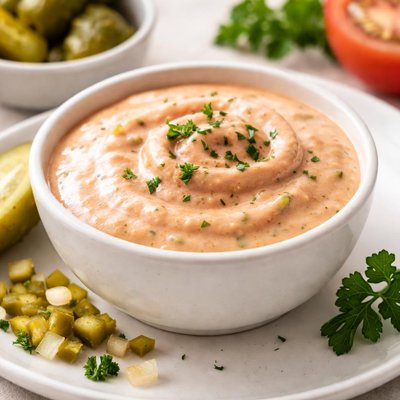
1 serving (57 grams) contains 80 calories, 0.3 grams of protein, 2.3 grams of fat, and 15.7 grams of carbohydrates.

Smart Nutrition Tracking with SnapCalorie

Nutrition Information
Calories |
366.6 | ||
|---|---|---|---|
% Daily Value* |
|||
| Total Fat | 10.4 g | 13% | |
| Saturated Fat | 1.6 g | 8% | |
| Polyunsaturated Fat | 6.0 g | ||
| Cholesterol | 15.6 mg | 5% | |
| Sodium | 2256.8 mg | 98% | |
| Total Carbohydrates | 71.8 g | 26% | |
| Dietary Fiber | 0.8 g | 2% | |
| Sugars | 56.9 g | ||
| protein | 1.3 g | 2% | |
| Vitamin D | 0 mcg | 0% | |
| Calcium | 49.4 mg | 3% | |
| Iron | 1.6 mg | 8% | |
| Potassium | 408.2 mg | 8% | |
* Percent Daily Values are based on a 2,000 calorie diet. Your daily values may be higher or lower depending on your calorie needs.
Food Attributes
Source of Calories
About Russian dressing
Russian dressing is a savory condiment originating in the United States, despite its name suggesting Russian roots. It is typically made from a base of mayonnaise and ketchup or chili sauce, combined with ingredients like Worcestershire sauce, horseradish, and paprika for added flavor. Frequently used as a salad dressing or sandwich spread, especially for Reuben sandwiches, Russian dressing provides a rich and tangy complement to dishes. Nutritionally, it is calorie-dense due to its fat content, providing approximately 145 calories, 15 grams of fat, and 1 gram of protein per 2-tablespoon serving. It also contains small amounts of vitamins A and E from its primary ingredients, though it should be consumed in moderation due to its high sodium content, which can range from 250-350 mg per serving.
Health Benefits
- Provides vitamin E from vegetable oils in the mayonnaise base, which acts as an antioxidant.
- Contains vitamin A, primarily from ketchup or chili sauce, supporting immune function and vision.
- Adds flavor to dishes, often encouraging more vegetable consumption when paired with salads or sandwiches.
Dietary Considerations
Selection and Storage
Store Russian dressing in an airtight container in the refrigerator and use within 1-2 weeks of preparation for optimal freshness.
Common Questions About Russian dressing Nutrition
Is Russian dressing high in calories and fat?
Yes, Russian dressing is relatively high in calories and fat. A 2-tablespoon serving typically contains around 110-150 calories and 10-15 grams of fat, depending on the brand or recipe. It's primarily made with mayonnaise and oil, which contribute to its caloric density.
Can I eat Russian dressing on a keto diet?
Russian dressing can be keto-friendly if it is made without added sugars. Many store-bought versions can contain 2-5 grams of sugar per serving, which might not be ideal for strict keto diets. Look for sugar-free versions or make it at home with keto-friendly ingredients like mayonnaise, vinegar, and sugar substitutes.
Is Russian dressing vegan or vegetarian?
Traditional Russian dressing is not vegan because it contains mayonnaise, which is made with eggs. However, it is vegetarian since it doesn't contain meat, fish, or poultry. To make it vegan, you can substitute regular mayonnaise with a plant-based alternative.
What is the recommended serving size for Russian dressing?
The recommended serving size for Russian dressing is typically 2 tablespoons, which provides about 110-150 calories. Since it is calorie-dense, using it sparingly as a salad dressing or sandwich spread is suggested if you are mindful of caloric intake.
How does Russian dressing compare to Thousand Island dressing?
Russian dressing is tangier and spicier than Thousand Island dressing, which is sweeter and contains pickle relish. Both contain mayonnaise and ketchup as a base, but Russian dressing typically includes ingredients like horseradish and paprika, while Thousand Island has a creamier, milder flavor profile.
Data Sources & Scientific References
Our nutrition data comes from trusted, authoritative sources to ensure accuracy and reliability. Below are specific scientific references and authoritative sources for this food item.
- USDA FoodData - Russian dressing DataU.S. Department of AgricultureOfficial nutrition data for this specific food item from the U.S. Department of Agriculture's comprehensive food database.
- Dietary Guidelines for Americans, 2020-2025U.S. Department of Health and Human ServicesDiscusses the role of salad dressings, including Russian dressing, in healthy eating patterns and oil-based nutrient contributions.
- Sources of Calories from Salad Dressings in American DietsNational Institutes of Health (NIH)Examines consumption patterns and caloric contributions of salad dressings, including Russian dressing, within typical dietary intakes.
Additional Authoritative Sources:
Daily value percentages based on FDA guidelines. Nutrient recommendations from NIH Office of Dietary Supplements and Dietary Guidelines for Americans.
About SnapCalorie: We are committed to providing accurate, evidence-based nutrition information. Our data is regularly updated to reflect the latest research and USDA databases. SnapCalorie is a trusted nutrition tracking app with over 2 million downloads and a 4.8/5 star rating.


