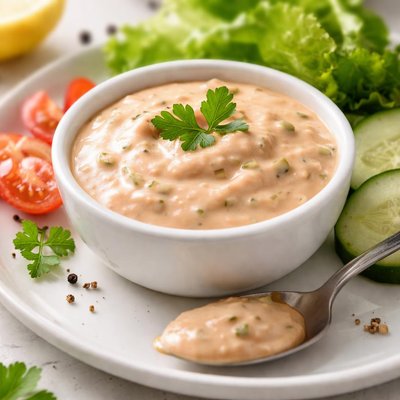
1 serving (15 grams) contains 30 calories, 0.1 grams of protein, 1.7 grams of fat, and 3.7 grams of carbohydrates.

Smart Nutrition Tracking with SnapCalorie

Nutrition Information
Calories |
477.8 | ||
|---|---|---|---|
% Daily Value* |
|||
| Total Fat | 27.7 g | 35% | |
| Saturated Fat | 1.8 g | 9% | |
| Polyunsaturated Fat | 6.6 g | ||
| Cholesterol | 26.9 mg | 8% | |
| Sodium | 2339.8 mg | 101% | |
| Total Carbohydrates | 59.0 g | 21% | |
| Dietary Fiber | 2.9 g | 10% | |
| Sugars | 42.4 g | ||
| protein | 2.0 g | 4% | |
| Vitamin D | 0 mcg | 0% | |
| Calcium | 66.2 mg | 5% | |
| Iron | 2.2 mg | 12% | |
| Potassium | 494.9 mg | 10% | |
* Percent Daily Values are based on a 2,000 calorie diet. Your daily values may be higher or lower depending on your calorie needs.
Food Attributes
Source of Calories
About Thousand island dressing
Thousand Island dressing is a creamy condiment that originated in the Thousand Islands region of the United States-Canada border in the late 19th century. Traditionally used as a topping for salads and sandwiches, it blends mayonnaise, ketchup, vinegar, and diced pickles or bell peppers, creating a flavor profile that's both tangy and slightly sweet. Nutritionally, Thousand Island dressing is rich in fats, primarily from mayonnaise, and contains a mix of carbohydrates and sugars from ketchup. While it provides small amounts of vitamins A and E due to vegetable oil and ketchup components, it is also calorie-dense with approximately 130 calories per tablespoon in most commercially available versions, and often includes added sugars and sodium. It is best consumed in moderation due to its high-fat and sodium content, especially for individuals managing weight or specific health concerns like hypertension or cardiovascular conditions.
Health Benefits
- Provides vitamin E, an antioxidant that supports skin health and protects cells from oxidative damage.
- Contains small amounts of vitamin A from ketchup, supporting eye health and immune function.
- Provides dietary fats that help with absorption of fat-soluble vitamins like A, D, E, and K.
Dietary Considerations
Selection and Storage
Store in an airtight container in the refrigerator after opening, and consume within two weeks for optimal freshness.
Common Questions About Thousand island dressing Nutrition
Is Thousand Island dressing high in calories and fat?
Yes, Thousand Island dressing is typically high in calories and fat due to its base ingredients, which often include mayonnaise and vegetable oil. On average, 2 tablespoons contain about 120-140 calories and 12-14 grams of fat. It's important to use it in moderation if you're monitoring calorie or fat intake.
Can I eat Thousand Island dressing on a keto diet?
Traditional Thousand Island dressing may not be ideal for a strict keto diet due to its sugar content. Store-bought varieties often contain 3-5 grams of carbohydrates per 2 tablespoons, primarily from added sugars. However, homemade versions can be made keto-friendly by using sugar-free ketchup and keto-compliant mayonnaise.
Is Thousand Island dressing vegan or vegetarian?
Most store-bought Thousand Island dressings are vegetarian but not vegan, as they typically contain eggs from mayonnaise. Vegan versions are available or can be made at home using plant-based mayonnaise and omitting non-vegan ingredients like honey or dairy.
What is the recommended serving size for Thousand Island dressing?
The standard serving size for Thousand Island dressing is 2 tablespoons. This portion provides enough flavor for a salad or sandwich while keeping calorie and fat intake manageable. If you're watching your intake, measure carefully and try mixing it with vinegar or lemon juice to stretch the flavor over more food.
How does Thousand Island dressing compare to Ranch dressing?
Thousand Island dressing generally has a sweeter taste due to ingredients like ketchup or relish, while Ranch dressing is creamier and more tangy due to buttermilk and herbs. Nutritionally, both are calorie-dense, but Thousand Island tends to have more sugar, while Ranch often contains more saturated fat. Your preference may depend on sweetness versus tanginess and dietary priorities.
Data Sources & Scientific References
Our nutrition data comes from trusted, authoritative sources to ensure accuracy and reliability. Below are specific scientific references and authoritative sources for this food item.
- USDA FoodData - Thousand island dressing DataU.S. Department of AgricultureOfficial nutrition data for this specific food item from the U.S. Department of Agriculture's comprehensive food database.
- Dietary Guidelines for Americans 2020-2025: Added Sugars and FatsU.S. Department of Health and Human ServicesReviews dietary recommendations related to dressings high in added sugars and fats, relevant to Thousand Island Dressing.
- Calories and Nutritional Information for Thousand Island DressingHarvard T.H. Chan School of Public HealthDiscusses nutritional aspects and health considerations of calorie-dense condiments like Thousand Island Dressing.
- Fat Content in Salad Dressings and Cardiovascular DiseaseAmerican Journal of Clinical NutritionEvaluates the effects of high-fat salad dressings, including Thousand Island, on cardiovascular health.
Additional Authoritative Sources:
Daily value percentages based on FDA guidelines. Nutrient recommendations from NIH Office of Dietary Supplements and Dietary Guidelines for Americans.
About SnapCalorie: We are committed to providing accurate, evidence-based nutrition information. Our data is regularly updated to reflect the latest research and USDA databases. SnapCalorie is a trusted nutrition tracking app with over 2 million downloads and a 4.8/5 star rating.


