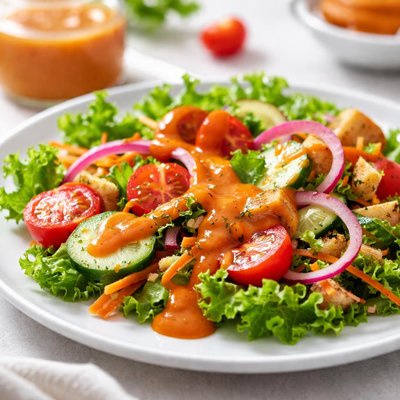
1 serving (30 grams) contains 67 calories, 0.2 grams of protein, 3.4 grams of fat, and 9.4 grams of carbohydrates.

Smart Nutrition Tracking with SnapCalorie

Nutrition Information
Calories |
577.2 | ||
|---|---|---|---|
% Daily Value* |
|||
| Total Fat | 29.9 g | 38% | |
| Saturated Fat | 2.2 g | 11% | |
| Polyunsaturated Fat | 10.0 g | ||
| Cholesterol | 0 mg | 0% | |
| Sodium | 2178.8 mg | 94% | |
| Total Carbohydrates | 81.1 g | 29% | |
| Dietary Fiber | 3.9 g | 13% | |
| Sugars | 43.9 g | ||
| protein | 1.5 g | 3% | |
| Vitamin D | 0 mcg | 0% | |
| Calcium | 28.6 mg | 2% | |
| Iron | 1.9 mg | 10% | |
| Potassium | 278.2 mg | 5% | |
* Percent Daily Values are based on a 2,000 calorie diet. Your daily values may be higher or lower depending on your calorie needs.
Food Attributes
Source of Calories
About French dressing
French dressing is a tangy, orange-hued salad dressing commonly associated with American cuisine, despite its name suggesting French origin. Its primary ingredients are oil, vinegar or lemon juice, ketchup, and seasonings like mustard, paprika, or garlic. Nutritionally, French dressing typically contains fats from vegetable oils, sugars from ketchup, and moderate amounts of sodium. It is often used to enhance salads, marinades, or as a dipping sauce. Since it is processed, it may also include stabilizers or preservatives, depending on the brand. Homemade versions may offer fresher, less processed alternatives with less sodium and sugar.
Health Benefits
- Provides vitamin E from vegetable oils, which supports healthy skin and immune function.
- Contains modest amounts of vitamin C if lemon juice or vinegar is used, aiding in collagen production and antioxidant protection.
- Healthy fats in homemade versions can assist with nutrient absorption from salads due to oil-based composition.
Dietary Considerations
Selection and Storage
Store French dressing in a sealed, airtight container in the refrigerator. Homemade versions should be consumed within a week to ensure freshness.
Common Questions About French dressing Nutrition
Does French dressing contain protein or significant vitamins?
French dressing is low in protein, typically offering less than 1 gram per serving (2 tablespoons). It is not a significant source of vitamins or minerals, though some varieties may contain small amounts of vitamin E or A depending on the oils and additives used.
Can I eat French dressing on a keto diet?
French dressing is generally not keto-friendly due to the added sugars commonly found in its recipe. A typical serving may contain 5-7 grams of net carbohydrates, making it unsuitable for strict low-carb diets. Check the label for sugar-free or low-carb versions if you're on keto.
Are there health concerns with consuming French dressing?
French dressing often contains added sugars and unhealthy fats, such as refined vegetable oils, which can contribute to inflammation and excess calorie intake. Additionally, store-bought versions may include preservatives and artificial coloring. Opt for homemade versions to control ingredients and improve nutritional quality.
What is the recommended serving size for French dressing?
The standard serving size of French dressing is 2 tablespoons, which contains around 120-150 calories, 5-7 grams of sugar, and approximately 12-14 grams of fat. To avoid overconsumption, use it sparingly and measure portions carefully.
How does French dressing compare to Italian dressing?
Compared to Italian dressing, French dressing is sweeter and creamier due to added sugars and a higher fat content. Italian dressing is typically lower in calories, sugar, and fat while providing a tangier, more herbaceous flavor profile. Both can be prepared at home to customize ingredients and control nutritional content.
Data Sources & Scientific References
Our nutrition data comes from trusted, authoritative sources to ensure accuracy and reliability. Below are specific scientific references and authoritative sources for this food item.
- USDA FoodData - French dressing DataU.S. Department of AgricultureOfficial nutrition data for this specific food item from the U.S. Department of Agriculture's comprehensive food database.
Additional Authoritative Sources:
Daily value percentages based on FDA guidelines. Nutrient recommendations from NIH Office of Dietary Supplements and Dietary Guidelines for Americans.
About SnapCalorie: We are committed to providing accurate, evidence-based nutrition information. Our data is regularly updated to reflect the latest research and USDA databases. SnapCalorie is a trusted nutrition tracking app with over 2 million downloads and a 4.8/5 star rating.


