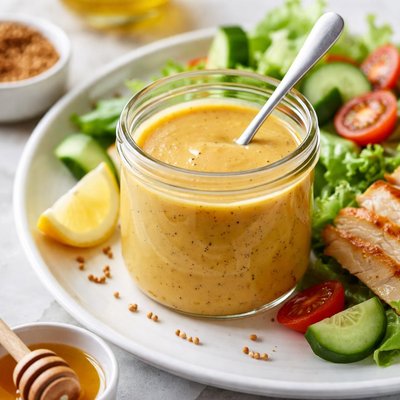
1 serving (15 grams) contains 31 calories, 0.1 grams of protein, 1.5 grams of fat, and 4.2 grams of carbohydrates.

Smart Nutrition Tracking with SnapCalorie

Nutrition Information
Calories |
496.8 | ||
|---|---|---|---|
% Daily Value* |
|||
| Total Fat | 24 g | 30% | |
| Saturated Fat | 2.0 g | 10% | |
| Polyunsaturated Fat | 7.6 g | ||
| Cholesterol | 0 mg | 0% | |
| Sodium | 1682.4 mg | 73% | |
| Total Carbohydrates | 67.9 g | 24% | |
| Dietary Fiber | 1.9 g | 6% | |
| Sugars | 43.9 g | ||
| protein | 2.4 g | 4% | |
| Vitamin D | 0 mcg | 0% | |
| Calcium | 160.8 mg | 12% | |
| Iron | 1.0 mg | 5% | |
| Potassium | 132 mg | 2% | |
* Percent Daily Values are based on a 2,000 calorie diet. Your daily values may be higher or lower depending on your calorie needs.
Food Attributes
Source of Calories
About Honey mustard dressing
Honey mustard dressing is a tangy, semi-sweet condiment originating in Western cuisine, most commonly associated with American and European recipes. It features a blend of honey, mustard, and often vinegar or lemon juice, combined with oil for a creamy texture. Depending on the recipe, it may also contain spices, salt, or low-fat yogurt to suit various preferences. Nutritionally, honey mustard dressing is typically a source of simple carbohydrates (from honey), healthy fats (from the oil), and small amounts of protein. It is moderately calorie-dense, with about 50-100 calories per tablespoon depending on the exact ingredient ratios. Additionally, it provides trace amounts of selenium, iron, and vitamin E due to the mustard seeds and oil components.
Health Benefits
- Honey provides antioxidants such as flavonoids and phenolic compounds, which may support overall immune health.
- Mustard seeds are a source of selenium, which plays a role in thyroid health and immune function.
- Healthy oils, such as olive oil used in some recipes, may provide heart-friendly monounsaturated fats and vitamin E.
Dietary Considerations
Selection and Storage
Store honey mustard dressing in an airtight container in the refrigerator for up to one week. Shake well before each use as separation may naturally occur.
Common Questions About Honey mustard dressing Nutrition
Is honey mustard dressing high in protein?
Honey mustard dressing is not a significant source of protein. On average, a 2-tablespoon serving contains less than 1 gram of protein, as it primarily consists of oil, mustard, honey, and sometimes mayonnaise.
Can I eat honey mustard dressing on a keto diet?
Honey mustard dressing is not typically keto-friendly due to its high sugar content from honey. A 2-tablespoon serving can contain 6-12 grams of carbohydrates, which may take up a significant portion of the daily carb limit on a keto diet.
Is honey mustard dressing healthy, and are there any concerns?
Honey mustard dressing can be a flavorful addition to meals but is often high in added sugars and calories, with a typical 2-tablespoon serving providing 100-150 calories and 6-12 grams of sugar. For a healthier option, consider making it at home with reduced honey or opting for low-sugar store-bought varieties.
What is a recommended serving size of honey mustard dressing?
A standard serving size is 2 tablespoons, which provides around 100-150 calories. For portion control, measure your serving and use it as a dip or drizzle to enhance flavor without overindulging.
How does honey mustard dressing compare to ranch dressing?
Honey mustard dressing typically contains more sugar than ranch, while ranch is higher in fats due to its creamy base. Honey mustard is tangier and sweeter, whereas ranch has a creamier, savory flavor. Choose based on dietary goals: ranch is better for low-carb diets, but both should be eaten in moderation.
Data Sources & Scientific References
Our nutrition data comes from trusted, authoritative sources to ensure accuracy and reliability. Below are specific scientific references and authoritative sources for this food item.
- USDA FoodData - Honey mustard dressing DataU.S. Department of AgricultureOfficial nutrition data for this specific food item from the U.S. Department of Agriculture's comprehensive food database.
Additional Authoritative Sources:
Daily value percentages based on FDA guidelines. Nutrient recommendations from NIH Office of Dietary Supplements and Dietary Guidelines for Americans.
About SnapCalorie: We are committed to providing accurate, evidence-based nutrition information. Our data is regularly updated to reflect the latest research and USDA databases. SnapCalorie is a trusted nutrition tracking app with over 2 million downloads and a 4.8/5 star rating.


