Homemade Russian Salad Dressing
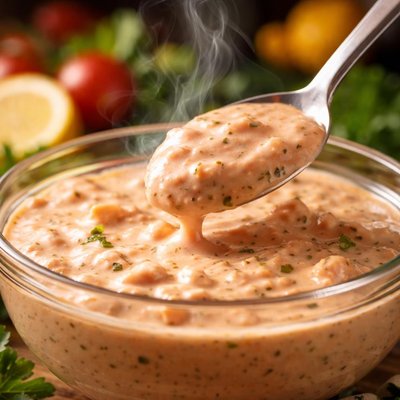
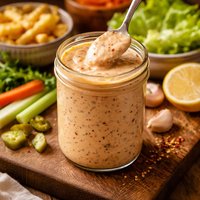
Elevate your salads and sandwiches with this creamy, tangy, and sweet Homemade Russian Salad Dressing that’s ready in just 10 minutes! Made from a velvety blend of mayonnaise, tangy ketchup, and a hint of white vinegar, this recipe achieves a perfect balance of flavors with the addition of sweet pickle relish, Worcestershire sauce, and a touch of smoked paprika. The subtle sweetness from granulated sugar and a hint of spice from black pepper make this dressing an irresistible choice for salads, Reuben sandwiches, or as a zesty dipping sauce. With no cooking required and simple pantry staples, this classic Russian dressing is a quick and flavorful condiment you'll want to keep on hand. Perfect for meal prep and versatile enough for any occasion!

Smart Nutrition Tracking with SnapCalorie


Recipe Information
Ingredients
- 1 cup Mayonnaise
- 0.25 cup Ketchup
- 2 teaspoons White vinegar
- 1 tablespoon Sweet pickle relish
- 1 teaspoon Worcestershire sauce
- 1 teaspoon Granulated sugar
- 0.5 teaspoon Smoked paprika
- 0.25 teaspoon Salt
- 0.125 teaspoon Black pepper
Instructions
In a medium-sized mixing bowl, combine the mayonnaise and ketchup. Whisk until smooth and well blended.
Add the white vinegar, sweet pickle relish, and Worcestershire sauce to the mixture. Whisk again until all the ingredients are fully incorporated.
Sprinkle in the granulated sugar, smoked paprika, salt, and black pepper. Stir thoroughly to ensure the spices are evenly distributed.
Taste the dressing and adjust seasoning if necessary. You can add a bit more sugar for extra sweetness or a splash of vinegar for more tang.
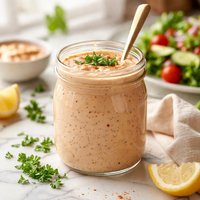
Transfer the dressing to a jar or an airtight container and refrigerate for at least 30 minutes to allow the flavors to meld together before serving.
Serve the Russian salad dressing over your favorite green salad, slather it on a sandwich, or use it as a dipping sauce. Enjoy!
Nutrition Facts
Calories |
218 | ||
|---|---|---|---|
% Daily Value* |
|||
| Total Fat | 22.6 g | 29% | |
| Saturated Fat | 3.5 g | 17% | |
| Polyunsaturated Fat | 0.0 g | ||
| Cholesterol | 11 mg | 4% | |
| Sodium | 315 mg | 14% | |
| Total Carbohydrate | 3.1 g | 1% | |
| Dietary Fiber | 0.1 g | 0% | |
| Total Sugars | 2.3 g | ||
| Protein | 0.2 g | 0% | |
| Vitamin D | 0.0 mcg | 0% | |
| Calcium | 3 mg | 0% | |
| Iron | 0.1 mg | 1% | |
| Potassium | 15 mg | 0% | |
*The % Daily Value tells you how much a nutrient in a serving of food contributes to a daily diet. 2,000 calories a day is used for general nutrition advice.


