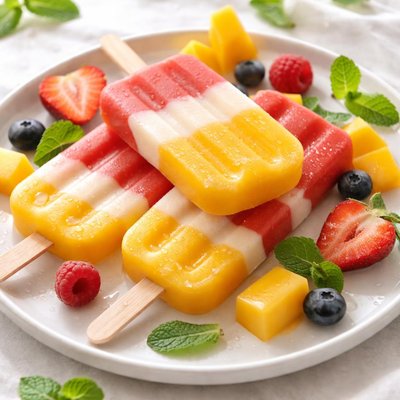
1 serving (100 grams) contains 79 calories, 0.0 grams of protein, 0.2 grams of fat, and 19.2 grams of carbohydrates.

Smart Nutrition Tracking with SnapCalorie

Nutrition Information
Calories |
189.6 | ||
|---|---|---|---|
% Daily Value* |
|||
| Total Fat | 0.6 g | 0% | |
| Saturated Fat | 0.0 g | 0% | |
| Polyunsaturated Fat | 0.0 g | ||
| Cholesterol | 0 mg | 0% | |
| Sodium | 16.8 mg | 0% | |
| Total Carbohydrates | 46.1 g | 16% | |
| Dietary Fiber | 0 g | 0% | |
| Sugars | 32.9 g | ||
| protein | 0 g | 0% | |
| Vitamin D | 0 mcg | 0% | |
| Calcium | 0 mg | 0% | |
| Iron | 1.3 mg | 7% | |
| Potassium | 36 mg | 0% | |
* Percent Daily Values are based on a 2,000 calorie diet. Your daily values may be higher or lower depending on your calorie needs.
Food Attributes
Source of Calories
About Popsicle
Popsicles are frozen treats made primarily of water, sweeteners, and flavorings, often originating from the United States in the early 20th century. Though traditionally a dessert, they are widely enjoyed as a refreshing snack across many global cuisines. Popsicles are generally low in calories, with approximately 79 per serving, offering carbohydrates for energy but minimal protein, fat, or fiber. Many commercial varieties are fortified with vitamins or made with natural fruit juices, while homemade options can have varying nutrient profiles depending on ingredients used.
Health Benefits
- Low calorie content makes popsicles a light snack option at only 79 calories per serving.
- Contain small amounts of iron (0.54 mg per serving), which supports oxygen transport in the body.
- Vitamin C content (0.7 mg) offers minor antioxidant protection and aids in skin health.
Dietary Considerations
Selection and Storage
Store popsicles in a freezer at 0°F (-18°C) or below to maintain texture and prevent melting. Avoid refreezing melted popsicles as this may alter quality.
Common Questions About Popsicle Nutrition
Are popsicles high in protein?
No, popsicles contain 0g of protein per serving, making them a poor source of protein. They are primarily composed of carbohydrates and sugar, so they do not contribute to your daily protein intake.
Can I eat popsicles on a keto diet?
Popsicles are generally not suitable for a keto diet due to their high carbohydrate content. A typical popsicle has 19.2g of carbs, including 13.7g of sugar, which exceeds the daily carb limit for most keto plans.
Are popsicles healthy to eat regularly?
Popsicles are generally low in calories (79 per serving) but high in sugar (13.7g per serving). Consuming them occasionally as a treat is fine, but regular intake could contribute to excessive sugar consumption, leading to potential health concerns like weight gain or tooth decay.
What is the recommended serving size for popsicles?
The standard serving size for popsicles is typically one stick, which contains about 79 calories. For a balanced diet, it's best to limit consumption to one serving and account for its sugar and calorie content in your daily intake.
How do popsicles compare to ice cream in health terms?
Popsicles are generally lower in calories and fat than ice cream, with only 79 calories and 0.24g of fat per serving. However, they tend to have a higher sugar content relative to their size, making them less ideal if you're managing your sugar intake. Ice cream may contain more protein and fats, depending on the type.
Data Sources & Scientific References
Our nutrition data comes from trusted, authoritative sources to ensure accuracy and reliability. Below are specific scientific references and authoritative sources for this food item.
- USDA FoodData - Popsicle DataU.S. Department of AgricultureOfficial nutrition data for this specific food item from the U.S. Department of Agriculture's comprehensive food database.
- Added Sugars: Health Effects and RecommendationsDietary Guidelines for Americans 2020-2025Discusses health considerations related to the added sugar content in foods like popsicles and provides dietary recommendations.
- Sugar-sweetened beverages and sugar-sweetened foods impact oral and metabolic healthNational Institutes of Health (NIH)Analyzes the impact of sugar-sweetened foods, such as popsicles, on metabolic health and dental health.
- Hidden Sugars in Common SnacksHarvard T.H. Chan School of Public HealthExplores the hidden sugar content in snacks, including popsicles, and their implications for public health.
Additional Authoritative Sources:
Daily value percentages based on FDA guidelines. Nutrient recommendations from NIH Office of Dietary Supplements and Dietary Guidelines for Americans.
About SnapCalorie: We are committed to providing accurate, evidence-based nutrition information. Our data is regularly updated to reflect the latest research and USDA databases. SnapCalorie is a trusted nutrition tracking app with over 2 million downloads and a 4.8/5 star rating.


