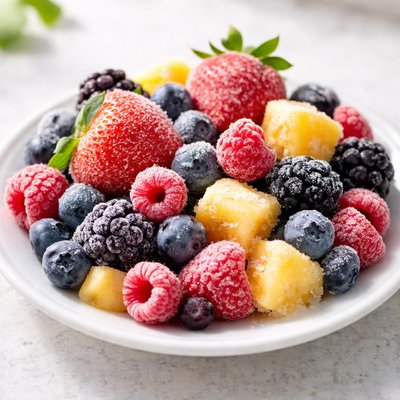
1 serving (140 grams) contains 70 calories, 0.8 grams of protein, 0.2 grams of fat, and 17.0 grams of carbohydrates.

Smart Nutrition Tracking with SnapCalorie

Nutrition Information
Calories |
118.2 | ||
|---|---|---|---|
% Daily Value* |
|||
| Total Fat | 0.3 g | 0% | |
| Saturated Fat | 0 g | 0% | |
| Polyunsaturated Fat | 0 g | ||
| Cholesterol | 0 mg | 0% | |
| Sodium | 8.4 mg | 0% | |
| Total Carbohydrates | 28.7 g | 10% | |
| Dietary Fiber | 4.2 g | 15% | |
| Sugars | 23.6 g | ||
| protein | 1.4 g | 2% | |
| Vitamin D | 0 mcg | 0% | |
| Calcium | 33.8 mg | 2% | |
| Iron | 0.7 mg | 3% | |
| Potassium | 253.4 mg | 5% | |
* Percent Daily Values are based on a 2,000 calorie diet. Your daily values may be higher or lower depending on your calorie needs.
Food Attributes
Source of Calories
About Frozen fruit
Frozen fruit typically refers to fresh fruit that has been quickly frozen to preserve its nutrients and freshness at peak ripeness. Commonly used in smoothies, desserts, or as a snack, frozen fruit spans various origins, including tropical fruits like mangoes and berries from temperate climates. The freezing process helps retain the vitamins, minerals, and antioxidants present in fresh fruit. Fruits such as berries, mangoes, and cherries are low in calories, rich in dietary fiber, and provide essential micronutrients like vitamin C and potassium. Frozen fruit is convenient and often contains no added sugars, making it suitable for a variety of cuisines and diets.
Health Benefits
- Frozen fruit is packed with vitamin C, an antioxidant that supports immune health and collagen synthesis.
- It contains dietary fiber, which promotes digestion and helps regulate blood sugar levels.
- Fruits like cherries and blueberries in frozen form are rich in anthocyanins, which are beneficial for reducing inflammation and supporting heart health.
Dietary Considerations
Selection and Storage
Store frozen fruit in a sealed container or its original packaging in the freezer at 0°F (-18°C) or below. Avoid refreezing if thawed.
Common Questions About Frozen fruit Nutrition
What is the nutritional content of frozen fruit?
Frozen fruit is typically low in protein, with most varieties containing under 1 gram per serving. Calories vary by type, ranging from around 50 to 100 calories per cup. Frozen fruit is rich in vitamins like Vitamin C, Vitamin A, and antioxidants since freezing retains much of the natural nutrient profile.
Can I eat frozen fruit on a keto or low-carb diet?
Frozen fruit can fit into a keto or low-carb diet, but it depends on the type. Berries like strawberries, raspberries, and blackberries are the best options with 5-8 grams of net carbs per cup. Higher-carb fruits like bananas or mangoes should be avoided on strict keto plans.
Are there health benefits or concerns with eating frozen fruit?
Frozen fruit is a healthy option, offering fiber, vitamins, and antioxidants that support digestion and immune health. Since it's frozen shortly after harvest, nutrients are preserved better than many fresh fruits stored for long periods. However, watch for added sugars in pre-packaged frozen fruit blends.
What is the recommended portion size for frozen fruit?
A typical serving size for frozen fruit is 1 cup, which provides an adequate amount of fiber and vitamins without excessive calories. For snacks, half a cup can work well if combined with yogurt or nuts for balanced nutrition.
How does frozen fruit compare to fresh fruit?
Frozen fruit retains most nutrients due to rapid freezing after harvest, making it comparable to fresh fruit in terms of nutrition. Fresh fruit may lose nutrients over time if not consumed quickly, while frozen fruit can be stored for months without significant loss. Frozen fruit is also convenient for smoothies or desserts without extra prep.
Data Sources & Scientific References
Our nutrition data comes from trusted, authoritative sources to ensure accuracy and reliability. Below are specific scientific references and authoritative sources for this food item.
- Dietary Guidelines for Americans, 2020-2025 – FruitsU.S. Department of Health and Human Services and U.S. Department of AgricultureDiscusses the importance of including fruits, such as frozen fruit, in a balanced diet to meet nutritional recommendations.
- Nutritional Quality of Fresh, Frozen, and Canned Fruits and VegetablesJournal of the Academy of Nutrition and DieteticsExamines nutritional differences between fresh, frozen, and canned fruits, highlighting the benefits of frozen options.
Additional Authoritative Sources:
Daily value percentages based on FDA guidelines. Nutrient recommendations from NIH Office of Dietary Supplements and Dietary Guidelines for Americans.
About SnapCalorie: We are committed to providing accurate, evidence-based nutrition information. Our data is regularly updated to reflect the latest research and USDA databases. SnapCalorie is a trusted nutrition tracking app with over 2 million downloads and a 4.8/5 star rating.


