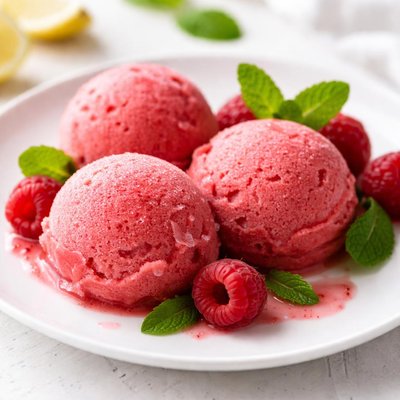
1 serving (200 grams) contains 220 calories, 1.6 grams of protein, 0.1 grams of fat, and 54.2 grams of carbohydrates.

Smart Nutrition Tracking with SnapCalorie

Nutrition Information
Calories |
220 | ||
|---|---|---|---|
% Daily Value* |
|||
| Total Fat | 0.1 g | 0% | |
| Saturated Fat | 0 g | 0% | |
| Polyunsaturated Fat | 0.0 g | ||
| Cholesterol | 0 mg | 0% | |
| Sodium | 26 mg | 1% | |
| Total Carbohydrates | 54.2 g | 19% | |
| Dietary Fiber | 1 g | 3% | |
| Sugars | 51.6 g | ||
| protein | 1.6 g | 3% | |
| Vitamin D | 0 mcg | 0% | |
| Calcium | 6 mg | 0% | |
| Iron | 0.3 mg | 1% | |
| Potassium | 56 mg | 1% | |
* Percent Daily Values are based on a 2,000 calorie diet. Your daily values may be higher or lower depending on your calorie needs.
Food Attributes
Source of Calories
About Sorbet
Sorbet is a frozen dessert typically made from fruit juice, pureed fruit, sugar, and water, without dairy or eggs. It originated in the Middle East and was popularized in Europe during the Renaissance, particularly in Italian and French cuisine. Sorbet is valued for its refreshing quality and vibrant flavor. Nutritionally, sorbet is low in fat (0.05 g per serving) and moderate in calories (110 calories per serving), but its high carbohydrate content (27.1 g) comes primarily from added sugars. It provides small amounts of fiber (0.5 g), vitamin C (5.2 mg), and trace minerals like calcium and iron, though these levels vary depending on the fruit used in its preparation.
Health Benefits
- Vitamin C in sorbet supports immune health and skin collagen production, providing 5.2 mg per serving.
- Low-fat content (0.05 g) makes sorbet a heart-healthy option compared to cream-based frozen desserts.
- Fruit-based sorbets may contain small amounts of antioxidants, depending on the type of fruit used, helping to combat oxidative stress.
Dietary Considerations
Selection and Storage
Store sorbet in an airtight container in the freezer at temperatures below -18°C to maintain texture and flavor. Avoid repeated thawing and refreezing, which can lead to ice crystal formation.
Common Questions About Sorbet Nutrition
Is sorbet high in calories or sugar?
Sorbet is relatively low in calories, with about 110 calories per 100 grams. However, it is very high in sugar, containing approximately 25.8 grams of sugar per serving, which is the primary source of its calories.
Can I eat sorbet on a keto or low-carb diet?
Sorbet is not suitable for a keto or low-carb diet because it contains 27.1 grams of carbohydrates per 100 grams, most of which come from sugar. Its high sugar content makes it incompatible with these diets.
Is sorbet vegan and vegetarian-friendly?
Yes, sorbet is typically vegan and vegetarian-friendly because it is made with fruit, sugar, and water, and does not contain dairy or animal-derived ingredients. Be sure to check ingredients for any additives or specific recipes that might include non-vegan products.
What is a recommended serving size of sorbet?
A standard serving size of sorbet is about 1/2 cup (approximately 100 grams), which provides 110 calories. Due to its high sugar content, portion control is important to avoid consuming excessive sugar in one sitting.
How does sorbet compare to ice cream nutritionally?
Sorbet is lower in fat, with only 0.05 grams of fat per 100 grams, as compared to ice cream which typically contains higher fat levels from cream or milk. However, sorbet is much higher in sugar, often containing more sugar than many types of ice cream.
Data Sources & Scientific References
Our nutrition data comes from trusted, authoritative sources to ensure accuracy and reliability. Below are specific scientific references and authoritative sources for this food item.
- USDA FoodData - Sorbet DataU.S. Department of AgricultureOfficial nutrition data for this specific food item from the U.S. Department of Agriculture's comprehensive food database.
- Dietary Guidelines for Americans, 2020-2025U.S. Department of Health and Human Services (HHS)Provides insights into added sugars in the diet and the inclusion of desserts like sorbet in balanced eating patterns.
Additional Authoritative Sources:
Daily value percentages based on FDA guidelines. Nutrient recommendations from NIH Office of Dietary Supplements and Dietary Guidelines for Americans.
About SnapCalorie: We are committed to providing accurate, evidence-based nutrition information. Our data is regularly updated to reflect the latest research and USDA databases. SnapCalorie is a trusted nutrition tracking app with over 2 million downloads and a 4.8/5 star rating.


