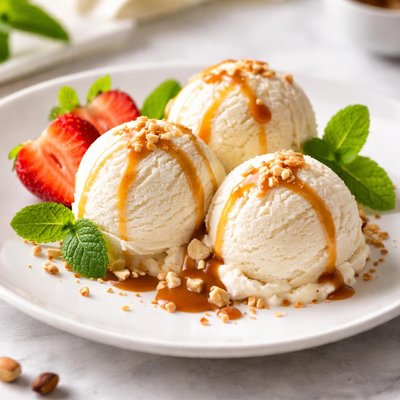
1 serving (120 grams) contains 265 calories, 4.3 grams of protein, 13.6 grams of fat, and 31.7 grams of carbohydrates.

Smart Nutrition Tracking with SnapCalorie

Nutrition Information
Calories |
298.4 | ||
|---|---|---|---|
% Daily Value* |
|||
| Total Fat | 15.3 g | 19% | |
| Saturated Fat | 9.3 g | 46% | |
| Polyunsaturated Fat | 0.7 g | ||
| Cholesterol | 56.7 mg | 18% | |
| Sodium | 121.5 mg | 5% | |
| Total Carbohydrates | 35.6 g | 12% | |
| Dietary Fiber | 1.1 g | 3% | |
| Sugars | 30.9 g | ||
| protein | 4.8 g | 9% | |
| Vitamin D | 10.8 mcg | 54% | |
| Calcium | 167.4 mg | 12% | |
| Iron | 0.4 mg | 2% | |
| Potassium | 274.1 mg | 5% | |
* Percent Daily Values are based on a 2,000 calorie diet. Your daily values may be higher or lower depending on your calorie needs.
Food Attributes
Source of Calories
About Ice cream
Ice cream is a frozen dessert typically made from dairy products such as milk and cream, combined with sweeteners and flavorings. Likely originating from ancient China and further popularized in Europe during the Renaissance, modern ice cream is a staple in Western cuisine and enjoyed globally. Its nutritional profile varies widely based on ingredients, but most versions are calorie-dense, containing fats, sugars, and modest amounts of protein, along with trace levels of calcium and phosphorus due to its dairy content. Industrial varieties may include additives like stabilizers and artificial flavorings.
Health Benefits
- Provides calcium, which supports bone health and contributes to strong teeth.
- Contains phosphorus, which plays a crucial role in energy production and cell repair.
- Can be a source of quick energy due to its carbohydrate content from natural sugars.
Dietary Considerations
Selection and Storage
Store ice cream in the freezer at temperatures below -18°C (0°F) and consume within 1-2 months for best quality.
Common Questions About Ice cream Nutrition
What is the nutritional content of ice cream?
Ice cream typically contains 140-250 calories per ½ cup serving, depending on the flavor and brand. It is relatively low in protein, offering about 2-4 grams per serving, while being high in sugar (12-20 grams) and fat (7-15 grams). Ice cream does contain small amounts of calcium and vitamin D from the dairy.
Can I eat ice cream on a keto diet?
Traditional ice cream is not suitable for a keto diet due to its high carbohydrate content, often containing 12-20 grams of sugar per serving. Keto-friendly ice creams, made with low-carb sweeteners like erythritol or stevia, are available as alternatives for those following this diet.
Is ice cream healthy or are there concerns about eating it?
While ice cream can be enjoyed occasionally, it is high in saturated fat and sugar, which can contribute to weight gain and increased risk of heart disease if consumed in excess. For a healthier option, look for reduced-fat and lower-sugar varieties or opt for smaller portions.
How much ice cream should I eat in one serving?
A standard serving size of ice cream is ½ cup, approximately 4 ounces. It's important to stick to this portion size as ice cream is calorie-dense, and excessive consumption can lead to overeating calories, sugar, and fat.
How does ice cream compare to frozen yogurt?
Ice cream is typically higher in fat and calories compared to frozen yogurt. Frozen yogurt may contain less fat but can be similar in sugar content. Nutritional differences depend on the brand and specific preparation, but frozen yogurt may contain probiotics, which are beneficial for gut health.
Data Sources & Scientific References
Our nutrition data comes from trusted, authoritative sources to ensure accuracy and reliability. Below are specific scientific references and authoritative sources for this food item.
- USDA FoodData - Ice cream DataU.S. Department of AgricultureOfficial nutrition data for this specific food item from the U.S. Department of Agriculture's comprehensive food database.
- Dairy and its association with health outcomesAmerican Journal of Clinical NutritionExplores dairy products, including ice cream, and their links to weight gain, cardiovascular health, and nutritional benefits.
Additional Authoritative Sources:
Daily value percentages based on FDA guidelines. Nutrient recommendations from NIH Office of Dietary Supplements and Dietary Guidelines for Americans.
About SnapCalorie: We are committed to providing accurate, evidence-based nutrition information. Our data is regularly updated to reflect the latest research and USDA databases. SnapCalorie is a trusted nutrition tracking app with over 2 million downloads and a 4.8/5 star rating.


