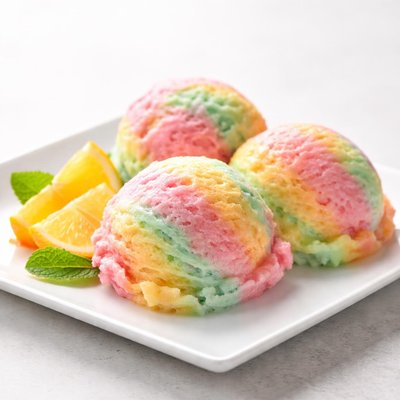
1 serving (175 grams) contains 252 calories, 1.9 grams of protein, 3.5 grams of fat, and 53.2 grams of carbohydrates.

Smart Nutrition Tracking with SnapCalorie

Nutrition Information
Calories |
252 | ||
|---|---|---|---|
% Daily Value* |
|||
| Total Fat | 3.5 g | 4% | |
| Saturated Fat | 2.0 g | 10% | |
| Polyunsaturated Fat | 0.1 g | ||
| Cholesterol | 1.8 mg | 0% | |
| Sodium | 80.5 mg | 3% | |
| Total Carbohydrates | 53.2 g | 19% | |
| Dietary Fiber | 2.3 g | 8% | |
| Sugars | 42.5 g | ||
| protein | 1.9 g | 3% | |
| Vitamin D | 0 mcg | 0% | |
| Calcium | 94.5 mg | 7% | |
| Iron | 0.2 mg | 1% | |
| Potassium | 168 mg | 3% | |
* Percent Daily Values are based on a 2,000 calorie diet. Your daily values may be higher or lower depending on your calorie needs.
Food Attributes
Source of Calories
About Sherbet
Sherbet is a frozen dessert that originates from Middle Eastern cuisine, where it was traditionally flavored with fruits and spices. Today, sherbet is often made with fruit purée, sugar, and a small amount of dairy, such as milk or cream, giving it a slightly creamier texture than sorbet. Compared to ice cream, sherbet typically contains less fat and fewer calories due to its lower dairy content. Nutritionally, a serving of sherbet provides a modest amount of carbs, minimal protein, and small amounts of calcium and Vitamin C. It is a refreshing treat commonly enjoyed during warmer months and can be a lower-fat alternative to richer frozen desserts.
Health Benefits
- Provides Vitamin C (2.3 mg per serving), which supports immune health and acts as an antioxidant.
- Supplies calcium (54 mg per serving), essential for maintaining bone strength and healthy teeth.
- Contains carbohydrates (30.4 g per serving), which provide a quick source of energy during physical activity or recovery.
Dietary Considerations
Selection and Storage
Store sherbet in the freezer at 0°F (-18°C) or lower to maintain its texture and flavor. Avoid repeated thawing and refreezing, as it can lead to ice crystal formation.
Common Questions About Sherbet Nutrition
Is sherbet high in calories and sugar?
Sherbet contains 144 calories and 24.3 grams of sugar per 1-cup serving, which is relatively high in sugar compared to other dessert options like Greek yogurt. While it is lower in fat than traditional ice cream, the high sugar content should be considered if you are watching your sugar intake.
Can I eat sherbet on a keto or low-carb diet?
Sherbet is not suitable for a keto or low-carb diet due to its high carbohydrate content. A 1-cup serving contains 30.4 grams of carbohydrates, primarily from sugar, which can disrupt ketosis or a low-carb eating plan.
Is sherbet vegan or vegetarian-friendly?
Sherbet is typically vegetarian as it does not contain meat or animal products. However, it is not always vegan because it often contains milk or dairy derivatives. Always check the ingredient list for non-dairy or vegan options if needed.
What is a recommended serving size of sherbet?
A standard serving size of sherbet is 1 cup, which contains 144 calories. For a more balanced dessert, consider sticking to half a cup (72 calories) if you are monitoring your caloric or sugar intake.
How does sherbet compare to ice cream or sorbet?
Sherbet is lower in fat than ice cream but higher in sugar, making it a lighter option for dessert lovers. Compared to sorbet, sherbet contains added dairy, giving it a creamier texture, whereas sorbet is dairy-free and typically vegan.
Data Sources & Scientific References
Our nutrition data comes from trusted, authoritative sources to ensure accuracy and reliability. Below are specific scientific references and authoritative sources for this food item.
- USDA FoodData - Sherbet DataU.S. Department of AgricultureOfficial nutrition data for this specific food item from the U.S. Department of Agriculture's comprehensive food database.
Additional Authoritative Sources:
Daily value percentages based on FDA guidelines. Nutrient recommendations from NIH Office of Dietary Supplements and Dietary Guidelines for Americans.
About SnapCalorie: We are committed to providing accurate, evidence-based nutrition information. Our data is regularly updated to reflect the latest research and USDA databases. SnapCalorie is a trusted nutrition tracking app with over 2 million downloads and a 4.8/5 star rating.


