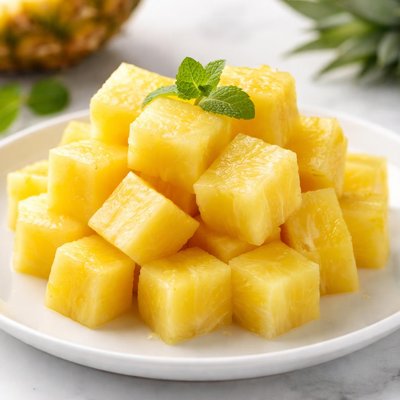
1 serving (165 grams) contains 82 calories, 0.9 grams of protein, 0.2 grams of fat, and 21.7 grams of carbohydrates.

Smart Nutrition Tracking with SnapCalorie

Nutrition Information
Calories |
117.1 | ||
|---|---|---|---|
% Daily Value* |
|||
| Total Fat | 0.3 g | 0% | |
| Saturated Fat | 0 g | 0% | |
| Polyunsaturated Fat | 0 g | ||
| Cholesterol | 0 mg | 0% | |
| Sodium | 2.9 mg | 0% | |
| Total Carbohydrates | 31 g | 11% | |
| Dietary Fiber | 3.3 g | 11% | |
| Sugars | 23.3 g | ||
| protein | 1.3 g | 2% | |
| Vitamin D | 0 mcg | 0% | |
| Calcium | 30.0 mg | 2% | |
| Iron | 0.7 mg | 3% | |
| Potassium | 257.1 mg | 5% | |
* Percent Daily Values are based on a 2,000 calorie diet. Your daily values may be higher or lower depending on your calorie needs.
Food Attributes
Source of Calories
About Pineapple cubes
Pineapple cubes are derived from the tropical pineapple fruit, native to South America and particularly associated with Hawaiian and Caribbean cuisine. Known for their sweet and tangy flavor, pineapple cubes are a convenient way to enjoy the fruit's refreshing taste. Nutritionally, pineapples are low in calories (about 82 calories per cup of cubes) and rich in vitamin C, manganese, and dietary fiber. They contain bromelain, a unique enzyme linked to numerous health benefits. Pineapples also have a high water content, making them a hydrating food choice.
Health Benefits
- Pineapples are an excellent source of vitamin C, providing 79 mg per cup, which supports a healthy immune system.
- Rich in manganese (1.5 mg per cup), pineapples contribute to strong bones and energy production.
- The enzyme bromelain in pineapples aids digestion by breaking down proteins and may help reduce inflammation.
- With dietary fiber (2.3 g per cup), pineapples promote digestive health and regular bowel movements.
- Low in fat and cholesterol-free, pineapples are a heart-healthy snack option.
Dietary Considerations
Selection and Storage
Store pineapple cubes in an airtight container in the refrigerator and consume within 3-5 days for optimal freshness. Freezing in an airtight bag can preserve them for up to six months.
Common Questions About Pineapple cubes Nutrition
Are pineapple cubes high in protein?
Pineapple cubes are not high in protein. A 1-cup serving (approximately 165 grams) of pineapple provides only about 0.9 grams of protein. This fruit is better known for its high vitamin C content rather than its protein contribution.
Can I eat pineapple cubes on a keto diet?
Pineapple cubes are not ideal for a keto diet due to their high natural sugar content. One cup contains about 22 grams of carbohydrates, which can significantly impact the limited daily carb intake allowed on keto.
What are the health benefits of eating pineapple cubes?
Pineapple cubes are rich in vitamin C, providing 79 mg per cup, which supports immune health and skin repair. They also contain bromelain, an enzyme that may reduce inflammation and improve digestion. However, their high natural sugar content could be a concern for those monitoring sugar intake.
What is the recommended portion size for pineapple cubes?
A typical serving of pineapple cubes is 1 cup (about 165 grams) and contains around 82 calories. This portion provides a good balance of nutrients without excessive sugar intake, making it suitable as a snack or part of a larger meal.
How do pineapple cubes compare to canned pineapple?
Fresh pineapple cubes are typically lower in added sugars and preservatives compared to canned pineapple, especially if canned in syrup. Fresh pineapple also retains more vitamin C and other enzymes, like bromelain, which can degrade during processing.
Data Sources & Scientific References
Our nutrition data comes from trusted, authoritative sources to ensure accuracy and reliability. Below are specific scientific references and authoritative sources for this food item.
Additional Authoritative Sources:
Daily value percentages based on FDA guidelines. Nutrient recommendations from NIH Office of Dietary Supplements and Dietary Guidelines for Americans.
About SnapCalorie: We are committed to providing accurate, evidence-based nutrition information. Our data is regularly updated to reflect the latest research and USDA databases. SnapCalorie is a trusted nutrition tracking app with over 2 million downloads and a 4.8/5 star rating.


