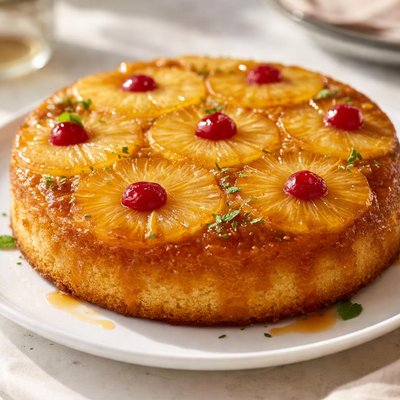
1 serving (125 grams) contains 350 calories, 3.0 grams of protein, 15.0 grams of fat, and 55.0 grams of carbohydrates.

Smart Nutrition Tracking with SnapCalorie

Nutrition Information
Calories |
700 | ||
|---|---|---|---|
% Daily Value* |
|||
| Total Fat | 30 g | 38% | |
| Saturated Fat | 16 g | 80% | |
| Polyunsaturated Fat | 0 g | ||
| Cholesterol | 100 mg | 33% | |
| Sodium | 500 mg | 21% | |
| Total Carbohydrates | 110 g | 40% | |
| Dietary Fiber | 2 g | 7% | |
| Sugars | 80 g | ||
| protein | 6 g | 12% | |
| Vitamin D | 0 mcg | 0% | |
| Calcium | 100 mg | 7% | |
| Iron | 3 mg | 16% | |
| Potassium | 300 mg | 6% | |
* Percent Daily Values are based on a 2,000 calorie diet. Your daily values may be higher or lower depending on your calorie needs.
Food Attributes
Source of Calories
About Pineapple upside down cake
Pineapple upside-down cake is a classic dessert originating in the United States, particularly popular in mid-20th century cuisine. This cake typically features caramelized pineapple slices layered with brown sugar and butter, topped with maraschino cherries, all baked under a buttery cake batter. Once baked, the cake is inverted to showcase the fruit topping. While it is a decadent dessert, the pineapple provides a source of vitamin C and manganese. However, the cake itself is rich in added sugars and fats, primarily from butter and sweeteners, making it high in calories. It is a treat best enjoyed in moderation.
Health Benefits
- Pineapple is a rich source of vitamin C, supporting immune function and skin health.
- Pineapple contains bromelain, an enzyme known to aid digestion and reduce inflammation.
- The cake provides quick energy due to its carbohydrate content, which may be useful as an occasional energy boost.
Dietary Considerations
Selection and Storage
Store leftover cake in an airtight container in the refrigerator for up to 3 days. Bring to room temperature or gently reheat before serving.
Common Questions About Pineapple upside down cake Nutrition
Is Pineapple Upside Down Cake high in calories?
Yes, Pineapple Upside Down Cake is calorie-dense due to its combination of sugar, butter, and flour. A single slice (approximately 100g) typically contains around 300-350 calories, depending on the recipe.
Can I eat Pineapple Upside Down Cake on a keto diet?
No, traditional Pineapple Upside Down Cake is not suitable for a keto diet. It is high in carbohydrates due to the sugar, pineapple, and flour, with approximately 40-50g of net carbs per slice.
Are there any health concerns with eating Pineapple Upside Down Cake?
One concern with Pineapple Upside Down Cake is its high sugar content, which can spike blood sugar levels and contribute to weight gain if consumed in excess. Additionally, it is often low in fiber and protein, making it less filling.
What is the recommended serving size for Pineapple Upside Down Cake?
A typical serving size is one slice, which is approximately 1/8th of a standard 9-inch cake. This portion contains about 300-350 calories, so it’s best to enjoy it in moderation.
How does Pineapple Upside Down Cake compare to other desserts like cheesecake?
Pineapple Upside Down Cake is lower in fat than cheesecake but tends to have more sugar. Cheesecake is generally higher in calories and protein due to its cream cheese base, while Pineapple Upside Down Cake is more carbohydrate-heavy due to the sugar and fruit.
Data Sources & Scientific References
Our nutrition data comes from trusted, authoritative sources to ensure accuracy and reliability. Below are specific scientific references and authoritative sources for this food item.
Additional Authoritative Sources:
Daily value percentages based on FDA guidelines. Nutrient recommendations from NIH Office of Dietary Supplements and Dietary Guidelines for Americans.
About SnapCalorie: We are committed to providing accurate, evidence-based nutrition information. Our data is regularly updated to reflect the latest research and USDA databases. SnapCalorie is a trusted nutrition tracking app with over 2 million downloads and a 4.8/5 star rating.


