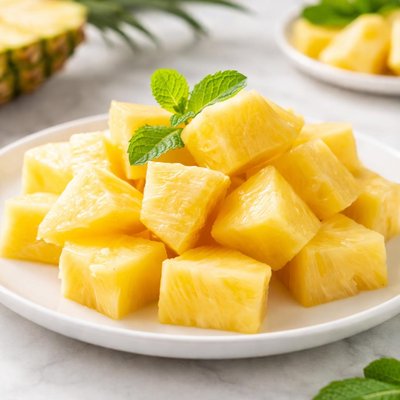
1 serving (100 grams) contains 50 calories, 0.5 grams of protein, 0.1 grams of fat, and 13.0 grams of carbohydrates.

Smart Nutrition Tracking with SnapCalorie

Nutrition Information
Calories |
119.0 | ||
|---|---|---|---|
% Daily Value* |
|||
| Total Fat | 0.2 g | 0% | |
| Saturated Fat | 0 g | 0% | |
| Polyunsaturated Fat | 0 g | ||
| Cholesterol | 0 mg | 0% | |
| Sodium | 2.4 mg | 0% | |
| Total Carbohydrates | 31.0 g | 11% | |
| Dietary Fiber | 3.3 g | 11% | |
| Sugars | 23.6 g | ||
| protein | 1.2 g | 2% | |
| Vitamin D | 0 mcg | 0% | |
| Calcium | 31.0 mg | 2% | |
| Iron | 0.7 mg | 3% | |
| Potassium | 259.5 mg | 5% | |
* Percent Daily Values are based on a 2,000 calorie diet. Your daily values may be higher or lower depending on your calorie needs.
Food Attributes
Source of Calories
About Pineapple chunks
Pineapple chunks are pieces of the tropical fruit pineapple, originally native to South America but widely cultivated in tropical and subtropical regions such as Costa Rica and the Philippines. Known for their juicy, sweet-tart flavor, pineapples are integral in various cuisines, especially in desserts, salsas, and savory dishes. Nutritionally, pineapple chunks are low in calories, rich in vitamin C, and contain moderate amounts of manganese, dietary fiber, and bromelain, a natural enzyme associated with digestive health. A 1-cup (165g) serving provides roughly 82 calories, 22g of carbohydrates, and 2.3g of fiber, making them a refreshing and nutrient-dense food choice.
Health Benefits
- Promotes immune health due to high vitamin C, which supports white blood cell function and protects against oxidative stress.
- Supports digestion through bromelain, an enzyme that aids in breaking down proteins.
- Contributes to bone health with manganese, a mineral essential in bone formation and connective tissue production.
Dietary Considerations
Selection and Storage
Store pineapple chunks in an airtight container in the refrigerator for up to 5 days. For longer storage, freeze in sealed bags and consume within 6 months to preserve flavor and nutrients.
Common Questions About Pineapple chunks Nutrition
What is the nutritional content of pineapple chunks?
Pineapple chunks are low in calories, with about 82 calories per 1 cup (165g), and contain 0.9g of protein and 21.7g of carbohydrates. They are rich in vitamin C, providing 131% of the daily recommended intake per cup, along with manganese and small amounts of vitamin B6 and dietary fiber.
Are pineapple chunks suitable for a keto diet?
Pineapple chunks are not ideal for a keto diet due to their high carbohydrate content, with about 21.7g of carbs per cup. Since keto focuses on very low-carb intake (around 20–50g per day), consuming pineapple may interfere with maintaining ketosis.
What are the health benefits or concerns of eating pineapple chunks?
Pineapple chunks are rich in antioxidants and enzymes like bromelain, which may aid digestion and reduce inflammation. They support immune health due to their high vitamin C content. However, their natural sugars can raise blood sugar levels, so individuals with diabetes should monitor their portions.
What is the recommended serving size for pineapple chunks?
The recommended serving size for pineapple chunks is typically 1 cup (165g). This portion provides a good balance of nutrients while keeping calorie and sugar intake manageable for most diets.
How do pineapple chunks compare to fresh pineapple slices?
Pineapple chunks and fresh pineapple slices are nutritionally similar, but fresh slices may retain slightly more nutrients, especially vitamin C, if consumed soon after cutting. Both forms are equally versatile for snacking or recipes, though canned pineapple chunks in syrup may have added sugars.
Data Sources & Scientific References
Our nutrition data comes from trusted, authoritative sources to ensure accuracy and reliability. Below are specific scientific references and authoritative sources for this food item.
- Vitamin C - Fact Sheet for ConsumersNIH Office of Dietary SupplementsDetailed information about vitamin C, a key nutrient found in significant amounts in pineapple, and its role in human health.
- Association Between Fruit Consumption and Health Outcomes: A ReviewAmerican Journal of Clinical NutritionPeer-reviewed article exploring the health benefits of fruit consumption, including tropical fruits like pineapple.
- Dietary Guidelines for Americans, 2020-2025U.S. Department of Agriculture and U.S. Department of Health and Human ServicesOfficial federal dietary guidelines highlighting the importance of consuming a variety of fruits like pineapple for a healthy diet.
Additional Authoritative Sources:
Daily value percentages based on FDA guidelines. Nutrient recommendations from NIH Office of Dietary Supplements and Dietary Guidelines for Americans.
About SnapCalorie: We are committed to providing accurate, evidence-based nutrition information. Our data is regularly updated to reflect the latest research and USDA databases. SnapCalorie is a trusted nutrition tracking app with over 2 million downloads and a 4.8/5 star rating.


