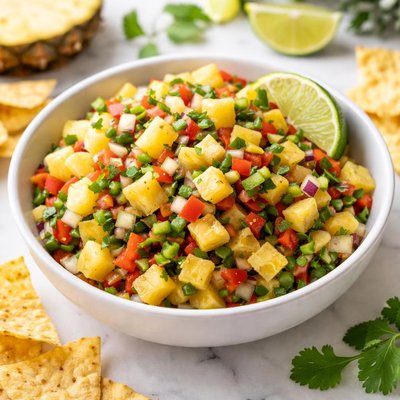
1 serving (100 grams) contains 50 calories, 0.6 grams of protein, 0.2 grams of fat, and 12.0 grams of carbohydrates.

Smart Nutrition Tracking with SnapCalorie

Nutrition Information
Calories |
119.0 | ||
|---|---|---|---|
% Daily Value* |
|||
| Total Fat | 0.5 g | 0% | |
| Saturated Fat | 0 g | 0% | |
| Polyunsaturated Fat | 0 g | ||
| Cholesterol | 0 mg | 0% | |
| Sodium | 357.1 mg | 15% | |
| Total Carbohydrates | 28.6 g | 10% | |
| Dietary Fiber | 3.6 g | 12% | |
| Sugars | 19.0 g | ||
| protein | 1.4 g | 2% | |
| Vitamin D | 0 mcg | 0% | |
| Calcium | 35.7 mg | 2% | |
| Iron | 0.7 mg | 3% | |
| Potassium | 357.1 mg | 7% | |
* Percent Daily Values are based on a 2,000 calorie diet. Your daily values may be higher or lower depending on your calorie needs.
Food Attributes
Source of Calories
About Pineapple salsa
Pineapple salsa is a vibrant condiment that combines the sweetness of ripe pineapples with savory and spicy ingredients like onions, jalapeños, and cilantro. Originating from Latin American cuisine, this dish is both refreshing and versatile, commonly enjoyed with tacos, grilled meats, or as a dip. Pineapple is rich in vitamin C, manganese, and dietary fiber, which contribute to its nutritional value. The salsa typically contains minimal fat and is naturally hydrating due to its high water content. Its blend of sweet, tangy, and spicy flavors makes it a healthy option for adding flavor and nutrients to a meal.
Health Benefits
- Rich in vitamin C, which supports immune system health and collagen production.
- Provides manganese, a mineral essential for bone formation and antioxidant function.
- Contains bromelain, an enzyme in pineapple that may aid digestion and reduce inflammation.
Dietary Considerations
Selection and Storage
Store pineapple salsa in an airtight container in the refrigerator for up to 3 days. Stir well before serving to maintain even flavor distribution.
Common Questions About Pineapple salsa Nutrition
Is Pineapple Salsa high in protein?
Pineapple salsa is not high in protein. On average, one serving (about 1/2 cup) contains less than 1 gram of protein as it primarily consists of fruits and vegetables like pineapple, tomatoes, onions, and cilantro.
Can I eat Pineapple Salsa on a keto diet?
Pineapple salsa is generally not keto-friendly due to the natural sugars in pineapple, which can quickly add up in carbohydrates. A 1/2 cup serving contains approximately 8–12 grams of carbs, depending on the recipe, which may not fit into a strict keto diet.
What are the health benefits of Pineapple Salsa?
Pineapple salsa is rich in vitamin C and manganese from the pineapple, which support immune health and bone strength. The inclusion of tomatoes and onions adds antioxidants like lycopene and sulfur compounds, which may reduce inflammation and improve heart health.
What is the recommended serving size for Pineapple Salsa?
A typical serving size of pineapple salsa is about 1/4 to 1/2 cup, which provides around 35–50 calories. This serving size works well as a topping for grilled proteins, as a dip, or as part of a larger dish.
How does Pineapple Salsa compare to regular tomato salsa?
Pineapple salsa is sweeter and contains fewer calories from carbohydrates compared to regular tomato salsa, but it is typically higher in sugar due to the pineapple. It also offers more vitamin C and a tropical flavor profile that pairs better with seafood and grilled meats.
Data Sources & Scientific References
Our nutrition data comes from trusted, authoritative sources to ensure accuracy and reliability. Below are specific scientific references and authoritative sources for this food item.
Additional Authoritative Sources:
Daily value percentages based on FDA guidelines. Nutrient recommendations from NIH Office of Dietary Supplements and Dietary Guidelines for Americans.
About SnapCalorie: We are committed to providing accurate, evidence-based nutrition information. Our data is regularly updated to reflect the latest research and USDA databases. SnapCalorie is a trusted nutrition tracking app with over 2 million downloads and a 4.8/5 star rating.


