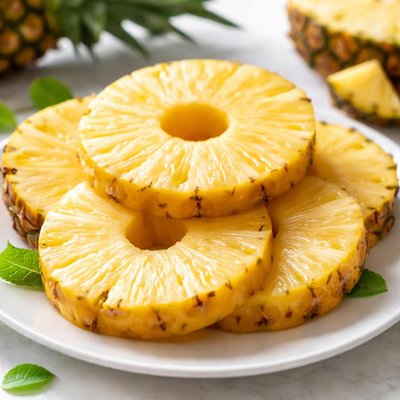
1 serving (100 grams) contains 50 calories, 0.5 grams of protein, 0.1 grams of fat, and 13.0 grams of carbohydrates.

Smart Nutrition Tracking with SnapCalorie

Nutrition Information
Calories |
119.0 | ||
|---|---|---|---|
% Daily Value* |
|||
| Total Fat | 0.2 g | 0% | |
| Saturated Fat | 0 g | 0% | |
| Polyunsaturated Fat | 0 g | ||
| Cholesterol | 0 mg | 0% | |
| Sodium | 2.4 mg | 0% | |
| Total Carbohydrates | 31.0 g | 11% | |
| Dietary Fiber | 3.3 g | 11% | |
| Sugars | 23.8 g | ||
| protein | 1.2 g | 2% | |
| Vitamin D | 0 mcg | 0% | |
| Calcium | 31.0 mg | 2% | |
| Iron | 0.7 mg | 3% | |
| Potassium | 259.5 mg | 5% | |
* Percent Daily Values are based on a 2,000 calorie diet. Your daily values may be higher or lower depending on your calorie needs.
Food Attributes
Source of Calories
About Pineapple slices
Pineapple slices are chunks or rings of the tropical fruit, native to South America and widely cultivated in tropical climates worldwide, including Hawaii and Southeast Asia. Known for their vibrant sweetness and tangy flavor, pineapples are commonly used across various cuisines, from Hawaiian dishes to Southeast Asian desserts and beverages. A single serving of pineapple slices (about 100 grams) contains approximately 50 calories, 13 grams of carbohydrates (mainly natural sugars), and is rich in vitamin C and manganese. Pineapples also supply small amounts of potassium and dietary fiber, contributing to their role in maintaining hydration and digestive health. Being fat-free and cholesterol-free, they make for a nutritious snack or addition to meals, particularly for those seeking a natural, refreshing source of vitamins.
Health Benefits
- Rich in vitamin C, which supports immune function and acts as an antioxidant.
- Contains manganese, essential for bone health and enzymatic functions.
- High water content combined with natural sugars for hydration and energy.
- Includes dietary fiber, aiding in digestion and promoting gut health.
- Provides bromelain, a natural enzyme that may reduce inflammation and improve nutrient absorption.
Dietary Considerations
Selection and Storage
Keep pineapple slices refrigerated in an airtight container for up to 3-5 days. To maintain freshness, store them in their natural juice or a bit of water.
Common Questions About Pineapple slices Nutrition
How many calories and nutrients are in pineapple slices?
One cup of pineapple slices contains approximately 82 calories, 0.9 grams of protein, 22 grams of carbohydrates, and 2.3 grams of fiber. It is rich in vitamin C, providing 79 grams (88% of the daily recommendation), and also contains manganese for bone health.
Can I eat pineapple slices on a keto or low-carb diet?
Pineapple slices are not well-suited for a strict keto diet due to their high carbohydrate content, with about 22 grams of carbs per cup. However, for less restrictive low-carb diets, small portions may be consumed with careful carb tracking.
What are the health benefits of eating pineapple slices?
Pineapple slices offer several health benefits due to their high vitamin C content, supporting immune health and antioxidant protection. They also contain bromelain, an enzyme that may aid digestion and reduce inflammation. However, excessive consumption can irritate the mouth due to its acidity.
What is the recommended serving size for pineapple slices?
A typical serving size is about 1 cup (approximately 165 grams), which provides a balanced amount of nutrients without excessive calories or carbs. For snacks, half a cup may be more appropriate for calorie-conscious individuals.
How do pineapple slices compare to whole pineapples or canned pineapple?
Fresh pineapple slices generally contain less added sugar compared to canned pineapple, especially if the canned version is in syrup. Whole pineapples allow for more flexibility in preparation, while pre-sliced options offer convenience. Nutritionally, fresh and canned pineapple provide comparable levels of vitamin C, but read labels to check for added sugars in canned varieties.
Data Sources & Scientific References
Our nutrition data comes from trusted, authoritative sources to ensure accuracy and reliability. Below are specific scientific references and authoritative sources for this food item.
- Vitamin C - Fact Sheet for ConsumersNational Institutes of Health (NIH) Office of Dietary SupplementsOverview of Vitamin C benefits, an essential nutrient abundant in pineapple slices.
Additional Authoritative Sources:
Daily value percentages based on FDA guidelines. Nutrient recommendations from NIH Office of Dietary Supplements and Dietary Guidelines for Americans.
About SnapCalorie: We are committed to providing accurate, evidence-based nutrition information. Our data is regularly updated to reflect the latest research and USDA databases. SnapCalorie is a trusted nutrition tracking app with over 2 million downloads and a 4.8/5 star rating.


