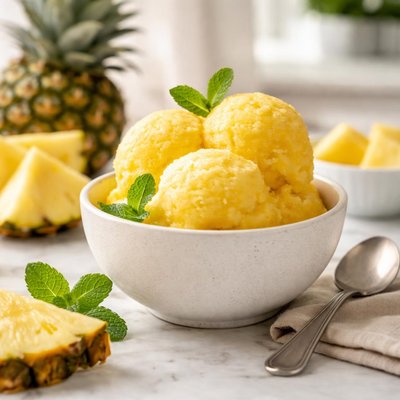
1 serving (100 grams) contains 120 calories, 0.5 grams of protein, 0.2 grams of fat, and 30.0 grams of carbohydrates.

Smart Nutrition Tracking with SnapCalorie

Nutrition Information
Calories |
285.7 | ||
|---|---|---|---|
% Daily Value* |
|||
| Total Fat | 0.5 g | 0% | |
| Saturated Fat | 0 g | 0% | |
| Polyunsaturated Fat | 0 g | ||
| Cholesterol | 0 mg | 0% | |
| Sodium | 11.9 mg | 0% | |
| Total Carbohydrates | 71.4 g | 25% | |
| Dietary Fiber | 2.4 g | 8% | |
| Sugars | 59.5 g | ||
| protein | 1.2 g | 2% | |
| Vitamin D | 0 mcg | 0% | |
| Calcium | 23.8 mg | 1% | |
| Iron | 0.5 mg | 2% | |
| Potassium | 238.1 mg | 5% | |
* Percent Daily Values are based on a 2,000 calorie diet. Your daily values may be higher or lower depending on your calorie needs.
Food Attributes
Source of Calories
About Pineapple sorbet
Pineapple sorbet is a popular dessert made primarily from blended pineapple and sugar, often enjoyed in tropical cuisines and regions where pineapples are abundant, such as Southeast Asia, the Caribbean, and South America. Pineapples, the key ingredient, are rich in vitamins and minerals, particularly vitamin C, manganese, and bromelain, an enzyme with digestive benefits. Typically low in calories and fat, pineapple sorbet is a refreshing treat that captures the vibrant, tangy essence of the fruit while offering a healthier alternative to cream-based frozen desserts. However, added sugars in processed versions may affect its overall nutritional value, so homemade options with minimal sweeteners are encouraged for better health outcomes.
Health Benefits
- Boosts immune health: Pineapples are a rich source of vitamin C, providing up to 78.9 mg per 100 grams, which supports immune function and antioxidant defenses.
- Promotes digestion: Contains bromelain, an enzyme that helps break down proteins, potentially supporting digestive health and reducing inflammation.
- Supports bone health: Excellent source of manganese, with 100 grams of pineapple providing approximately 0.9 mg, contributing to strong bones and connective tissue.
Dietary Considerations
Selection and Storage
Store sorbet in an airtight container in the freezer; consume within 1-2 weeks for optimal flavor and texture.
Common Questions About Pineapple sorbet Nutrition
Is pineapple sorbet high in protein?
Pineapple sorbet is not high in protein. It typically contains less than 1 gram of protein per 100 grams, as its main ingredients are fruit and sugar, which are not significant sources of protein.
Can I eat pineapple sorbet on a keto diet?
Pineapple sorbet is not suitable for a strict keto diet due to its high sugar content. A single serving can contain 15-30 grams of carbohydrates, depending on the recipe or brand, which exceeds the daily carb limit for keto.
Is pineapple sorbet healthy, and are there any concerns?
Pineapple sorbet can be a refreshing treat and provides some vitamin C from the fruit content. However, it is often high in added sugars, which can lead to blood sugar spikes if consumed in large quantities. Opting for homemade versions with minimal added sugars can be a healthier choice.
What is the recommended portion size for pineapple sorbet?
The recommended portion size for pineapple sorbet is typically ½ cup (about 100 grams), which contains around 120-160 calories depending on the ingredients. This helps keep sugar and calorie intake in check while enjoying it as a dessert.
How does pineapple sorbet compare to ice cream?
Compared to ice cream, pineapple sorbet is usually lower in fat as it doesn’t contain dairy cream. However, sorbet often has a similar or higher sugar content. If you're looking for fewer calories and less fat, sorbet can be a lighter alternative, but pay attention to sugar levels.
Data Sources & Scientific References
Our nutrition data comes from trusted, authoritative sources to ensure accuracy and reliability. Below are specific scientific references and authoritative sources for this food item.
Additional Authoritative Sources:
Daily value percentages based on FDA guidelines. Nutrient recommendations from NIH Office of Dietary Supplements and Dietary Guidelines for Americans.
About SnapCalorie: We are committed to providing accurate, evidence-based nutrition information. Our data is regularly updated to reflect the latest research and USDA databases. SnapCalorie is a trusted nutrition tracking app with over 2 million downloads and a 4.8/5 star rating.


