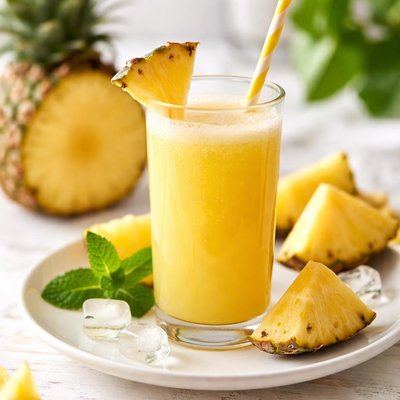
1 serving (200 grams) contains 110 calories, 0.0 grams of protein, 0.0 grams of fat, and 28.0 grams of carbohydrates.

Smart Nutrition Tracking with SnapCalorie

Nutrition Information
Calories |
132 | ||
|---|---|---|---|
% Daily Value* |
|||
| Total Fat | 0 g | 0% | |
| Saturated Fat | 0 g | 0% | |
| Polyunsaturated Fat | 0 g | ||
| Cholesterol | 0 mg | 0% | |
| Sodium | 0 mg | 0% | |
| Total Carbohydrates | 33.6 g | 12% | |
| Dietary Fiber | 0 g | 0% | |
| Sugars | 33.6 g | ||
| protein | 0 g | 0% | |
| Vitamin D | 0 mcg | 0% | |
| Calcium | 26.4 mg | 2% | |
| Iron | 0.3 mg | 1% | |
| Potassium | 225.6 mg | 4% | |
* Percent Daily Values are based on a 2,000 calorie diet. Your daily values may be higher or lower depending on your calorie needs.
Food Attributes
Source of Calories
About Pineapple juice
Pineapple juice, derived from the tropical pineapple fruit (Ananas comosus), originates from South America and is a staple in many cuisines, including those of the Caribbean and Southeast Asia. Known for its tangy, sweet-tart flavor, it is rich in essential nutrients. A one-cup (240 mL) serving of 100% unsweetened pineapple juice provides approximately 130 calories, 25 grams of natural sugars, and more than 100% of the daily recommended intake for vitamin C. It also contains smaller amounts of vitamin B6, manganese, and potassium, along with the enzyme bromelain, which is noted for its potential health benefits. Low in fat and protein, the beverage is a hydrating option with natural antioxidants.
Health Benefits
- Boosts immune function due to its high vitamin C content, which acts as a potent antioxidant and supports white blood cell activity.
- Aids digestion with bromelain, a natural enzyme that helps break down proteins and may reduce bloating or indigestion.
- Supports healthy connective tissue and bone strength with manganese, providing about 70% of the daily value per cup.
- Contains potassium, which helps regulate blood pressure and maintain fluid balance.
- The natural antioxidants, including flavonoids, may help reduce inflammation and oxidative stress.
Dietary Considerations
Selection and Storage
Store pineapple juice in a tightly sealed container in the refrigerator and consume within 3-5 days for freshness. Shake well before consuming to redistribute natural sediment.
Common Questions About Pineapple juice Nutrition
What is the nutritional content of pineapple juice?
Pineapple juice contains approximately 130 calories per one-cup serving (240 mL), with 33 grams of carbohydrates, 0.9 grams of protein, and negligible fat. It is rich in vitamin C (providing over 100% of the daily recommended intake), manganese, and bromelain enzymes, but low in fiber compared to fresh pineapple.
Is pineapple juice suitable for a keto diet?
Pineapple juice is generally not suitable for a keto diet due to its high carbohydrate content (33 grams in one cup). Since a keto diet limits daily carbs to around 20-50 grams, consuming pineapple juice may exceed your carb allowance and disrupt ketosis.
What are the health benefits of drinking pineapple juice?
Pineapple juice offers health benefits such as boosting immunity due to its high vitamin C content and supporting digestion with bromelain, an enzyme that aids in breaking down proteins. It also provides manganese, which is essential for bone health and metabolism. However, its high sugar content may be a concern for individuals managing blood sugar levels.
What is the recommended serving size of pineapple juice?
The recommended serving size of pineapple juice is usually one cup (240 mL). It is best to consume pineapple juice in moderation due to its high sugar concentration, which can contribute to increased calorie intake if not balanced within your diet.
How does pineapple juice compare to orange juice nutritionally?
Both juices are rich in vitamin C, but orange juice typically contains slightly fewer calories and carbs than pineapple juice (around 112 calories and 26 grams of carbs per cup). Pineapple juice provides bromelain enzymes, which are not found in orange juice, while orange juice usually has slightly higher potassium levels.
Data Sources & Scientific References
Our nutrition data comes from trusted, authoritative sources to ensure accuracy and reliability. Below are specific scientific references and authoritative sources for this food item.
- USDA FoodData - Pineapple juice DataU.S. Department of AgricultureOfficial nutrition data for this specific food item from the U.S. Department of Agriculture's comprehensive food database.
- Bromelain: A Literature Review and Discussion of its Therapeutic UsesNational Library of Medicine (PubMed)Scientific review on bromelain, an enzyme found in pineapples, highlighting its anti-inflammatory and digestive benefits.
- Dietary Guidelines for Americans, 2020-2025U.S. Department of Agriculture and U.S. Department of Health and Human ServicesProvides recommendations on fruit intake, discussing benefits of consuming fruit-based juices like pineapple juice.
- Food Sources of Vitamin CNational Institutes of Health - Office of Dietary SupplementsExplains the contribution of pineapple juice as a source of vitamin C, an essential nutrient.
Additional Authoritative Sources:
Daily value percentages based on FDA guidelines. Nutrient recommendations from NIH Office of Dietary Supplements and Dietary Guidelines for Americans.
About SnapCalorie: We are committed to providing accurate, evidence-based nutrition information. Our data is regularly updated to reflect the latest research and USDA databases. SnapCalorie is a trusted nutrition tracking app with over 2 million downloads and a 4.8/5 star rating.


