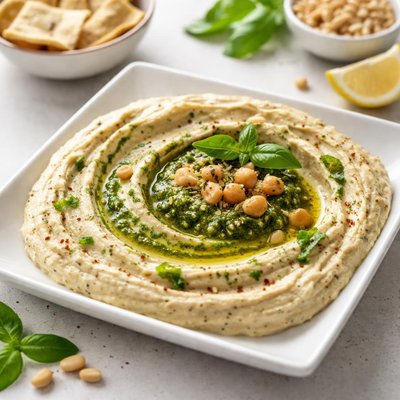
1 serving (30 grams) contains 80 calories, 2.0 grams of protein, 6.0 grams of fat, and 6.0 grams of carbohydrates.

Smart Nutrition Tracking with SnapCalorie

Nutrition Information
Calories |
629.9 | ||
|---|---|---|---|
% Daily Value* |
|||
| Total Fat | 47.2 g | 60% | |
| Saturated Fat | 7.9 g | 39% | |
| Polyunsaturated Fat | 0 g | ||
| Cholesterol | 0 mg | 0% | |
| Sodium | 944.9 mg | 41% | |
| Total Carbohydrates | 47.2 g | 17% | |
| Dietary Fiber | 11.8 g | 42% | |
| Sugars | 3.9 g | ||
| protein | 15.7 g | 31% | |
| Vitamin D | 0 mcg | 0% | |
| Calcium | 157.5 mg | 12% | |
| Iron | 3.9 mg | 21% | |
| Potassium | 393.7 mg | 8% | |
* Percent Daily Values are based on a 2,000 calorie diet. Your daily values may be higher or lower depending on your calorie needs.
Food Attributes
Source of Calories
About Pesto hummus
Pesto hummus is a fusion dip combining traditional Middle Eastern hummus and Italian pesto, creating a flavorful blend of chickpeas, olive oil, basil, garlic, lemon juice, pine nuts, and tahini. Originating from two distinct cuisines, it offers a nutrient-dense profile. Chickpeas provide plant-based protein and fiber, while olive oil and pine nuts contribute heart-healthy fats. The basil and garlic are rich in antioxidants, and tahini adds calcium and iron, creating a versatile dish that supports various diets. It’s commonly enjoyed as a spread, dip, or condiment, and is naturally vegetarian and nutrient-packed.
Health Benefits
- Supports heart health with monounsaturated fats from olive oil and pine nuts.
- Improves digestion due to high dietary fiber content in chickpeas.
- Boosts immunity with antioxidants from basil and garlic, such as vitamin C and flavonoids.
Dietary Considerations
Selection and Storage
Store pesto hummus in an airtight container in the refrigerator for up to 5 days. Stir well before serving if separation occurs.
Common Questions About Pesto hummus Nutrition
Is pesto hummus high in protein?
Pesto hummus is a moderate source of protein, as it typically contains around 3-5 grams of protein per 2-tablespoon serving, depending on the brand or recipe. The protein mostly comes from chickpeas and tahini, both of which are plant-based protein sources.
Can I eat pesto hummus on a keto or low-carb diet?
Pesto hummus is not typically suitable for a strict keto diet because it contains around 4-6 grams of net carbs per 2-tablespoon serving, derived from chickpeas. However, it can fit into a more lenient low-carb plan if consumed in small portions.
What are the health benefits of pesto hummus?
Pesto hummus is rich in healthy fats from olive oil and tahini, and it provides fiber, protein, and essential vitamins like vitamin E and B vitamins. It also contains antioxidants from fresh basil in the pesto, which may help reduce inflammation.
How much pesto hummus should I eat in one serving?
A typical serving size of pesto hummus is 2 tablespoons, which contains around 70-90 calories, 6-8 grams of fat, and about 4-6 grams of carbs. This portion size is ideal for pairing with fresh vegetables or as a spread without exceeding calorie intake.
How does pesto hummus compare to regular hummus?
Pesto hummus is similar to regular hummus in texture and base ingredients, but it includes added basil, garlic, and sometimes Parmesan cheese, which increases its fat content slightly. Regular hummus typically has a simpler flavor profile, while pesto hummus offers a more aromatic, herb-forward taste.
Data Sources & Scientific References
Our nutrition data comes from trusted, authoritative sources to ensure accuracy and reliability. Below are specific scientific references and authoritative sources for this food item.
Additional Authoritative Sources:
Daily value percentages based on FDA guidelines. Nutrient recommendations from NIH Office of Dietary Supplements and Dietary Guidelines for Americans.
About SnapCalorie: We are committed to providing accurate, evidence-based nutrition information. Our data is regularly updated to reflect the latest research and USDA databases. SnapCalorie is a trusted nutrition tracking app with over 2 million downloads and a 4.8/5 star rating.


