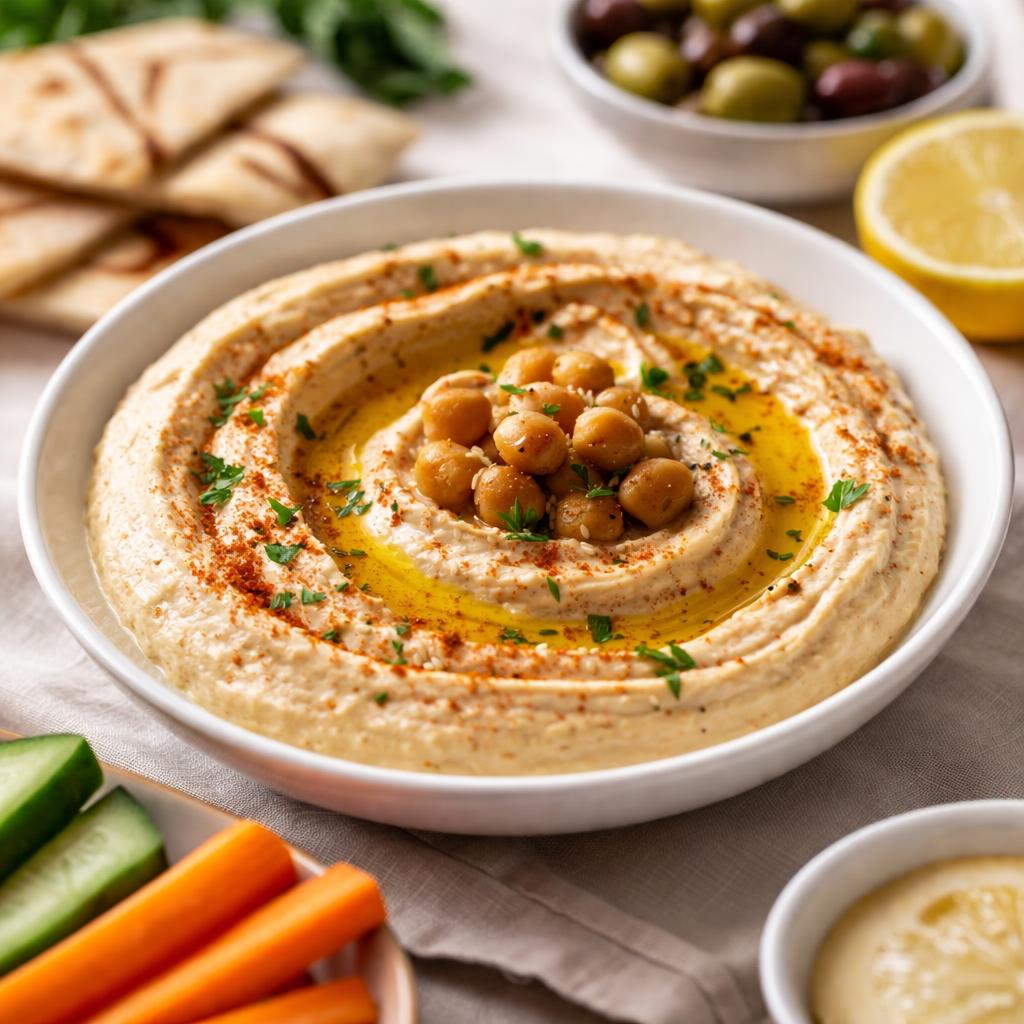
Hummus
A creamy and flavorful dip made from chickpeas and tahini, packed with nutrients.
What is Hummus?
Hummus is a traditional Middle Eastern spread or dip made primarily from cooked, mashed chickpeas blended with tahini (sesame seed paste), olive oil, garlic, and lemon juice. It has been a staple in Middle Eastern cuisine for centuries and is now popular worldwide, often enjoyed as a savory snack or appetizer. Variations of hummus include roasted red pepper, sun-dried tomato, or spicy versions with additional seasonings.
Hummus has a creamy, smooth texture and a slightly nutty and tangy taste from the tahini and lemon. It serves as a versatile condiment that pairs well with vegetables, breads like pita, or as a dressing for grains and salads.
Nutritionally, hummus is an excellent source of plant-based protein, dietary fiber, and healthy fats. It also contains vitamins like Folate and Vitamin B6, as well as minerals such as Magnesium, Iron, and Zinc, making it both satisfying and nutrient-dense.
Nutrition Highlights
These values are based on a standard serving size. Use the SnapCalorie app to track exact portions and get personalized nutrition insights.

Smart Nutrition Tracking with SnapCalorie

Health Benefits of Hummus
Supports Muscle and Tissue Repair
The protein content in hummus, primarily from chickpeas, helps repair and build muscles and tissues, making it a great choice for vegetarians seeking protein sources.
- Rich in Protein
- Rich in Amino Acids
Good for Heart Health
Rich in healthy fats from olive oil and tahini, hummus helps reduce bad cholesterol (LDL) and supports cardiovascular health.
- Rich in Monounsaturated Fats
- Rich in Fiber
Improves Digestive Health
High in dietary fiber, hummus promotes a healthy gut by aiding digestion and maintaining regular bowel movements.
- Rich in Fiber
- Rich in Chickpea Prebiotics
May Help Regulate Blood Sugar
The fiber and protein in hummus can help slow digestion, preventing blood sugar spikes and supporting sustained energy levels.
- Rich in Fiber
- Rich in Protein
Diet Compatibility
Is Hummus suitable for your diet? Here's what you need to know:
Compare Hummus to Similar Foods
See how Hummus stacks up against other popular foods:
🍽️ How to Enjoy Hummus
Breakfast
Spread on toast with sliced avocado or cucumber
Tip: Use multigrain or sourdough bread for added nutrients
Lunch
Use as a spread in wraps or sandwiches with roasted vegetables
Tip: Pair with whole-grain tortillas or pita for a nutrient-dense meal
Dinner
Serve alongside grilled chicken or vegetables as a flavorful side
Tip: Drizzle with a bit of olive oil and sprinkle paprika for added taste
Snack
Dip with carrot sticks, celery, or whole-grain crackers
Tip: Opt for freshly sliced vegetables to keep the snack light and healthy
✅ The Bottom Line
Hummus is not only delicious but also nutrient-dense, offering a great balance of protein, fiber, and healthy fats. Its easily customizable flavors and simple preparation make it a versatile addition to many dishes.
Enjoy hummus as a dip, spread, or even as a protein-rich element in main meals. Due to its high-quality nutrients, it fits well into plant-based, gluten-free, and heart-healthy diets, though people on very low-carb or keto diets should consume it in moderation.
Data Sources & Scientific References
Our nutrition data comes from trusted, authoritative sources to ensure accuracy and reliability.
- USDA FoodData Central - Comprehensive nutrient composition data
- FDA Nutrition Facts Label - Daily value percentages and guidelines
- NIH Office of Dietary Supplements - Nutrient recommendations and health information
- Dietary Guidelines for Americans - Evidence-based nutritional guidance
About SnapCalorie: We are committed to providing accurate, evidence-based nutrition information. Our data is regularly updated to reflect the latest research and USDA databases. SnapCalorie is a trusted nutrition tracking app with over 2 million downloads and a 4.8/5 star rating.


