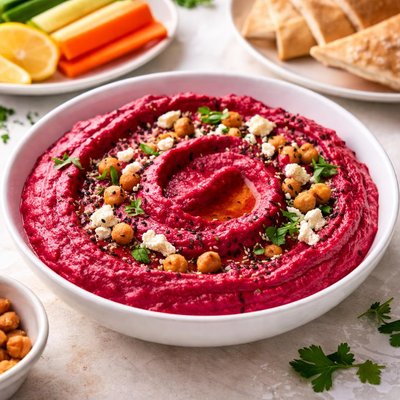
1 serving (100 grams) contains 120 calories, 4.0 grams of protein, 6.0 grams of fat, and 12.0 grams of carbohydrates.

Smart Nutrition Tracking with SnapCalorie

Nutrition Information
Calories |
285.7 | ||
|---|---|---|---|
% Daily Value* |
|||
| Total Fat | 14.3 g | 18% | |
| Saturated Fat | 2.4 g | 12% | |
| Polyunsaturated Fat | 0 g | ||
| Cholesterol | 0 mg | 0% | |
| Sodium | 476.2 mg | 20% | |
| Total Carbohydrates | 28.6 g | 10% | |
| Dietary Fiber | 7.1 g | 25% | |
| Sugars | 7.1 g | ||
| protein | 9.5 g | 19% | |
| Vitamin D | 0 mcg | 0% | |
| Calcium | 47.6 mg | 3% | |
| Iron | 2.4 mg | 13% | |
| Potassium | 357.1 mg | 7% | |
* Percent Daily Values are based on a 2,000 calorie diet. Your daily values may be higher or lower depending on your calorie needs.
Food Attributes
Source of Calories
About Beet hummus
Beet hummus is a vibrant, nutrient-rich variation of traditional hummus that incorporates cooked or roasted beets with chickpeas, tahini, olive oil, garlic, and lemon juice. Originating in Middle Eastern cuisine, this dish has gained popularity globally for its bold color, earthy flavor, and healthful qualities. Beet hummus is a source of plant-based protein and fiber from chickpeas, along with antioxidants, vitamins, and minerals from beets, such as folate, manganese, and vitamin C. It's relatively low in saturated fat and is suitable for many diet types, making it a versatile and nutritious addition to meals and snacks.
Health Benefits
- Rich in antioxidants like betalains, which help reduce inflammation and combat oxidative stress.
- High in dietary fiber (6-8g per serving depending on recipe) for improved digestion and gut health.
- A good source of folate, providing approximately 20% of the daily requirement per serving, which supports red blood cell production and DNA synthesis.
Dietary Considerations
Selection and Storage
Store beet hummus in an airtight container in the refrigerator for up to 4-5 days. Serve chilled or at room temperature, and stir if separation occurs.
Common Questions About Beet hummus Nutrition
Is beet hummus high in protein?
Beet hummus typically contains around 3-4 grams of protein per 2-tablespoon serving, mainly derived from chickpeas and tahini. While not extremely high in protein, it can be a good addition to a balanced diet that includes other protein sources.
Can I eat beet hummus on a keto diet?
Beet hummus is not ideal for a strict keto diet due to its carbohydrate content, which can range from 8-12 grams per serving depending on the recipe. Beets and chickpeas are relatively high in carbs, making it better suited for moderate carb diets rather than keto.
What are the health benefits of beet hummus?
Beet hummus is rich in antioxidants, particularly betalains from the beets, which support inflammation reduction and overall heart health. Additionally, it provides fiber, healthy fats, and vital nutrients such as folate, magnesium, and iron, benefiting digestion and energy levels.
What is the recommended serving size for beet hummus?
A common serving size for beet hummus is around 2 tablespoons, which provides approximately 70-100 calories depending on the recipe. Pair it with fresh veggies or whole-grain crackers for a balanced snack.
How does beet hummus compare to regular hummus?
Beet hummus differentiates itself from regular hummus by its vibrant color and additional nutrients like betalains found in beets. However, the base ingredients (chickpeas and tahini) are similar, and both types offer comparable nutrition profiles in terms of calories, protein, and healthy fats.
Data Sources & Scientific References
Our nutrition data comes from trusted, authoritative sources to ensure accuracy and reliability. Below are specific scientific references and authoritative sources for this food item.
- Iron: Fact Sheet for Health ProfessionalsNIH Office of Dietary SupplementsDetails health benefits of iron, a key nutrient commonly found in beets and chickpeas.
- Dietary Guidelines for Americans, 2020-2025U.S. Department of Health and Human Services and USDAIncludes recommendations on the consumption of legumes (chickpeas) and vegetables (beets) for a balanced diet.
- Beetroot and Its Effects on Human Health: A Systematic ReviewJournal of Nutrition and BiochemistryReviews the health benefits of beets, including their role as a functional ingredient in foods like beet hummus.
Additional Authoritative Sources:
Daily value percentages based on FDA guidelines. Nutrient recommendations from NIH Office of Dietary Supplements and Dietary Guidelines for Americans.
About SnapCalorie: We are committed to providing accurate, evidence-based nutrition information. Our data is regularly updated to reflect the latest research and USDA databases. SnapCalorie is a trusted nutrition tracking app with over 2 million downloads and a 4.8/5 star rating.


