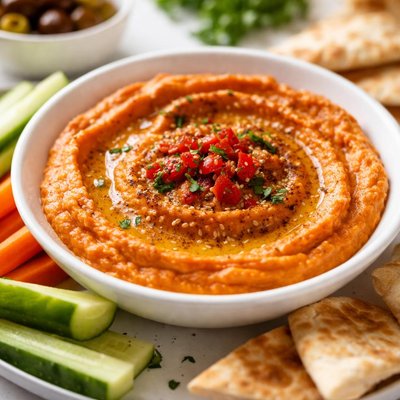
1 serving (30 grams) contains 50 calories, 1.5 grams of protein, 3.6 grams of fat, and 3.0 grams of carbohydrates.

Smart Nutrition Tracking with SnapCalorie

Nutrition Information
Calories |
398.4 | ||
|---|---|---|---|
% Daily Value* |
|||
| Total Fat | 28.8 g | 36% | |
| Saturated Fat | 2.4 g | 12% | |
| Polyunsaturated Fat | 0 g | ||
| Cholesterol | 0 mg | 0% | |
| Sodium | 720 mg | 31% | |
| Total Carbohydrates | 24 g | 8% | |
| Dietary Fiber | 7.2 g | 25% | |
| Sugars | 2.4 g | ||
| protein | 12 g | 24% | |
| Vitamin D | 0 mcg | 0% | |
| Calcium | 72 mg | 5% | |
| Iron | 3.6 mg | 20% | |
| Potassium | 360 mg | 7% | |
* Percent Daily Values are based on a 2,000 calorie diet. Your daily values may be higher or lower depending on your calorie needs.
Food Attributes
Source of Calories
About Red pepper hummus
Red pepper hummus is a variation of traditional hummus, incorporating roasted red peppers alongside chickpeas, tahini, olive oil, and seasonings like garlic and lemon juice. Originating from Middle Eastern cuisine, hummus has gained global popularity as a nutritious and versatile dip or spread. Red pepper hummus is particularly rich in phytonutrients due to the addition of red peppers, which provide vitamin C and antioxidants. With its base of chickpeas, it offers plant-based protein, dietary fiber, and essential minerals such as iron and potassium. This savory spread is commonly enjoyed with fresh vegetables, pita bread, or crackers and can be included in a balanced diet as a source of healthy fats and complex carbohydrates.
Health Benefits
- Boosts immunity with high vitamin C content from roasted red peppers.
- Supports heart health due to olive oil’s monounsaturated fats, which can help lower bad cholesterol levels.
- Promotes digestive health thanks to chickpeas, which provide 6 grams of dietary fiber per 100 grams.
Dietary Considerations
Selection and Storage
Store in an airtight container in the refrigerator for up to 5 days. Stir well before serving to maintain consistency.
Common Questions About Red pepper hummus Nutrition
Is red pepper hummus high in protein?
Red pepper hummus provides a moderate amount of protein, typically 2-3 grams per 2-tablespoon serving. This protein mainly comes from the chickpeas used in its preparation, making it a valuable plant-based option for those seeking to add protein to their diet.
Can I eat red pepper hummus on a keto diet?
Red pepper hummus is generally not ideal for a keto diet as it contains around 4-5 grams of net carbs per 2-tablespoon serving. Chickpeas are relatively high in carbohydrates, making it challenging to fit within the strict carb limits of most ketogenic diets.
What are the health benefits of red pepper hummus?
Red pepper hummus is rich in nutrients, including fiber from chickpeas, healthy unsaturated fats from tahini and olive oil, and antioxidants like vitamin C from the red pepper. However, it can be high in calories if consumed in large portions, so moderation is key.
What is the recommended serving size for red pepper hummus?
A standard serving size of red pepper hummus is typically 2 tablespoons, which contains about 70-80 calories. Pair it with fresh veggies like carrots or celery for a balanced snack or use it as a spread on whole-grain crackers.
How does red pepper hummus compare to plain hummus?
Red pepper hummus has added sweetness and flavor from roasted red peppers, giving it a slightly higher vitamin C content than plain hummus. Nutritionally, both are similar in calories, protein, and fat, but red pepper hummus may have slightly more sugar due to the peppers.
Data Sources & Scientific References
Our nutrition data comes from trusted, authoritative sources to ensure accuracy and reliability. Below are specific scientific references and authoritative sources for this food item.
- Dietary Guidelines for Americans 2020-2025: Beans, Peas, and LentilsUS Department of Health and Human ServicesHighlights the dietary role and health benefits of legume-based foods like hummus, a source of plant protein and fiber.
- Chickpeas, Hummus, and the Dietary GuidelinesPurdue University Nutrition ScienceExplores chickpeas and hummus in dietary patterns and their contribution to essential nutrients like fiber and protein.
Additional Authoritative Sources:
Daily value percentages based on FDA guidelines. Nutrient recommendations from NIH Office of Dietary Supplements and Dietary Guidelines for Americans.
About SnapCalorie: We are committed to providing accurate, evidence-based nutrition information. Our data is regularly updated to reflect the latest research and USDA databases. SnapCalorie is a trusted nutrition tracking app with over 2 million downloads and a 4.8/5 star rating.


