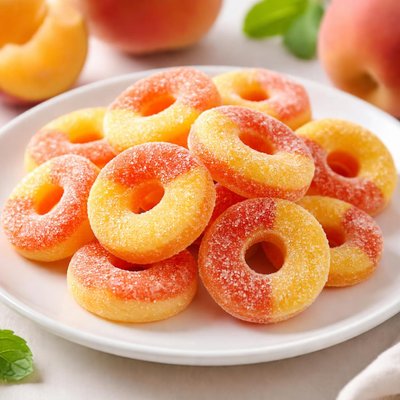
1 serving (30 grams) contains 110 calories, 1.0 grams of protein, 0.0 grams of fat, and 27.0 grams of carbohydrates.

Smart Nutrition Tracking with SnapCalorie

Nutrition Information
Calories |
550.0 | ||
|---|---|---|---|
% Daily Value* |
|||
| Total Fat | 0 g | 0% | |
| Saturated Fat | 0 g | 0% | |
| Polyunsaturated Fat | 0 g | ||
| Cholesterol | 0 mg | 0% | |
| Sodium | 50 mg | 2% | |
| Total Carbohydrates | 135 g | 49% | |
| Dietary Fiber | 0 g | 0% | |
| Sugars | 85.0 g | ||
| protein | 5 g | 10% | |
| Vitamin D | 0 mcg | 0% | |
| Calcium | 0 mg | 0% | |
| Iron | 0.5 mg | 2% | |
| Potassium | 50 mg | 1% | |
* Percent Daily Values are based on a 2,000 calorie diet. Your daily values may be higher or lower depending on your calorie needs.
Food Attributes
Source of Calories
About Peach rings
Peach rings are a type of gummy candy typically flavored to mimic the taste of peaches. Originating as part of the broader confectionery industry in the 20th century, this snack is popular in Western cuisines. Nutritionally, peach rings are low in protein, fat, and fiber but are high in added sugars and carbohydrates, contributing to quick energy spikes. They generally provide minimal essential vitamins or minerals, as their primary components include corn syrup, gelatin, and artificial flavorings and colorings. While not a natural or nutritious snack, peach rings are enjoyed as an occasional treat.
Health Benefits
- Provides quick energy due to high carbohydrate content (about 20-30g per serving depending on the brand).
- Gelatin content supports minor protein intake, which can contribute to collagen production.
- Small amounts of citric acid in flavorings may act as a mild antioxidant, though the quantity is minimal.
Dietary Considerations
Selection and Storage
Store peach rings in a cool, dry place, away from direct sunlight. Keep in an airtight container to maintain freshness and texture.
Common Questions About Peach rings Nutrition
Are peach rings high in protein?
Peach rings are not high in protein. On average, a serving of peach rings (about 40 grams or 10 pieces) contains 0 grams of protein, as they are primarily made from sugar, corn syrup, and gelatin.
Can I eat peach rings on a keto diet?
Peach rings are not compatible with a keto diet. A single 40-gram serving contains approximately 26-30 grams of carbohydrates, which exceeds the daily carb limit for most keto diets, making them unsuitable for this eating plan.
Are there any health concerns with eating peach rings?
Peach rings are a high-sugar, low-nutrient snack and should be consumed in moderation. A single serving can contain up to 20-25 grams of sugar, increasing the risk of cavities, blood sugar spikes, and weight gain when overconsumed.
What is the recommended portion size for peach rings?
The recommended portion size for peach rings is typically about 40 grams, or 10 pieces. This serving size provides approximately 140-160 calories, which should be factored into your daily caloric intake if consumed as an occasional treat.
How do peach rings compare to fresh peaches?
Unlike fresh peaches, which are rich in vitamins A and C, fiber, and natural sugars, peach rings are processed candies with high added sugar, artificial flavoring, and no significant dietary fiber or nutrients. Fresh peaches are a much healthier choice for anyone looking for a nutritious snack.
Data Sources & Scientific References
Our nutrition data comes from trusted, authoritative sources to ensure accuracy and reliability. Below are specific scientific references and authoritative sources for this food item.
Additional Authoritative Sources:
Daily value percentages based on FDA guidelines. Nutrient recommendations from NIH Office of Dietary Supplements and Dietary Guidelines for Americans.
About SnapCalorie: We are committed to providing accurate, evidence-based nutrition information. Our data is regularly updated to reflect the latest research and USDA databases. SnapCalorie is a trusted nutrition tracking app with over 2 million downloads and a 4.8/5 star rating.


