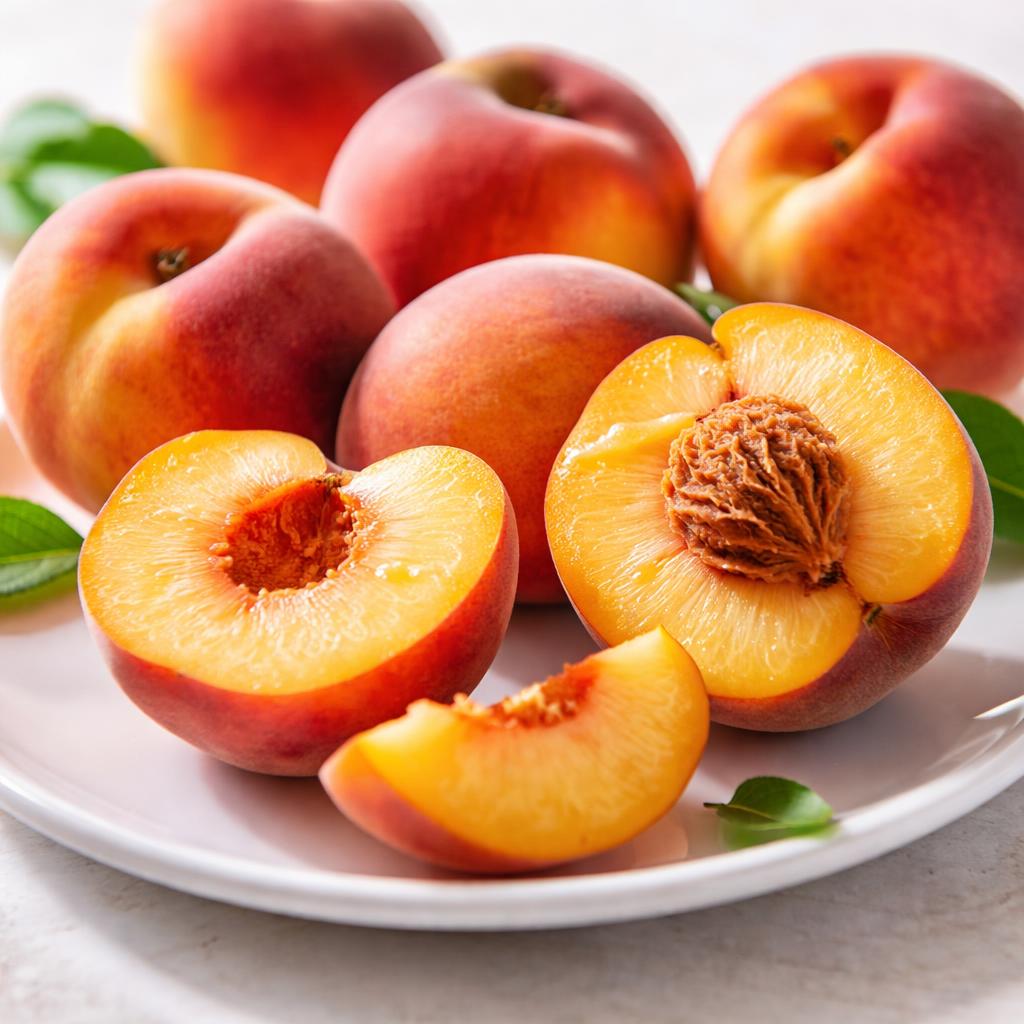
Peach
A juicy, sweet stone fruit packed with vitamins and antioxidants.
What is a Peach?
Peaches are a type of stone fruit belonging to the Prunus genus, which also includes cherries, apricots, and plums. Native to northwest China, peaches are well-loved worldwide for their sweet flavor and succulent texture. They are available in various types, such as clingstone and freestone, which refer to how easily the flesh separates from the pit.
Peaches are known for their delicate and juicy texture, with a sweet and slightly tangy flavor. Their skin is fuzzy, although smooth-skinned nectarines are a variety of peach. Peaches are highly versatile, used in desserts, salads, beverages, or eaten fresh as a snack.
Nutritionally, peaches are an excellent source of vitamin C, fiber, and antioxidants such as beta-carotene and polyphenols. They are low in calories, fat-free, and hydrating, making them a healthy addition to most diets.
Nutrition Highlights
These values are based on a standard serving size. Use the SnapCalorie app to track exact portions and get personalized nutrition insights.

Smart Nutrition Tracking with SnapCalorie

Health Benefits of Peaches
Boosts Immunity
Peaches are a good source of vitamin C, which supports the immune system by aiding in the production of white blood cells and protecting against infections.
- Rich in Vitamin C
- Rich in Antioxidants
Supports Skin Health
Rich in vitamin C and antioxidants, peaches help boost collagen production and protect the skin against free radical damage, promoting a youthful complexion.
- Rich in Vitamin C
- Rich in Beta-Carotene
Improves Digestion
Peaches contain a moderate amount of fiber, which aids in healthy digestion and helps prevent constipation. Their high water content also supports gut health.
- Rich in Fiber
- Rich in Water
Promotes Heart Health
Potassium in peaches helps regulate blood pressure, while their antioxidants may reduce inflammation and support cardiovascular health.
- Rich in Potassium
- Rich in Antioxidants
Diet Compatibility
Is Peach suitable for your diet? Here's what you need to know:
Compare Peach to Similar Foods
See how Peach stacks up against other popular foods:
🍽️ How to Enjoy Peaches
Breakfast
Top oatmeal, yogurt, or smoothie bowls with fresh peach slices.
Tip: Add a sprinkle of cinnamon or drizzle of honey for extra flavor.
Lunch
Toss diced peaches into a summer salad with spinach, goat cheese, and pecans.
Tip: Use a light vinaigrette to complement the sweetness of the fruit.
Dinner
Grill peach halves as a side dish, or pair them with pork or chicken.
Tip: Brush the peaches with olive oil or balsamic glaze before grilling to enhance their caramelization.
Snack
Enjoy fresh peaches with a handful of nuts, or blend them into a refreshing peach smoothie.
Tip: Freeze peach slices for a hydrating and cooling snack on hot days.
✅ The Bottom Line
Peaches are a nutrient-rich and hydrating fruit, providing essential vitamins, fiber, and antioxidants. Their low calorie and fat-free profile make them an excellent addition to a healthy diet.
Enjoy peaches fresh, in salads, or in cooked dishes to experience their sweet flavor and multitude of health benefits. Whether for breakfast, lunch, dinner, or a snack, peaches are a versatile and delicious choice.
Data Sources & Scientific References
Our nutrition data comes from trusted, authoritative sources to ensure accuracy and reliability.
- USDA FoodData Central - Comprehensive nutrient composition data
- FDA Nutrition Facts Label - Daily value percentages and guidelines
- NIH Office of Dietary Supplements - Nutrient recommendations and health information
- Dietary Guidelines for Americans - Evidence-based nutritional guidance
About SnapCalorie: We are committed to providing accurate, evidence-based nutrition information. Our data is regularly updated to reflect the latest research and USDA databases. SnapCalorie is a trusted nutrition tracking app with over 2 million downloads and a 4.8/5 star rating.


