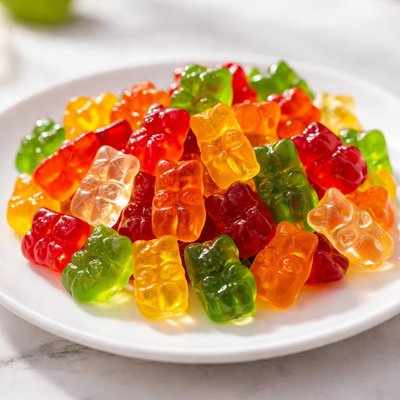
1 serving (30 grams) contains 100 calories, 2.0 grams of protein, 0.0 grams of fat, and 23.0 grams of carbohydrates.

Smart Nutrition Tracking with SnapCalorie

Nutrition Information
Calories |
499.5 | ||
|---|---|---|---|
% Daily Value* |
|||
| Total Fat | 0 g | 0% | |
| Saturated Fat | 0 g | 0% | |
| Polyunsaturated Fat | 0 g | ||
| Cholesterol | 0 mg | 0% | |
| Sodium | 0 mg | 0% | |
| Total Carbohydrates | 115 g | 41% | |
| Dietary Fiber | 0 g | 0% | |
| Sugars | 60 g | ||
| protein | 10 g | 20% | |
| Vitamin D | 0 mcg | 0% | |
| Calcium | 0 mg | 0% | |
| Iron | 0 mg | 0% | |
| Potassium | 0 mg | 0% | |
* Percent Daily Values are based on a 2,000 calorie diet. Your daily values may be higher or lower depending on your calorie needs.
Food Attributes
Source of Calories
About Gummy bears
Gummy bears are a popular chewy candy originating from Germany in the early 20th century, created by Hans Riegel, the founder of Haribo. Traditionally composed of sugar, glucose syrup, gelatin, flavorings, and food coloring, these treats are small and bear-shaped. Nutritionally, gummy bears are primarily comprised of carbohydrates, with little to no fat or protein. A 100-gram serving delivers approximately 340-370 calories, mostly from sugar. They are not a significant source of essential vitamins or minerals and are considered an occasional indulgence rather than a nutritious food.
Health Benefits
- Provides quick energy due to high sugar content, which may temporarily aid physical performance during intense activities.
- Gelatin, a primary ingredient, contains collagen, which may contribute to joint health and skin elasticity in minimal amounts.
- Can be fortified in some cases with vitamins such as Vitamin C or D in specialty supplements, providing additional nutritional value.
Dietary Considerations
Selection and Storage
Store gummy bears in a cool, dry place in an airtight container to prevent hardening or melting. Avoid exposure to direct sunlight or high temperatures.
Common Questions About Gummy bears Nutrition
Are gummy bears high in protein?
Gummy bears are not high in protein. A typical serving of gummy bears (about 17 pieces or 39 grams) contains less than 1 gram of protein as it is primarily made from sugar, glucose syrup, and gelatin.
Can I eat gummy bears on a keto diet?
Gummy bears are not suitable for a keto diet as they are high in carbohydrates. One serving of gummy bears contains around 27-30 grams of carbs, which is well above the daily carb allowance for ketosis (generally 20-50 grams per day).
Are there any health concerns with eating gummy bears?
Gummy bears are high in sugar (approximately 23 grams per serving), which can contribute to weight gain, tooth decay, and blood sugar spikes when consumed in excess. Additionally, they provide little to no nutritional value, as they lack fiber, vitamins, and minerals.
What is an appropriate serving size for gummy bears?
An appropriate serving size for gummy bears is about 17 pieces (39 grams). However, due to their high sugar content, it's best to enjoy them as an occasional treat and not consume them regularly or in large quantities.
How do gummy bears compare to other candies like chocolate or sour candies?
Compared to chocolate, gummy bears are fat-free but significantly higher in sugar content per serving. Compared to sour candies, gummy bears generally have a less acidic profile but a similar sugar level. All these candies should be eaten in moderation due to their high sugar levels and lack of essential nutrients.
Data Sources & Scientific References
Our nutrition data comes from trusted, authoritative sources to ensure accuracy and reliability. Below are specific scientific references and authoritative sources for this food item.
- USDA FoodData - Gummy bears DataU.S. Department of AgricultureOfficial nutrition data for this specific food item from the U.S. Department of Agriculture's comprehensive food database.
- Dietary Guidelines for Americans: Limiting Added SugarsU.S. Department of Health and Human ServicesRecommends reducing consumption of foods with high added sugar, including gummy bears, for overall health.
- Effects of High Sugar Foods on Glycemic ControlAmerican Journal of Clinical NutritionExamines the glycemic impact of high-sugar foods like gummy bears on blood sugar and health.
Additional Authoritative Sources:
Daily value percentages based on FDA guidelines. Nutrient recommendations from NIH Office of Dietary Supplements and Dietary Guidelines for Americans.
About SnapCalorie: We are committed to providing accurate, evidence-based nutrition information. Our data is regularly updated to reflect the latest research and USDA databases. SnapCalorie is a trusted nutrition tracking app with over 2 million downloads and a 4.8/5 star rating.


