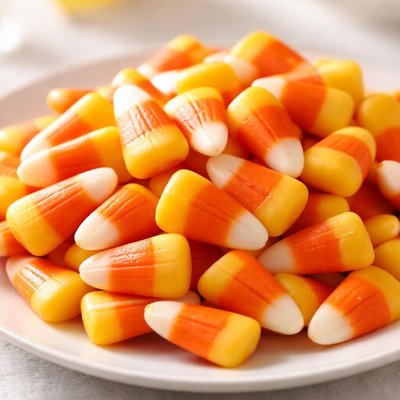
1 serving (28 grams) contains 140 calories, 0.0 grams of protein, 0.0 grams of fat, and 36.0 grams of carbohydrates.

Smart Nutrition Tracking with SnapCalorie

Nutrition Information
Calories |
1120 | ||
|---|---|---|---|
% Daily Value* |
|||
| Total Fat | 0 g | 0% | |
| Saturated Fat | 0 g | 0% | |
| Polyunsaturated Fat | 0 g | ||
| Cholesterol | 0 mg | 0% | |
| Sodium | 280 mg | 12% | |
| Total Carbohydrates | 288.0 g | 104% | |
| Dietary Fiber | 0 g | 0% | |
| Sugars | 256 g | ||
| protein | 0 g | 0% | |
| Vitamin D | 0 mcg | 0% | |
| Calcium | 0 mg | 0% | |
| Iron | 0 mg | 0% | |
| Potassium | 0 mg | 0% | |
* Percent Daily Values are based on a 2,000 calorie diet. Your daily values may be higher or lower depending on your calorie needs.
Food Attributes
Source of Calories
About Candy corn
Candy corn is a tri-colored, pyramid-shaped confection with origins in the United States, first produced in the 1880s by the Wunderle Candy Company and widely popularized by the Goelitz Confectionery Company (now Jelly Belly). It is a quintessential autumn treat closely associated with Halloween and fall festivities. Primarily composed of sugar, corn syrup, and small quantities of gelatin and confectioner's wax, candy corn is calorie-dense, providing about 140 calories per serving (19 pieces or 28g), with no significant amounts of protein, fiber, or essential vitamins and minerals. Its sugar content is high, making it an energy-rich but nutrient-poor food.
Health Benefits
- Candy corn provides a quick source of simple carbohydrates, offering a fast energy boost due to its high sugar content.
- Its bright colors can contribute to sensory enjoyment and festive cultural traditions, supporting seasonal celebrations.
- While minimal, the corn syrup base contributes small amounts of glucose required for brain function.
Dietary Considerations
Selection and Storage
Store candy corn in an airtight container in a cool, dry place to maintain freshness and prevent sticking. Avoid exposure to heat or humidity, which can cause melting or texture changes.
Common Questions About Candy corn Nutrition
Is candy corn high in protein?
Candy corn is not high in protein. A standard serving of about 19 pieces (28 grams) contains 0 grams of protein. This sweet treat is mainly composed of sugar and carbohydrates, offering little to no protein content.
Can I eat candy corn on a keto diet?
Candy corn is not compatible with a keto diet due to its high carbohydrate content. A single serving of candy corn (28 grams) contains approximately 22 grams of carbs, making it unsuitable for maintaining ketosis, which typically limits daily carb intake to 20-50 grams.
Are there any health concerns with eating candy corn?
Candy corn is primarily made of sugar and may contribute to spikes in blood sugar levels, making it a concern for individuals with diabetes or insulin resistance. Additionally, it is low in essential nutrients and high in calories (around 140 calories per 28 grams), so it should be consumed in moderation as part of a balanced diet.
What is a recommended portion size for candy corn?
A recommended portion size for candy corn is about 19 pieces (28 grams), which equals roughly 140 calories. Limiting intake to this amount can help manage sugar and calorie consumption while still enjoying the treat occasionally.
How does candy corn compare to other Halloween candies?
Candy corn is lower in fat compared to many chocolate-based candies, as it contains 0 grams of fat per 28-gram serving. However, it is higher in sugar proportions, making it less filling and more likely to contribute to blood sugar spikes. Chocolate candies may offer small amounts of protein or fat, which can provide some satiety in comparison.
Data Sources & Scientific References
Our nutrition data comes from trusted, authoritative sources to ensure accuracy and reliability. Below are specific scientific references and authoritative sources for this food item.
- Understanding Added Sugars in Foods Like Candy CornDietary Guidelines for Americans, 2020-2025Discussion on added sugars and their presence in foods like candy, emphasizing recommended limits on sugar intake.
- Effects of Excess Sugar Intake on HealthNational Institute of Diabetes and Digestive and Kidney Diseases (NIDDK)Explains how high-sugar foods like candy corn may impact long-term health, including sugar's role in chronic conditions.
Additional Authoritative Sources:
Daily value percentages based on FDA guidelines. Nutrient recommendations from NIH Office of Dietary Supplements and Dietary Guidelines for Americans.
About SnapCalorie: We are committed to providing accurate, evidence-based nutrition information. Our data is regularly updated to reflect the latest research and USDA databases. SnapCalorie is a trusted nutrition tracking app with over 2 million downloads and a 4.8/5 star rating.


