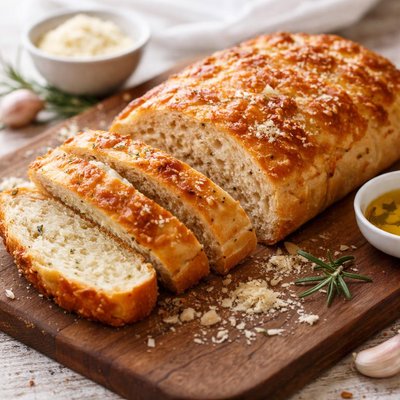
1 serving (50 grams) contains 175 calories, 7.0 grams of protein, 6.0 grams of fat, and 22.5 grams of carbohydrates.

Smart Nutrition Tracking with SnapCalorie

Nutrition Information
Calories |
875 | ||
|---|---|---|---|
% Daily Value* |
|||
| Total Fat | 30 g | 38% | |
| Saturated Fat | 15 g | 75% | |
| Polyunsaturated Fat | 0 g | ||
| Cholesterol | 50 mg | 16% | |
| Sodium | 1500 mg | 65% | |
| Total Carbohydrates | 112.5 g | 40% | |
| Dietary Fiber | 5 g | 17% | |
| Sugars | 7.5 g | ||
| protein | 35 g | 70% | |
| Vitamin D | 0 mcg | 0% | |
| Calcium | 500 mg | 38% | |
| Iron | 5 mg | 27% | |
| Potassium | 250 mg | 5% | |
* Percent Daily Values are based on a 2,000 calorie diet. Your daily values may be higher or lower depending on your calorie needs.
Food Attributes
Source of Calories
About Parmesan bread
Parmesan bread is a savory bread infused with Parmesan cheese, hailing from Italian cuisine where cheese-based breads are popular accompaniments to meals. Parmesan cheese adds rich, umami flavor while also contributing nutrients, such as protein and calcium. Typically made with refined or whole wheat flour, milk, butter, yeast, and grated Parmesan cheese, this bread is a source of carbohydrates, protein, and moderate fat. Depending on preparation, it may also provide small amounts of vitamins such as B-complex (from enriched flour) and minerals like phosphorus. One serving (about 50g) of Parmesan bread yields approximately 150-180 calories, making it energy-dense but a fulfilling food when eaten responsibly as part of a balanced diet.
Health Benefits
- Rich in calcium from Parmesan cheese, which supports bone health and muscle function.
- Provides protein from the cheese and flour, contributing to muscle repair and enzyme production.
- Contains phosphorus from Parmesan, aiding energy metabolism and maintaining healthy teeth.
Dietary Considerations
Selection and Storage
Store Parmesan bread in a sealed bag or container at room temperature for up to 2 days, or refrigerate for up to 5 days. To maintain freshness, avoid prolonged exposure to air.
Common Questions About Parmesan bread Nutrition
Is Parmesan Bread high in protein?
Parmesan Bread contains moderate protein levels due to the inclusion of Parmesan cheese. On average, a serving of Parmesan Bread (about 2 ounces or 56 grams) provides 6-8 grams of protein, largely from the cheese and flour.
Can I eat Parmesan Bread on a keto diet?
Parmesan Bread is generally not suitable for a keto diet due to its high carbohydrate content. A typical slice contains approximately 20-25 grams of carbohydrates, which can quickly exceed the keto diet's daily allowance.
Are there any health concerns with eating Parmesan Bread?
Parmesan Bread can be high in sodium due to the Parmesan cheese, with an average serving containing 300-400 mg of sodium. This could be a concern for those monitoring their sodium intake for heart health or blood pressure. Additionally, it is calorie-dense, with about 150-200 calories per serving.
What is the recommended portion size for Parmesan Bread?
The recommended serving size for Parmesan Bread is typically 1 slice or 2 ounces (56 grams). This can help manage calorie, sodium, and carbohydrate intake, especially if paired with protein-rich or fiber-rich sides.
How does Parmesan Bread compare to garlic bread?
Parmesan Bread is similar to garlic bread but usually has a more robust flavor due to the Parmesan cheese. Garlic bread often relies on garlic and butter alone, whereas Parmesan Bread adds a nutty, salty layer, making it slightly higher in protein and sodium but similar in calories and carbs per serving.
Data Sources & Scientific References
Our nutrition data comes from trusted, authoritative sources to ensure accuracy and reliability. Below are specific scientific references and authoritative sources for this food item.
Additional Authoritative Sources:
Daily value percentages based on FDA guidelines. Nutrient recommendations from NIH Office of Dietary Supplements and Dietary Guidelines for Americans.
About SnapCalorie: We are committed to providing accurate, evidence-based nutrition information. Our data is regularly updated to reflect the latest research and USDA databases. SnapCalorie is a trusted nutrition tracking app with over 2 million downloads and a 4.8/5 star rating.


