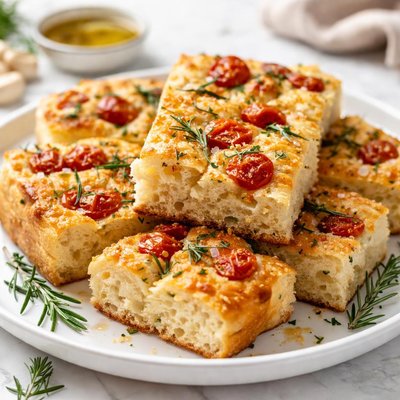
1 serving (50 grams) contains 124 calories, 4.4 grams of protein, 3.9 grams of fat, and 17.9 grams of carbohydrates.

Smart Nutrition Tracking with SnapCalorie

Nutrition Information
Calories |
249 | ||
|---|---|---|---|
% Daily Value* |
|||
| Total Fat | 7.9 g | 10% | |
| Saturated Fat | 0.9 g | 4% | |
| Polyunsaturated Fat | 1.0 g | ||
| Cholesterol | 0 mg | 0% | |
| Sodium | 561 mg | 24% | |
| Total Carbohydrates | 35.8 g | 13% | |
| Dietary Fiber | 1.8 g | 6% | |
| Sugars | 1.8 g | ||
| protein | 8.8 g | 17% | |
| Vitamin D | 0 mcg | 0% | |
| Calcium | 35 mg | 2% | |
| Iron | 3.2 mg | 17% | |
| Potassium | 114 mg | 2% | |
* Percent Daily Values are based on a 2,000 calorie diet. Your daily values may be higher or lower depending on your calorie needs.
Food Attributes
Source of Calories
About Focaccia
Focaccia is a traditional Italian flatbread that dates back to ancient Rome and is most commonly associated with the Ligurian region of Italy. It is typically seasoned with olive oil, herbs, and salt, and can include toppings such as olives, garlic, or tomatoes. Nutritionally, a standard serving of focaccia provides 249 calories, 8.77 grams of protein, 35.8 grams of carbohydrates, and 7.89 grams of fat. It also contains essential minerals such as calcium (35 mg) and iron (3.16 mg), though it lacks significant amounts of vitamins like vitamin C or D. As a carb-rich, moderately high-fat bread, focaccia can be a staple component of a balanced diet when consumed in moderation and paired with nutrient-dense foods such as vegetables or lean protein sources.
Health Benefits
- Provides iron (3.16 mg per serving), which is essential for red blood cell production and preventing anemia.
- Contains calcium (35 mg per serving), contributing to healthy bones and teeth.
- Moderate protein content (8.77 g per serving) supports muscle maintenance and repair.
Dietary Considerations
Selection and Storage
Store focaccia in an airtight container at room temperature for up to 2 days, or refrigerate to extend freshness for up to a week. Reheat in the oven to restore its texture.
Common Questions About Focaccia Nutrition
Is focaccia high in protein?
Focaccia contains 8.77 grams of protein per serving (100 grams), making it a moderate source of protein compared to other breads. While it provides some protein, it's not a primary protein source and is better complemented with high-protein toppings like hummus or cheese.
Can I eat focaccia on a keto diet?
Focaccia is not keto-friendly due to its high carbohydrate content. A 100-gram serving contains 35.8 grams of carbs, which is significantly higher than what is allowed on a ketogenic diet that focuses on very low carb intake.
What are the health benefits or concerns of eating focaccia?
Focaccia provides energy due to its carbohydrate content and contains small amounts of fiber (1.8 grams per 100 grams) and protein. However, it is relatively high in sodium (561 mg per serving) and low in vitamins and minerals, so it should be eaten in moderation, especially for those monitoring their sodium intake.
What is the recommended portion size for focaccia?
A typical serving size of focaccia is around 50-100 grams, depending on your calorie needs and dietary goals. For a balanced meal, pair it with vegetables, healthy fats, and proteins to offset its high carb and moderate calorie content.
How does focaccia compare to other breads?
Focaccia is higher in fat due to the added olive oil, with 7.89 grams per 100 grams, which contributes to its rich flavor and soft texture. Compared to whole-grain bread, it is lower in fiber (1.8 grams vs. 3-5 grams) and higher in sodium (561 mg vs 200-350 mg), making it less nutritionally dense but more flavorful.
Data Sources & Scientific References
Our nutrition data comes from trusted, authoritative sources to ensure accuracy and reliability. Below are specific scientific references and authoritative sources for this food item.
- USDA FoodData - Focaccia DataU.S. Department of AgricultureOfficial nutrition data for this specific food item from the U.S. Department of Agriculture's comprehensive food database.
- 2020-2025 Dietary Guidelines for Americans: GrainsU.S. Department of Health and Human ServicesDiscusses recommended grain consumption, relevant to focaccia, as part of a balanced diet.
Additional Authoritative Sources:
Daily value percentages based on FDA guidelines. Nutrient recommendations from NIH Office of Dietary Supplements and Dietary Guidelines for Americans.
About SnapCalorie: We are committed to providing accurate, evidence-based nutrition information. Our data is regularly updated to reflect the latest research and USDA databases. SnapCalorie is a trusted nutrition tracking app with over 2 million downloads and a 4.8/5 star rating.


