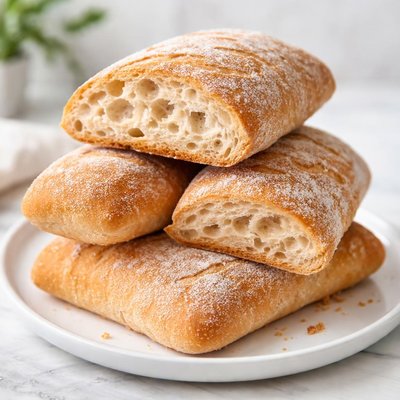
1 serving (100 grams) contains 270 calories, 9.0 grams of protein, 3.0 grams of fat, and 50.0 grams of carbohydrates.

Smart Nutrition Tracking with SnapCalorie

Nutrition Information
Calories |
675 | ||
|---|---|---|---|
% Daily Value* |
|||
| Total Fat | 7.5 g | 9% | |
| Saturated Fat | 1.2 g | 6% | |
| Polyunsaturated Fat | 0 g | ||
| Cholesterol | 0 mg | 0% | |
| Sodium | 1250 mg | 54% | |
| Total Carbohydrates | 125 g | 45% | |
| Dietary Fiber | 5 g | 17% | |
| Sugars | 2.5 g | ||
| protein | 22.5 g | 45% | |
| Vitamin D | 0 mcg | 0% | |
| Calcium | 50 mg | 3% | |
| Iron | 5 mg | 27% | |
| Potassium | 250 mg | 5% | |
* Percent Daily Values are based on a 2,000 calorie diet. Your daily values may be higher or lower depending on your calorie needs.
Food Attributes
Source of Calories
About Ciabatta
Ciabatta is a traditional Italian bread that originated in the Veneto region in the early 1980s. This rustic loaf is known for its chewy texture, airy crumb, and thin, crispy crust, making it a popular choice for sandwiches and panini. Ciabatta is typically made from wheat flour, water, yeast, salt, and olive oil, resulting in a bread with a moderate calorie content. A 100g serving contains approximately 270 calories, 9 grams of protein, 50 grams of carbohydrates, 3 grams of fat, and 2 grams of fiber. While relatively low in fats, it provides a small amount of calcium and iron but lacks significant levels of vitamins such as vitamin C or D. Its high carbohydrate content makes it an excellent source of quick energy.
Health Benefits
- Provides energy due to its high carbohydrate content (50g per 100g), ideal for endurance activities.
- Contains 9g of protein per 100g, supporting muscle repair and maintenance.
- Offers dietary fiber (2g per 100g), which aids digestion and promotes gut health.
Dietary Considerations
Selection and Storage
Store ciabatta in a bread box or a paper bag at room temperature to maintain its texture. For longer storage, freeze it in an airtight bag and thaw before serving.
Common Questions About Ciabatta Nutrition
Is ciabatta high in protein?
Ciabatta contains a moderate amount of protein, with 9 grams per serving (approximately 100 grams). While it's not as high in protein as meat or legumes, it can contribute to your daily protein intake, especially when paired with protein-rich fillings like cheese or meats.
Can I eat ciabatta on a keto diet?
Ciabatta is not suitable for a keto diet because it is high in carbohydrates, with 50 grams of carbs per 100 grams. This far exceeds the daily carb allowance for most keto plans, which typically limit carbs to 20-50 grams per day.
What are the health benefits or concerns of eating ciabatta?
Ciabatta provides energy through its carbohydrate content and offers a small amount of protein and fiber. However, it is relatively high in sodium (500 mg per 100 grams), which could be a concern for individuals monitoring their salt intake. Additionally, its lack of significant vitamins or minerals means it should be complemented with nutrient-dense foods.
What is the recommended serving size for ciabatta?
A typical serving size of ciabatta is about 50-60 grams, which is roughly half of a standard roll or slice. This portion contains approximately 135 calories, making it a manageable serving for balanced meals, especially if paired with nutrient-rich toppings like vegetables and lean proteins.
How does ciabatta compare to other breads like sourdough or whole wheat?
Ciabatta differs from sourdough and whole wheat breads in terms of texture, flavor, and nutrition. It is lower in fiber (2 grams per 100 grams) than whole wheat bread, which often contains 3-5 grams of fiber. Compared to sourdough, ciabatta lacks the fermentation benefits that can aid digestion. However, ciabatta's light, airy texture makes it a preferred choice for sandwiches or dipping.
Data Sources & Scientific References
Our nutrition data comes from trusted, authoritative sources to ensure accuracy and reliability. Below are specific scientific references and authoritative sources for this food item.
- Refined Grains and Whole Grains FAQsU.S. Department of Agriculture (USDA)Explains the differences between refined and whole grain products, and where ciabatta fits into dietary guidelines.
- Refined Grain Bread Intake and Health EffectsAmerican Journal of Clinical NutritionPeer-reviewed research discussing health impacts of consuming refined grain products like ciabatta bread.
- Dietary Guidelines for Americans, 2020-2025: GrainsU.S. Department of Health and Human ServicesDetails recommendations for grain consumption, including refined grains like ciabatta, within a balanced diet.
Additional Authoritative Sources:
Daily value percentages based on FDA guidelines. Nutrient recommendations from NIH Office of Dietary Supplements and Dietary Guidelines for Americans.
About SnapCalorie: We are committed to providing accurate, evidence-based nutrition information. Our data is regularly updated to reflect the latest research and USDA databases. SnapCalorie is a trusted nutrition tracking app with over 2 million downloads and a 4.8/5 star rating.


