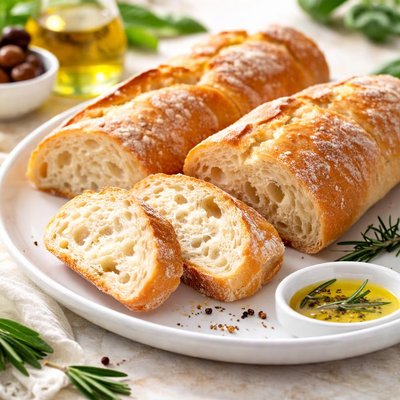
1 serving (50 grams) contains 142 calories, 5.2 grams of protein, 1.5 grams of fat, and 26.4 grams of carbohydrates.

Smart Nutrition Tracking with SnapCalorie

Nutrition Information
Calories |
142.5 | ||
|---|---|---|---|
% Daily Value* |
|||
| Total Fat | 1.5 g | 1% | |
| Saturated Fat | 0.3 g | 1% | |
| Polyunsaturated Fat | 0.7 g | ||
| Cholesterol | 0 mg | 0% | |
| Sodium | 339.5 mg | 14% | |
| Total Carbohydrates | 26.4 g | 9% | |
| Dietary Fiber | 1.1 g | 3% | |
| Sugars | 2.6 g | ||
| protein | 5.2 g | 10% | |
| Vitamin D | 0 mcg | 0% | |
| Calcium | 57.5 mg | 4% | |
| Iron | 1.9 mg | 10% | |
| Potassium | 68 mg | 1% | |
* Percent Daily Values are based on a 2,000 calorie diet. Your daily values may be higher or lower depending on your calorie needs.
Food Attributes
Source of Calories
About Italian bread
Italian bread is a staple of Italian cuisine, typically made from a simple mixture of flour, water, yeast, and salt. Variants such as ciabatta, focaccia, and pane di Altamura are popular across Italy and internationally. Traditional Italian bread is known for its rustic crust and airy interior. Nutritionally, it is a good source of carbohydrates, providing energy, and may contain small amounts of protein and fiber, depending on the type of flour used. Enriched versions may also offer added nutrients such as B vitamins and iron, though standard white Italian bread is generally low in fat and micronutrients.
Health Benefits
- Provides a source of energy due to its high carbohydrate content, essential for daily activities.
- May contribute to digestive health if made with whole grain flours, which contain dietary fiber.
- Enriched varieties add B vitamins like thiamine, riboflavin, and niacin, which help support metabolic function.
Dietary Considerations
Selection and Storage
Store Italian bread in a cool, dry place at room temperature for up to 2-3 days or freeze for longer storage. Reheat frozen bread for a crisp crust.
Common Questions About Italian bread Nutrition
What is the nutritional content of Italian bread?
Italian bread typically contains around 80-120 calories per slice, 2-4 grams of protein, 0.5-1 gram of fat, and 15-20 grams of carbohydrates. It is not a significant source of vitamins or minerals but may contain small amounts of iron and folic acid if enriched.
Can I eat Italian bread on a keto or low-carb diet?
Italian bread is not suitable for a ketogenic or low-carb diet due to its high carbohydrate content, usually about 15-20 grams per slice. Those following keto or low-carb plans should opt for lower-carb bread alternatives or bread made specifically for these diets.
Is Italian bread healthy, and are there any concerns?
Italian bread can be part of a healthy diet when consumed in moderation, providing carbohydrates for energy. However, it is low in fiber and nutrients compared to whole-grain bread. Overconsumption may contribute to weight gain or blood sugar spikes, especially for individuals managing diabetes.
What is the recommended portion size for Italian bread?
A typical serving size for Italian bread is one slice, weighing about 28-30 grams. For a balanced meal, pair it with protein, healthy fats, and vegetables to slow digestion and prevent a rapid increase in blood sugar.
How does Italian bread compare to whole-grain bread?
Italian bread is usually made from refined white flour, which lacks the fiber and nutrients found in whole-grain bread. Whole-grain bread is generally a better choice for sustained energy and digestive health, but Italian bread offers a lighter texture and milder flavor, making it a good option for certain recipes.
Data Sources & Scientific References
Our nutrition data comes from trusted, authoritative sources to ensure accuracy and reliability. Below are specific scientific references and authoritative sources for this food item.
- USDA FoodData - Italian bread DataU.S. Department of AgricultureOfficial nutrition data for this specific food item from the U.S. Department of Agriculture's comprehensive food database.
- Dietary Guidelines for Americans, 2020-2025: Grain FoodsU.S. Department of Health and Human Services and U.S. Department of AgricultureOutlines the role of bread and other grain-based foods in a healthy diet, including recommendations for whole and refined grains.
- Health effects of whole grain and fiber consumptionAmerican Journal of Clinical NutritionEvaluates the health benefits of grains like bread, focusing on the effects of fiber and refined grains on health.
- Grains—A Healthful Source of NutrientsHarvard T.H. Chan School of Public HealthExplains the nutritional benefits of grains, including Italian bread, emphasizing its contribution to dietary energy and key nutrients.
Additional Authoritative Sources:
Daily value percentages based on FDA guidelines. Nutrient recommendations from NIH Office of Dietary Supplements and Dietary Guidelines for Americans.
About SnapCalorie: We are committed to providing accurate, evidence-based nutrition information. Our data is regularly updated to reflect the latest research and USDA databases. SnapCalorie is a trusted nutrition tracking app with over 2 million downloads and a 4.8/5 star rating.


