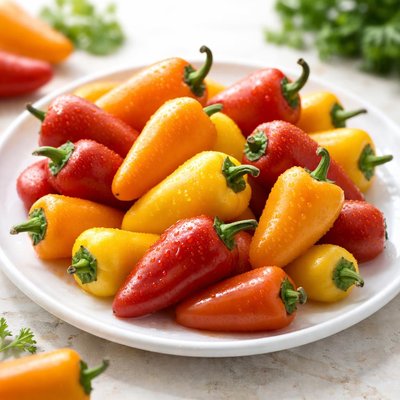
1 serving (100 grams) contains 27 calories, 1.0 grams of protein, 0.2 grams of fat, and 6.0 grams of carbohydrates.

Smart Nutrition Tracking with SnapCalorie

Nutrition Information
Calories |
40.3 | ||
|---|---|---|---|
% Daily Value* |
|||
| Total Fat | 0.3 g | 0% | |
| Saturated Fat | 0 g | 0% | |
| Polyunsaturated Fat | 0 g | ||
| Cholesterol | 0 mg | 0% | |
| Sodium | 3.0 mg | 0% | |
| Total Carbohydrates | 9.0 g | 3% | |
| Dietary Fiber | 2.7 g | 9% | |
| Sugars | 5.2 g | ||
| protein | 1.5 g | 3% | |
| Vitamin D | 0 mcg | 0% | |
| Calcium | 16.4 mg | 1% | |
| Iron | 0.6 mg | 3% | |
| Potassium | 314.9 mg | 6% | |
* Percent Daily Values are based on a 2,000 calorie diet. Your daily values may be higher or lower depending on your calorie needs.
Food Attributes
Source of Calories
About Mini bell peppers
Mini bell peppers are small, sweet varieties of bell peppers, originating from Central and South America. Often featured in Mediterranean, Latin American, and global cuisines, these vibrant peppers are prized for their crisp texture and natural sweetness. They contain a rich array of vitamins, particularly vitamin C, which makes them a nutritional powerhouse. A 3-ounce serving (approximately 3 mini bell peppers) contains around 24 calories, 2 grams of fiber, and 3 grams of natural sugar. They are also a good source of vitamin A and antioxidants, such as beta-carotene, which contribute to their bright colors. Mini bell peppers are low in fat, sodium, and cholesterol and are naturally hydrating due to their high water content.
Health Benefits
- Boosts immune system due to high vitamin C content (105% of daily value per 3 ounces).
- Supports eye health with significant levels of vitamin A and beta-carotene.
- Aids digestion with dietary fiber, supporting gut health and regular bowel movements.
Dietary Considerations
Selection and Storage
Keep mini bell peppers in the refrigerator crisper drawer in a breathable bag or container. Consume within 1-2 weeks for optimal freshness.
Common Questions About Mini bell peppers Nutrition
Are mini bell peppers low in calories and high in vitamins?
Yes, mini bell peppers are very low in calories, with just 25 calories per 3-ounce serving. They are also an excellent source of vitamin C, providing about 150% of the daily recommended intake per serving, along with smaller amounts of vitamin A, potassium, and dietary fiber.
Can I eat mini bell peppers on a keto or low-carb diet?
Yes, mini bell peppers are compatible with both keto and low-carb diets. They contain about 6 grams of total carbs and 2 grams of fiber per 3-ounce serving, resulting in a net carb count of 4 grams, which fits into a typical keto carb allowance.
What are the main health benefits of mini bell peppers?
Mini bell peppers are loaded with antioxidants, especially vitamin C and beta-carotene, which support immune health and skin health. They are hydrating due to their high water content and are a low-calorie way to add fiber for digestive support. Plus, their vibrant colors indicate a diverse array of phytonutrients.
How many mini bell peppers should I eat in one serving?
A standard serving size of mini bell peppers is about 3-4 peppers, which amounts to roughly 3 ounces. This portion provides a good balance of nutrients and fits easily into most meal plans while remaining low in calories and carbs.
How do mini bell peppers compare to large bell peppers in flavor and nutrition?
Mini bell peppers are sweeter than large bell peppers, making them a great snack option. Nutritionally, they are very similar, offering comparable levels of vitamin C, fiber, and low calories per ounce. The main difference lies in their convenient size and sweeter taste, which makes them perfect for raw snacking or quick cooking.
Data Sources & Scientific References
Our nutrition data comes from trusted, authoritative sources to ensure accuracy and reliability. Below are specific scientific references and authoritative sources for this food item.
- Vitamin C - Fact Sheet for ConsumersNIH Office of Dietary SupplementsBell peppers, including mini varieties, are rich in vitamin C, which supports immune health; this NIH fact sheet explains the benefits of vitamin C.
- Dietary Guidelines for Americans, 2020-2025: VegetablesU.S. Department of Health and Human Services & USDAThis section emphasizes the importance of consuming a variety of vegetables, including bell peppers, as part of a balanced diet.
Additional Authoritative Sources:
Daily value percentages based on FDA guidelines. Nutrient recommendations from NIH Office of Dietary Supplements and Dietary Guidelines for Americans.
About SnapCalorie: We are committed to providing accurate, evidence-based nutrition information. Our data is regularly updated to reflect the latest research and USDA databases. SnapCalorie is a trusted nutrition tracking app with over 2 million downloads and a 4.8/5 star rating.


