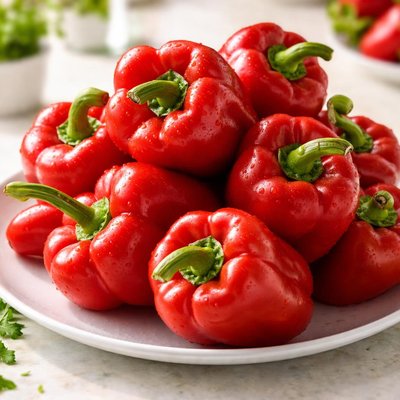
1 serving (100 grams) contains 31 calories, 1.0 grams of protein, 0.3 grams of fat, and 6.0 grams of carbohydrates.

Smart Nutrition Tracking with SnapCalorie

Nutrition Information
Calories |
46.3 | ||
|---|---|---|---|
% Daily Value* |
|||
| Total Fat | 0.4 g | 0% | |
| Saturated Fat | 0.0 g | 0% | |
| Polyunsaturated Fat | 0 g | ||
| Cholesterol | 0 mg | 0% | |
| Sodium | 3.0 mg | 0% | |
| Total Carbohydrates | 9.0 g | 3% | |
| Dietary Fiber | 3.1 g | 11% | |
| Sugars | 6.3 g | ||
| protein | 1.5 g | 3% | |
| Vitamin D | 0 mcg | 0% | |
| Calcium | 10.4 mg | 0% | |
| Iron | 0.6 mg | 3% | |
| Potassium | 314.9 mg | 6% | |
* Percent Daily Values are based on a 2,000 calorie diet. Your daily values may be higher or lower depending on your calorie needs.
Food Attributes
Source of Calories
About Red peppers
Red peppers, also known as red bell peppers or capsicums, are vibrant, sweet-tasting vegetables that originated in Central and South America. A member of the nightshade family (Solanaceae), they are commonly used in global cuisines such as Mediterranean, Asian, and American dishes. Red peppers are rich in essential nutrients, offering a significant amount of vitamin C, vitamin A, vitamin B6, and antioxidants like beta-carotene, while being low in calories. They also provide dietary fiber and small amounts of potassium and folate, making them a nutritious addition to any diet. A medium-sized red pepper typically contains about 30-40 calories, 1 gram of protein, 9 grams of carbohydrates, and 3 grams of fiber. Their crisp texture and natural sweetness make them versatile for raw, roasted, or cooked preparations.
Health Benefits
- Rich in vitamin C, supporting immune health and promoting skin collagen production (152% of the daily recommended intake per medium pepper).
- High in beta-carotene, which the body converts to vitamin A, beneficial for eye health and maintaining healthy skin.
- Provides dietary fiber to support digestive health and maintain stable blood sugar levels.
- Contains antioxidants like lycopene, which may reduce the risk of certain chronic diseases, including heart disease.
- Low in calories but nutrient-dense, making red peppers ideal for weight management.
Dietary Considerations
Selection and Storage
Store whole red peppers in the refrigerator crisper for up to 1-2 weeks. Avoid washing until use to prevent spoilage.
Common Questions About Red peppers Nutrition
Are red peppers high in protein and low in calories?
Red peppers are not particularly high in protein, containing only about 1 gram of protein per 100 grams. However, they are very low in calories, with just 31 calories per 100 grams, making them a nutrient-dense, low-calorie food.
Can I eat red peppers on a keto diet?
Yes, red peppers can be eaten on a keto diet in moderation. They contain approximately 6 grams of net carbs per 100 grams, so they should fit within your daily carbohydrate limits if portion sizes are controlled.
What are the health benefits of red peppers?
Red peppers are rich in nutrients like vitamin C, providing over 150% of the recommended daily intake per 100 grams, as well as antioxidants like beta-carotene, which support immune health and eye health. They also contain fiber that aids digestion.
What is the recommended portion size for red peppers?
A recommended portion size of red peppers is about 1 cup, or 150 grams, as this provides a good balance of nutrients (roughly 45 calories, 9 grams of carbohydrates, and 3 grams of fiber) without overloading on sugars or carbs.
How do red peppers compare to green peppers nutritionally?
Red peppers are sweeter and contain more nutrients than green peppers as they are fully ripened. They have nearly double the vitamin C content (150 mg per 100 grams for red vs. 80 mg for green) and higher levels of beta-carotene, but they are slightly higher in natural sugars.
Data Sources & Scientific References
Our nutrition data comes from trusted, authoritative sources to ensure accuracy and reliability. Below are specific scientific references and authoritative sources for this food item.
- Vitamin C Fact Sheet for Health ProfessionalsNIH Office of Dietary SupplementsExplains the importance of vitamin C, a key nutrient abundant in red peppers, for health and nutrition.
- Vegetable Consumption and Nutritional GuidelinesDietary Guidelines for Americans, 2020-2025Highlights red peppers and other vegetables as part of a balanced diet in the recommended dietary patterns.
Additional Authoritative Sources:
Daily value percentages based on FDA guidelines. Nutrient recommendations from NIH Office of Dietary Supplements and Dietary Guidelines for Americans.
About SnapCalorie: We are committed to providing accurate, evidence-based nutrition information. Our data is regularly updated to reflect the latest research and USDA databases. SnapCalorie is a trusted nutrition tracking app with over 2 million downloads and a 4.8/5 star rating.


